Beaches, bananagrams and beers
Hello! PeaHead here. Now as Radio Fred mentioned I need regular hits of beach lounging and sunbathing to retain my wonderfully measured temperament and positive attitude so after all the culture we’d absorbed and exploring of ancient civilisations we’d done I was in need of some sand and sunshine so our journey took us to the North East Coast of Sri Lanka to a small coastal area North of Trincomalee called Uppuveli.
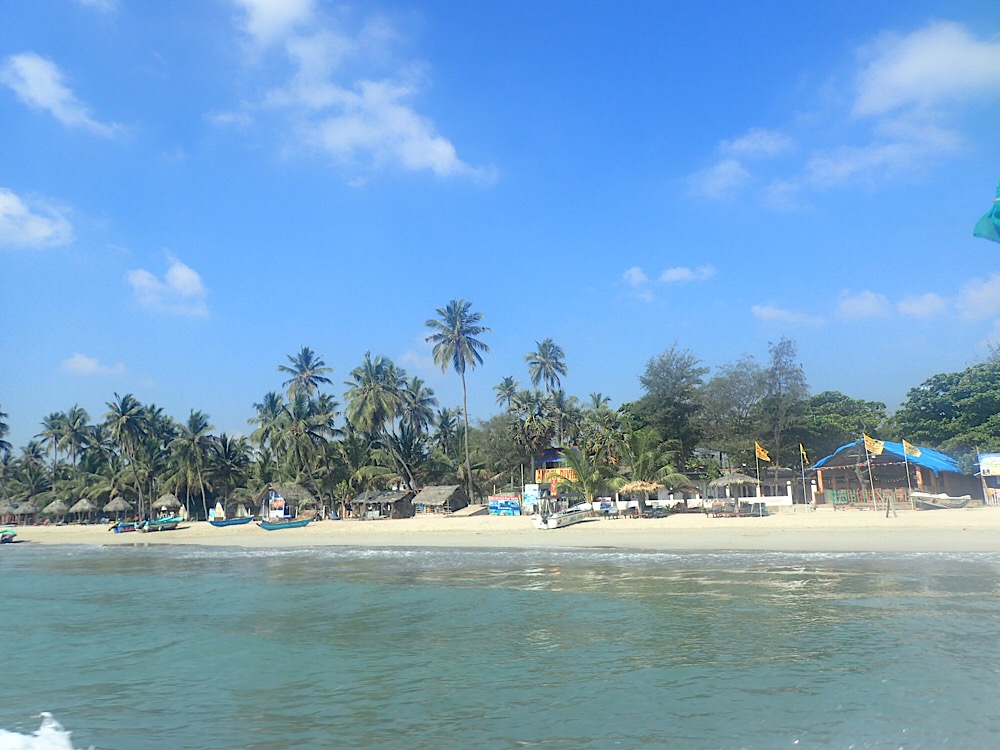
Debatably interesting fact: Trincomalee is home to the word’s largest natural harbour – which is much nicer than it sounds! We had a bit of a shaky start in Uppuveli as we’d unwittingly booked ourselves into some awful accommodation for four nights (cheers Lonely Planet) – but after making the decision that we weren’t going to stay there (the swarm of mosquitos in the room, dirty sheets and proximity of the bedroom window to the public/backyard shower were the last straw) we summoned our courage and walked out (which is always so difficult when it’s obviously a family run place) and found a much nicer (if a little resorty) hotel just round the corner. Once we’d settled in we headed off to explore the beach – which was a typically beautiful Sri Lankan treat – clean straw coloured sand, fringed with palm trees and a scattering of colourful fishing boats.
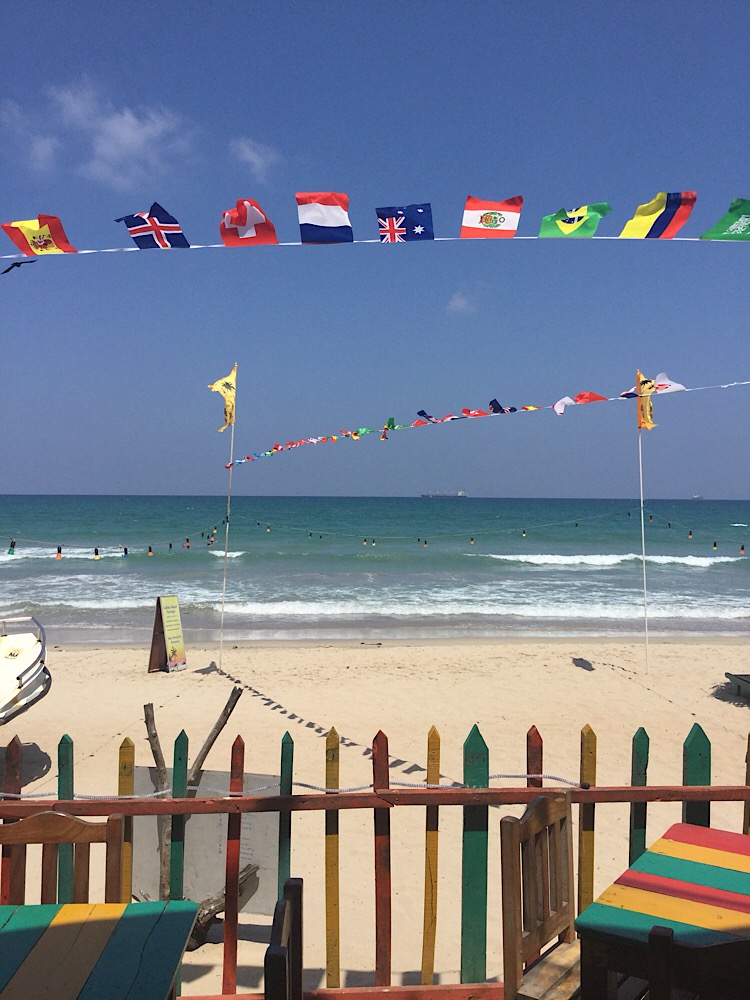
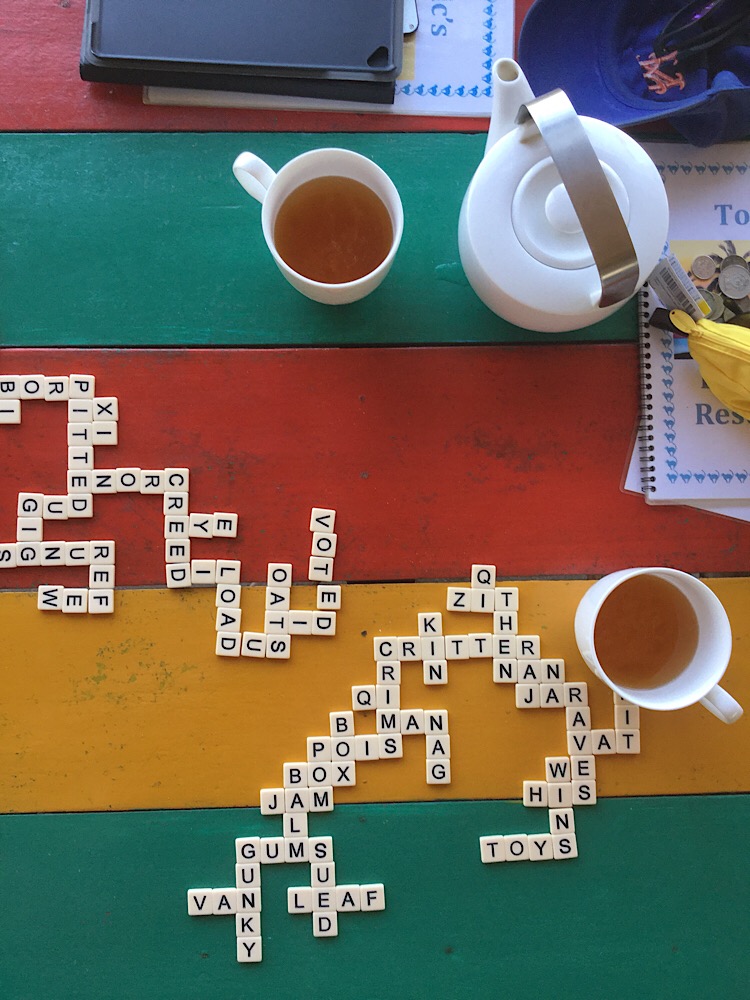
We spent a good few days relaxing on the beach, reading, swimming, playing fiercely contested games of banagrams, drinking beer out of mugs and teapots in the restaurants lacking licenses and wandering up and down the beach. Fred also got his creative juices flowing and wrote the first instalment of the blog here so you could almost view it as a (piss) artists retreat.
We had a majorly early dawn rise one morning to go out on a whale watching trip – apparently Sri Lanka is one of the best places in the world to spot a Blue Whale. This (sadly) is because as the civil war raged on for over 30 years they were left undisturbed off the island’s shore and no one was poaching them. Unfortunately it wasn’t second time lucky for us (we didn’t see any on our first whale watching trip in Sri Lanka in 2012), but we had a lovely morning out on the boat and saw loads of Dolphins – I’m holding out for the third time round…
We headed over to Trincomalee one late afternoon/early evening to see Fort Frederick (nothing to do with Radio Fred) which is set back from the coastal path near the port. It has a typical narrow gatehouse entrance and was originally built by the Portuguese in 1623 then changed hands loads of times between them, the Dutch, French, British, Dutch and back again which is a great reminder of the absurdity of colonial power grabs. The Fort (which is now a Sri Lankan Military Base) is a complex of impressive buildings set amongst massive gnarled trees around which roam loads of lovely spotted deer, surrounded by white picket fences, throw into the mix all the monkeys and peacocks and it feels more like a a zoo!
We meandered through the fort as dusk approached and up towards an awesome Hindu Temple – Kandasamy Kovil which sits at the summit of a rocky outcrop. Once you pass through the stall holders and the trees strung with strips of orange and red ribbons (which looked gorgeous in the evening sunlight) you are faced with a massive super colourful statue of Shiva – which is at least 15 metres high, perched upon a rock – it caught the light in the most magical way. Behind the statue was a typically “extra” Hindu Temple adorned with extremely intricate and colourful carvings.
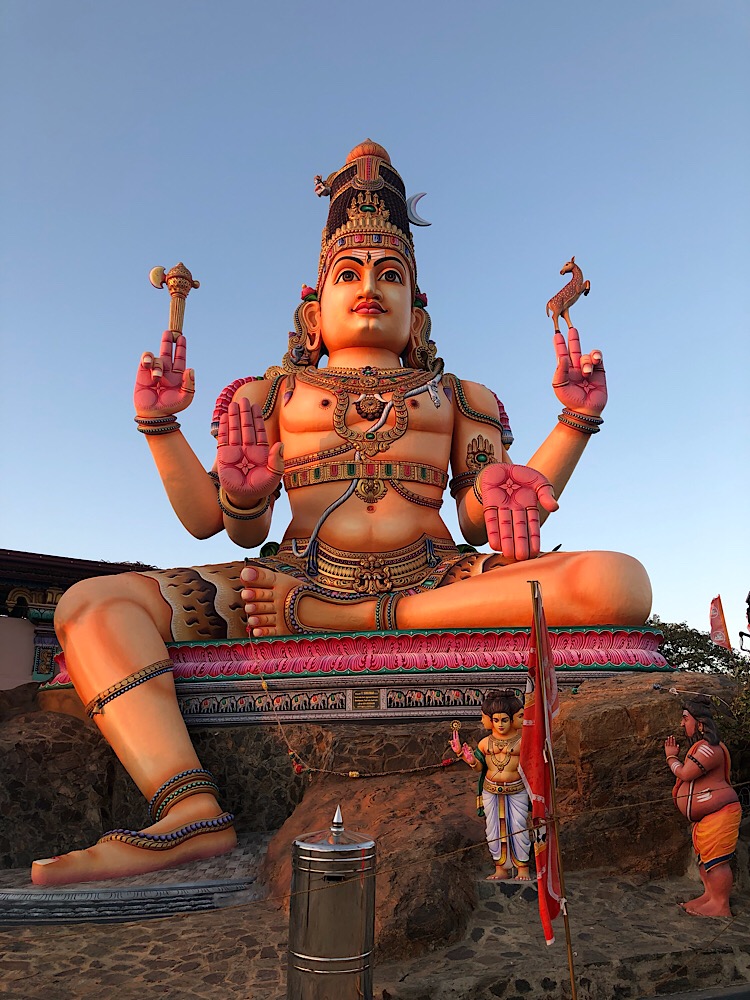
We arrived just before Puja which are prayer ceremonies that take place multiple times throughout the day. Inside the temple there were people playing lute-type instruments, drums and singing – which is piped through loud speakers on the outside of the temple. The Puja included bell ringing, loads of incense and waftings of lit candelabras. The whole thing was totally magical and enhanced by the beautiful orange low sun which when shining through the surrounding Palm trees whilst the religious music warbled through the speakers made it feel very exotic. I had a bit of a moment if I’m honest. Hindu temples are so up my street, the mega colour clash and general over the top decoration is awesome, with the dwindling Church attendance in the UK perhaps people would be more inclined to attend if we jazzed them up a bit? We followed the Temple visit by having a fresh coconut at a roadside fruit juice shack which just happened to have the most incredible view over the harbour for sunset. Dreamy.
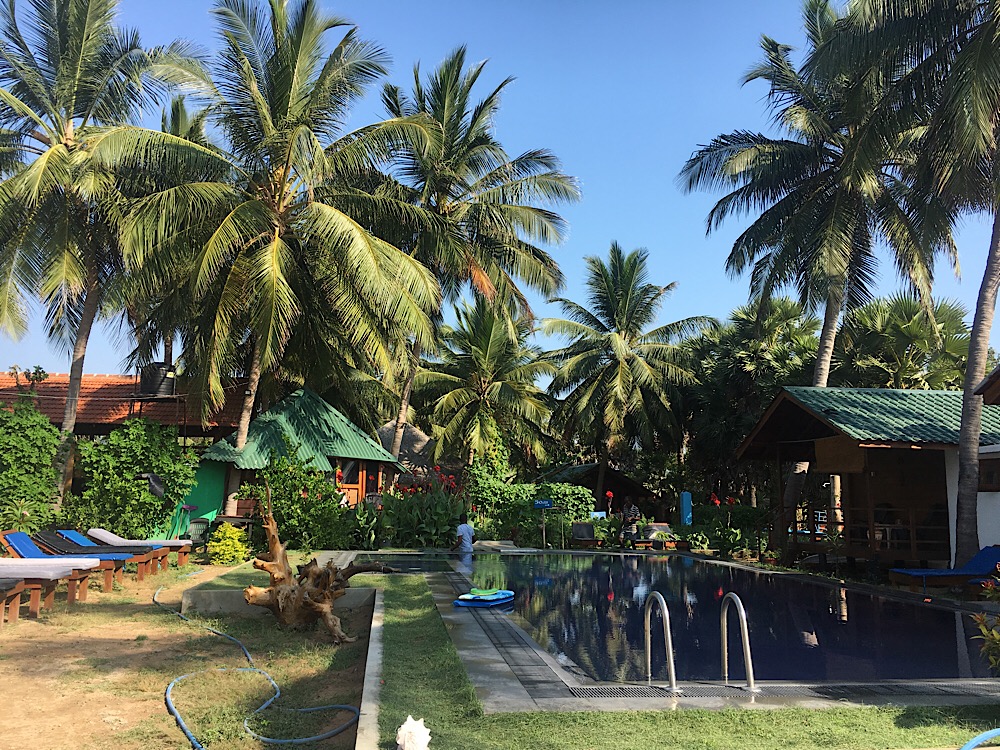
We upped sticks after a few days and travelled further north up the coast to Nilaveli to stay at a lovely little spot called Bella Nilaveli – run by Ana, an Italian woman, her Sri Lankan husband and their little boy Leo (although he was no Picolo Rosso, more Picolo Marrone!) It really is a lovely, peaceful spot – a handful of little cabins just set back from the beach around a refreshing pool, amongst swaying coconut trees and an epic veg patch with aubergines, chillies, beans, gourd and loads of parsley and mint. The beach in Nilaveli was unspoilt and largely empty apart from us and a few fishermen.
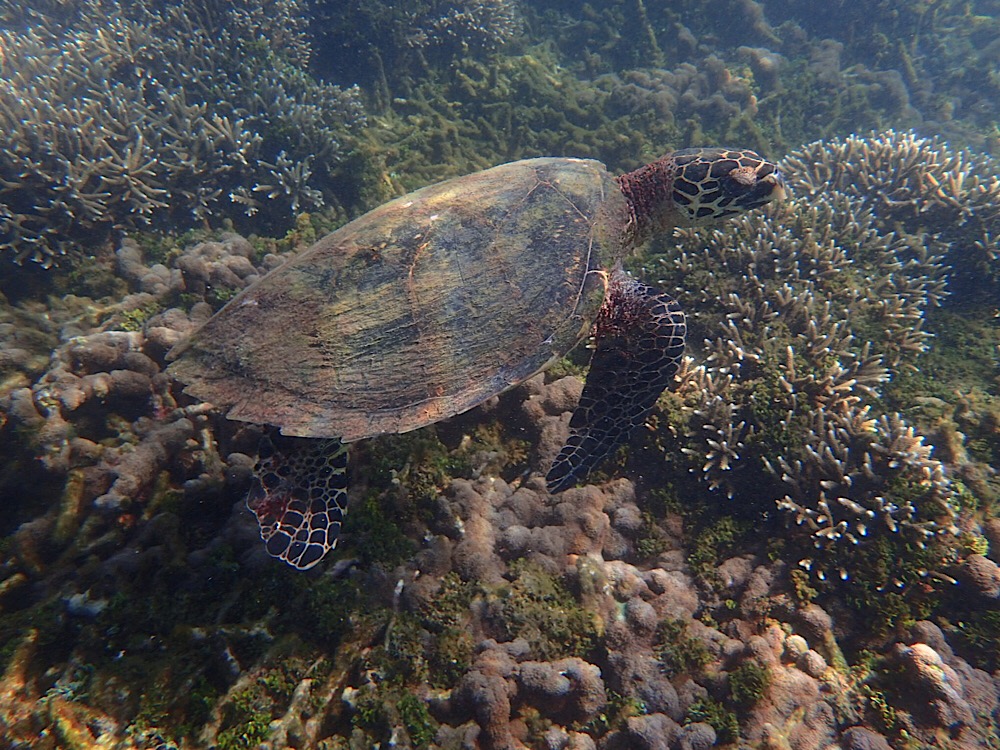
Just off the coast at Nilaveli is Pigeon Island which is a famed snorkelling spot. We were met after our breakfast at Bella’s and shown to a boat down on the beach by an ancient Sri Lankan gent in a lunghi – we weren’t really sure what to expect but we were introduced to our private guide who it turned out was a Sri Lankan dive master who does snorkelling trips off season, so was really knowledgable and spoke great English. The boat ride to the small island was about 20 minutes, it had lovely sandy beaches, a few rocky outcrops in the shallows and tonnes of coral skeleton washed up on the shore. Luckily we were the first to arrive which meant we had the first section of snorkelling to ourselves. The coral was a little bit worse for wear but we saw some huge black tip reef sharks (complete with remoras), a Green Turtle up-close which came up to the surface for air while we bobbed around, Moorish Idols, Coronet Fish and Clown Fish – lots of lovely underwater life. It made me remember quite how much I love the water and all the life that teems beneath it.
Uppuvelli and Nilaveli were all in all a lovely spot for some beachside R&R, leaving me fully charged on sunshine and ready for a city adventure in Jaffna.
Jaffna: pedal power and faded grandeur
Being naive tourists we opted to take the coastal route for our drive up to Jaffna rather than the express way thinking it would be scenic drive along the lush coastline. Unfortunately there wasn’t much coastline to be seen and what it lacked in beauty it made up for in extremely bumpy and poorly maintained road surfaces.
We were both really excited about visiting Jaffna and had regretted not making it here on our first trip to SL, it’s the most Northerly city in Sri Lanka and was the Tamil Tigers’ strong hold and epicentre of the increasingly vicious civil war – this meant that it wasn’t until 2012 that any tourists were allowed here. The people here are still largely Tamil so culturally it’s quite different to the rest of Sri Lanka. We also took a diversion on our bumpy drive to visit the hotly anticipated Sea Tigers Ship Yard which when we arrived had unfortunately been dismantled (much to Fred’s disappointment.) It used be be an area on the coast where the Tamil Tigers (or “LTTE”) built mad submarines and other seafaring weapons with parts smuggled in from all over the place including India, Russia and North Korea – but the current Government obviously didn’t want weird tourists like us looking at it I suppose. Never mind we (read Fred) carefully studied the Wikipedia page instead.
We stayed in the Jaffna Heritage Hotel which was lovely but we were the only guests there so also a bit odd. Had a brilliant veg curry Thali for lunch at a restaurant called Mangoes (often Thali is the only option for lunch), lots of lovely little pots of curry, sambal, loads of rice, papadums, buttermilk and a sweet (which we think was some form of tapioca), so delicious and super cheap (about £3 for both). Followed by an explore around town and a sunset beer on the roof of the high rise Jetwing Hotel – which also gave us an awesome view across Jaffa – stretching from the peninsula and its islands to right out into across the ocean. The city is densely spread as far as the eye can see with clusters of buildings, thickets of palm trees and the requisite massive fruit bats circling around – it was nothing like the war torn, derelict city I’d imagined, but a bustling modern city with an incredibly interesting if very sad history.
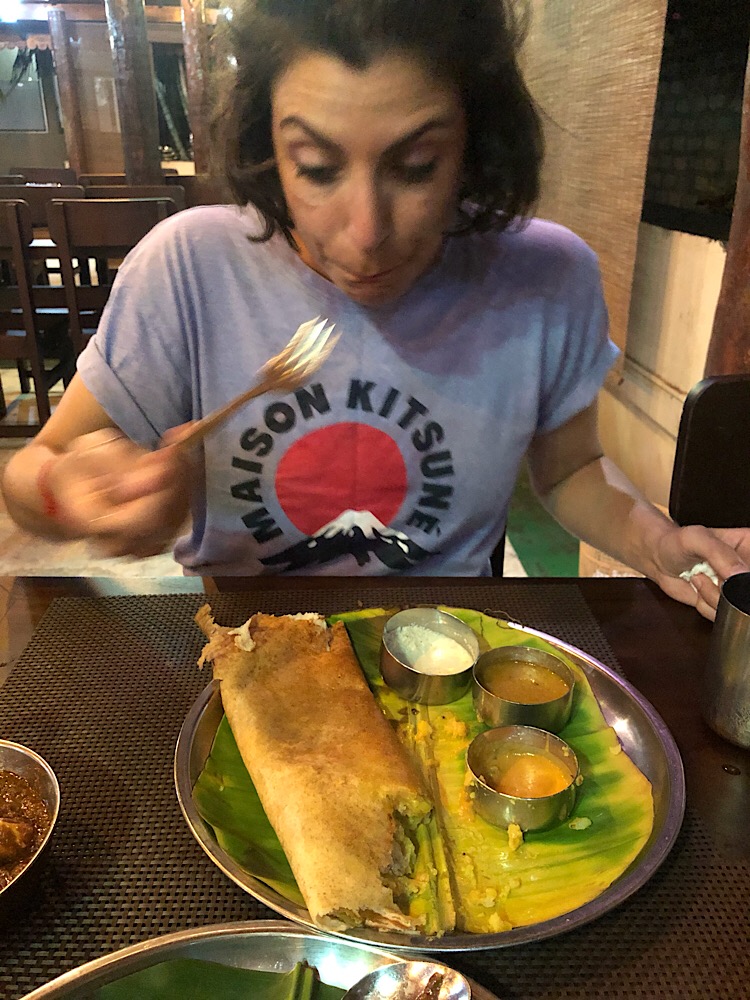
Back to Mangoes for dinner where we had an outrageously rich and tasty meal – Ghee Dosa which unsurprisingly is Dosa cooked in Ghee and stuffed with lightly spiced potatoes with loads of lovely side dippy bits, a chopped then deep fried roti with a spicy sauce plus an absolutely banging Paneer Tikka Masala. I’ve been maintaining a steady consumption of Paneer to ensure I get enough calcium…
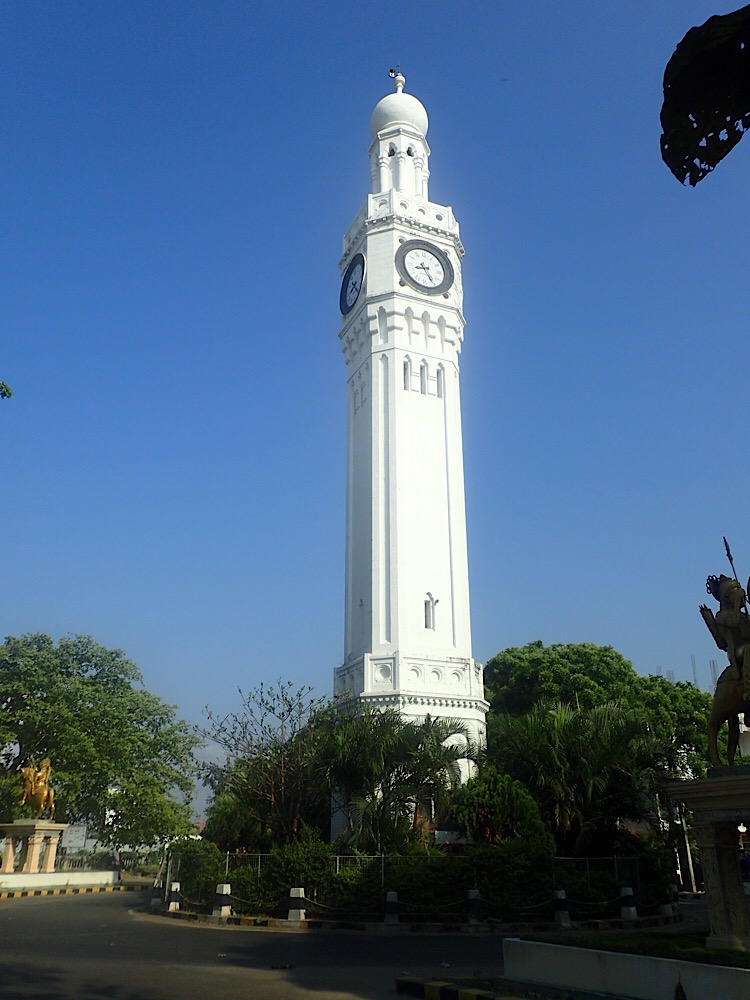
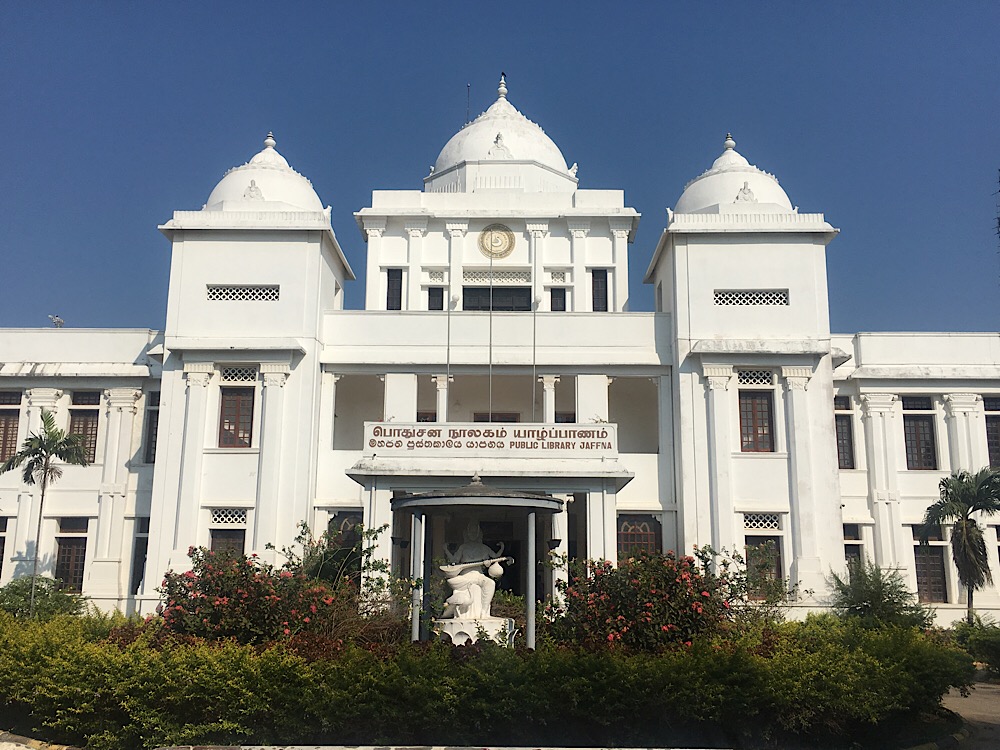
We did an excellent tour of the city by bicycle with our guide Mohan (who despite first impression was exceptionally knowledgeable and a fantastic person to show us around the city). We set off early but the dab-o-meter (the measure of how much we were sweating – 0 being a drought, 10 being a monsoon) was already off the scale. Our first stop was a picturesque white clock tower with a minaret style top – which was originally built in 1875 to honour a visit from the Prince of Wales, it was heavily damaged in fighting and the current PoW Prince Charles replaced the clocks within in 2000. We then cycled onto the Jaffna Public Library which was burnt down by Pro-Government rebels in 1981 and was a major factor in the build up to the civil war. The fire didn’t do much damage to the white Neo-Mughal building structurally but destroyed ancient Tamil scriptures and artifacts. The act was horrific and destroyed a large part of the physical history of Tamil people – exactly the objective of the perpetrators.
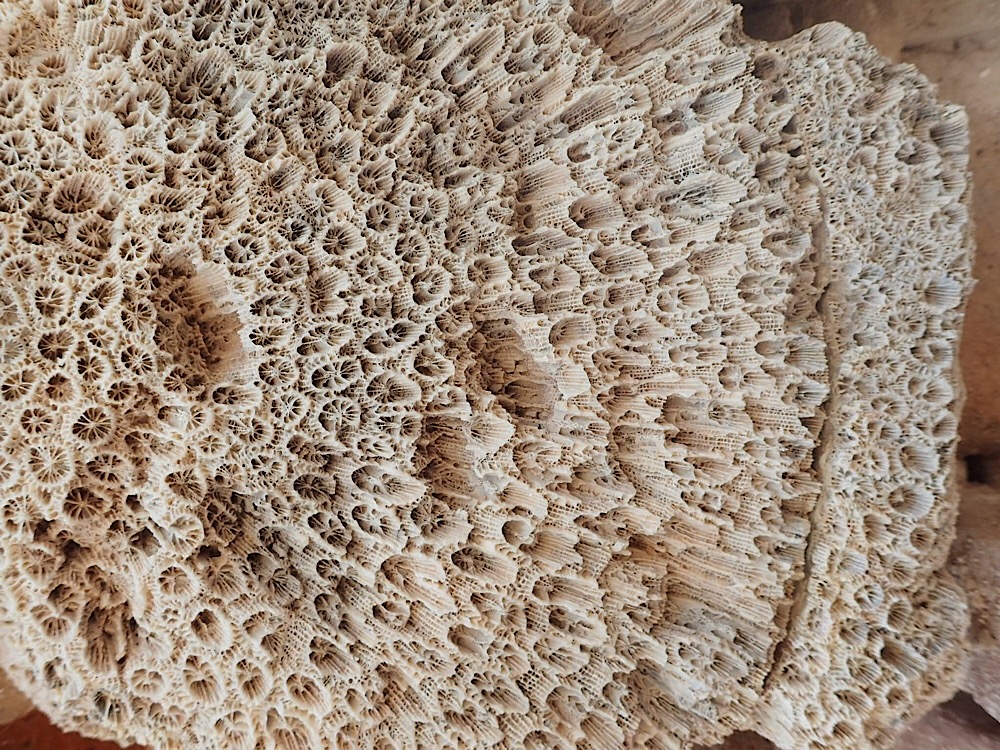
Next up: Jaffna’s impressive Fort. Once we’d wiped the sweat out of our eyes we had a good look around the huge Fort which is right on the coast – way back when it was originally a Sri Lankan religious site then the Portuguese Colonialists built the structure over the top, then in 1680 the Dutch built over that (sound familiar?) then various groups and colonialists fought over it right up until the 1990s when government forces and the LTTE battled it out there, unsurprisingly lots of it is destroyed but you can still see the walls, moats and some of the former buildings inside the Fort. The walls are a combination of limestone and coral bricks which have awesome coral features and patterns in them.
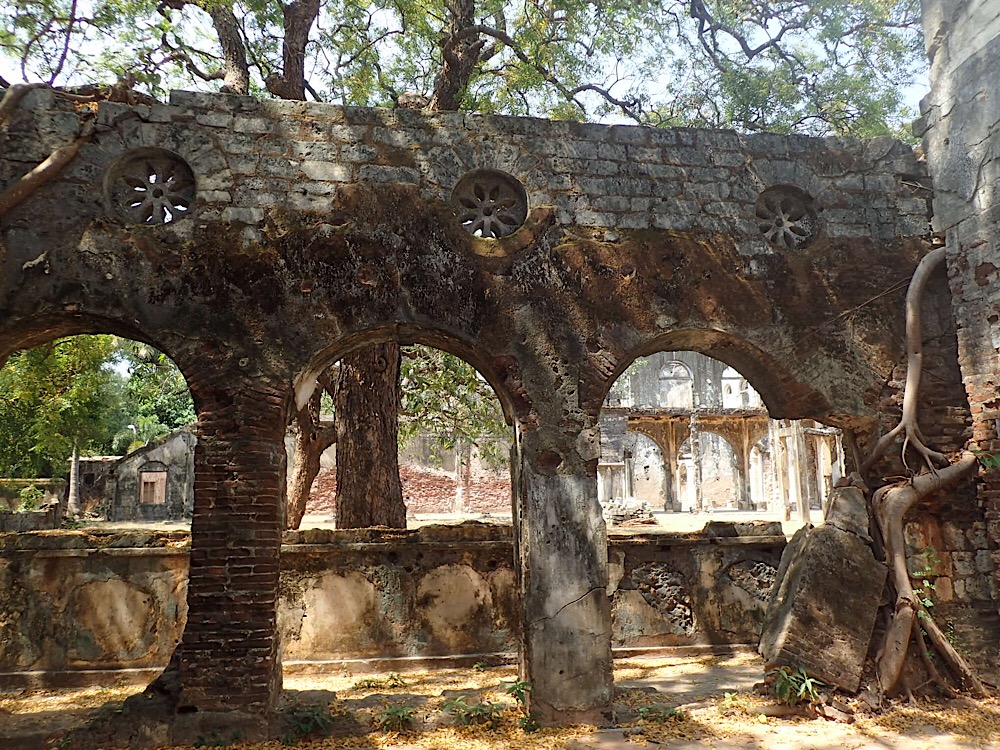
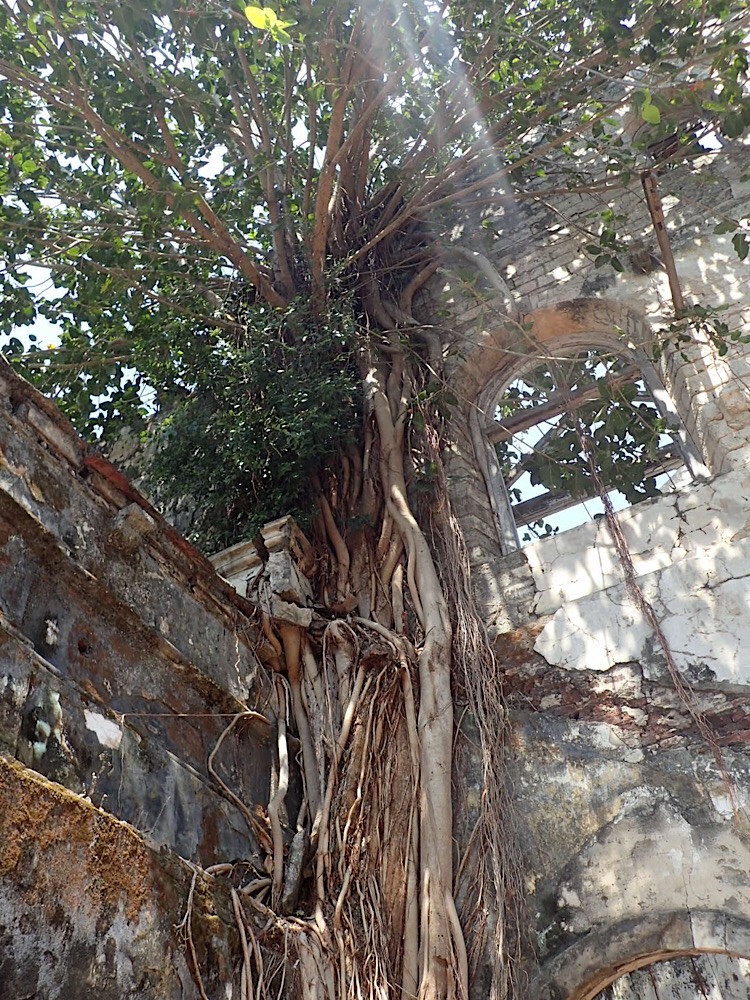
By this point we really were sweating profusely and weren’t that interested in a huge Catholic cathedral built by the Portuguese during their ‘convert to Catholicism or we’ll execute you’ phase. The ruined remains (due to the war) of a British Colonial-era Government office set in the grounds of the Old Park was really interesting, it was obviously once a seriously impressive building with curved walls, huge archways and a garden area in the centre. Now it’s being gradually engulfed by nature, the structure taken over by vines that are growing around and into the building, with eagles soaring overhead and lizards zipping around it was certainly one of my favourite parts of the tour. We had noticed there were no monkeys in Jaffna – unlike many other Sri Lankan cities – Mohan suggested this was because they’d all buggered off during the war with the humans and never come back. The final stop on the tour was Nallur Kandaswamy Kovil: a larger than life temple with towering god-encrusted gopuran (gateway towers). We timed it so we were there just ahead of noon prayers which involved going around to different points in the inner sanctum saying prayers and making offerings to different deities. It was a brilliant way to see the city and we learnt so much. We also got our first sighting of an automated ceremonial drum machine which is a big metal box with drums and bells that’s hooked up to a mic and beats out the call to prayer automatically. Awesome bit of kit.
A restaurant called Cosy’s (which we visited twice for dinner) is officially where Fred’s love affair with Chicken Tikka started. Cosy’s is a great little place that has an outdoor courtyard with views of the kitchen and outdoor Tandoor oven – we had some of the best and tastiest food of our trip so far there, delicious flaky and buttery Tandoori Paratha, a perfectly tender and spicy Jaffna special fish curry and the star of the show Fred’s Chicken Tikka – video report below:
This is also the official start of the world Chicken Tandoor-nament – whereby Fred embarks on tasting and rating as many Chicken Tikka dishes as he can whilst in SL and India. Stay tuned for Tandoor-nament updates.
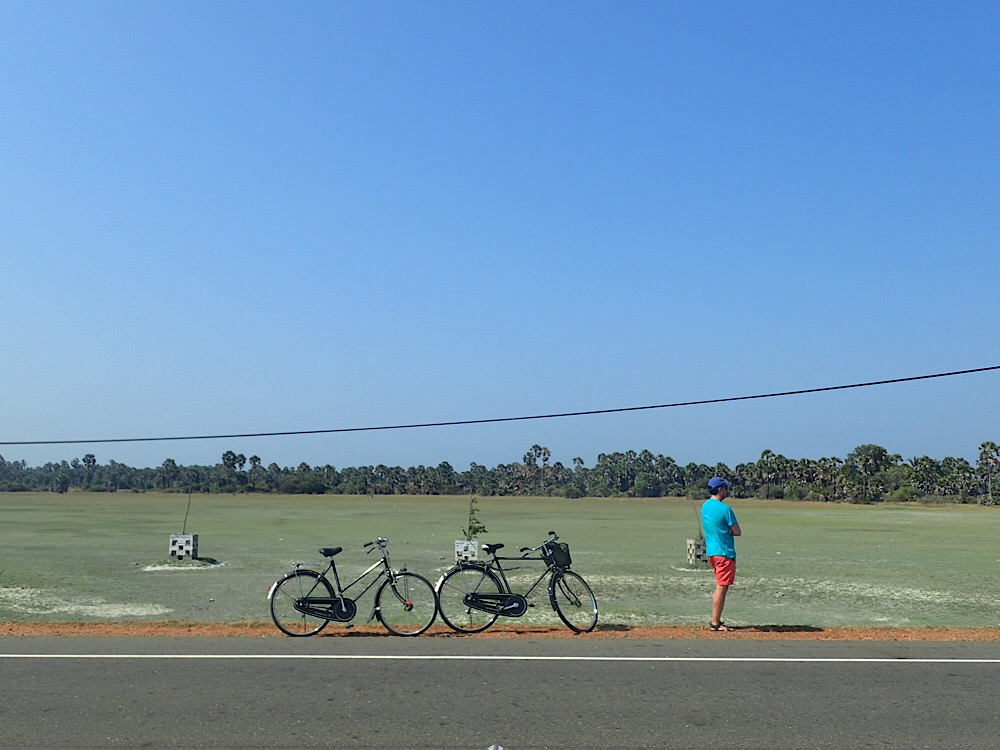
On our final day in Jaffna we decided to explore the peninsular comprising a scattering of islands joined to the mainland by causeways and ferries, jutting out into the Palk Strait off the Northwest of Sri Lanka – they are very remote and are supposed to have some beautiful beaches so we valiantly set off on our bone-rattler bikes to visit Chaatty Beach which was a long but manageable distance from where we were staying. When I say long it would’ve been around eight miles each way. However when we arrived Chaatty Beach after a hefty hot cycle over a mega causeway and seemingly deserted wetlands on one long road with only a few birds and the occasional cow or bus for company (dab-o-meter firmly at 7.5 the whole way, with a breeze), we decided it wasn’t up to our beach perfection standards. This left us in a bit of a predicament given that we’d already cycled eight miles and there weren’t any other beaches for quite some distance. But we summoned our sense of adventure and energy and pressed on aiming for a beach on another island.
We cycled the length of the island aiming for a beach that had had rave reviews – catching a ‘ferry’ (essentially a floating pontoon with a boat engine attached) which putt putted us and a handful of Sri Lankan’s across the short stretch of water separating us from neighbouring Karaitivu Island.
(I should mention that throughout the entire day we only saw two other tourists – two Russian guys who certainly hadn’t been as stupid to cycle there on crap bikes in 30+ degree heat).
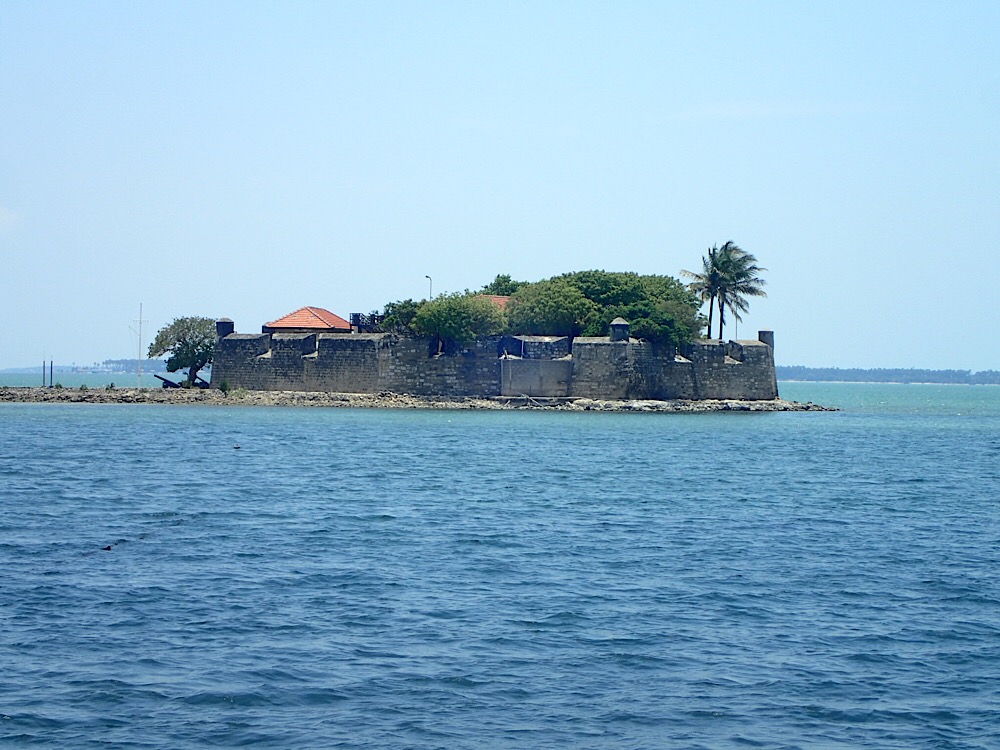
Anyway once we’d disembarked the ‘ferry’ onto Karaitivu we headed to Fort Hanmenhiel a small Portuguese-built bastion that now serves as a Sri Lankan Navy Butlin’s Style Holiday resort. Obviously we were the only people there! It felt like proper end-of-the-world vibes, it was so still and quiet that the only noise came from the birds and a few fish splashing around in the water. In other circumstances it may have been a bit creepy but the cold water, beer, food and a rest were very welcome.
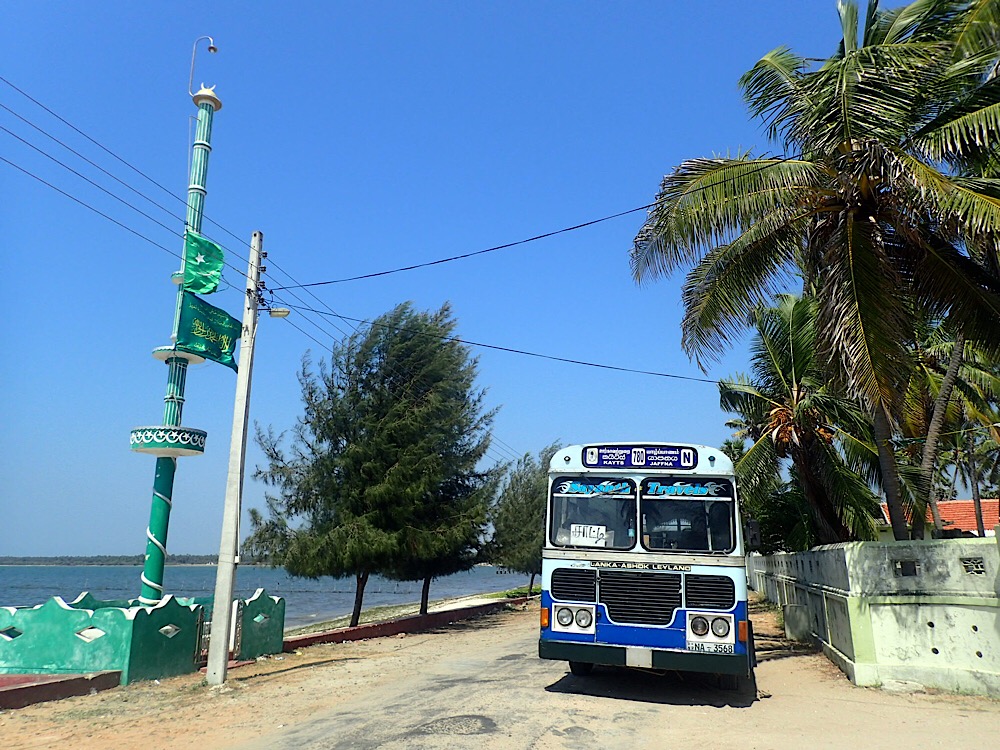
But, our epic tour of the Jaffna Peninsula wasn’t over yet, by this point it was around 1pm and seriously hot – we forged on, cycling the length of the island along a single and thankfully pretty well surfaced rad – past palm trees, tiny villages, derelict houses and perplexed Sri Lankans. I can’t stress just how remote these islands are, each being home to a few thousand people and clearly very rarely receiving any white tourists – it’s a lovely feeling to be so far away from it all. Still everyone we passed although initially eyeing us with slight suspicion (or perhaps just confusion) immediately returned our smiles with their own beaming smiles or a nod and hello!
We finally made it to Casuarina Beach – a lovely sandy spot just out from the pine forest and had a much needed ice cream and swim in the bath temperature water. But we couldn’t stop for long since we had an epic cycle home (around 14 miles). The journey home was just as hot and bloody bumpy in parts, we somehow both avoided a sense of humour failure and just kept going – we joined the mainland by another causeway, the shallow water on one side strewn with fishing nets and wooden traps and cycled through miles and miles of farmland until we reached the outskirts of Jaffna and finally made it back to our hotel filthy, sweaty, with sore arses and knackered! When we worked it out we’d accidentally managed to cycle 40miles!
Ancient Anuradhapura:
From Jaffna our penultimate stop in Sri Lanka was Anuradhapura – we almost missed our stop since there are no announcements on the train and unhelpfully the station signs face down the platform rather than outwards to the arriving train, making it useful to precisely no one, unless someone waiting on the platform momentarily develops amnesia and forgets where they are. Classic. Anyway somehow we miraculously managed to get ourselves and all our stuff off at the last minute.
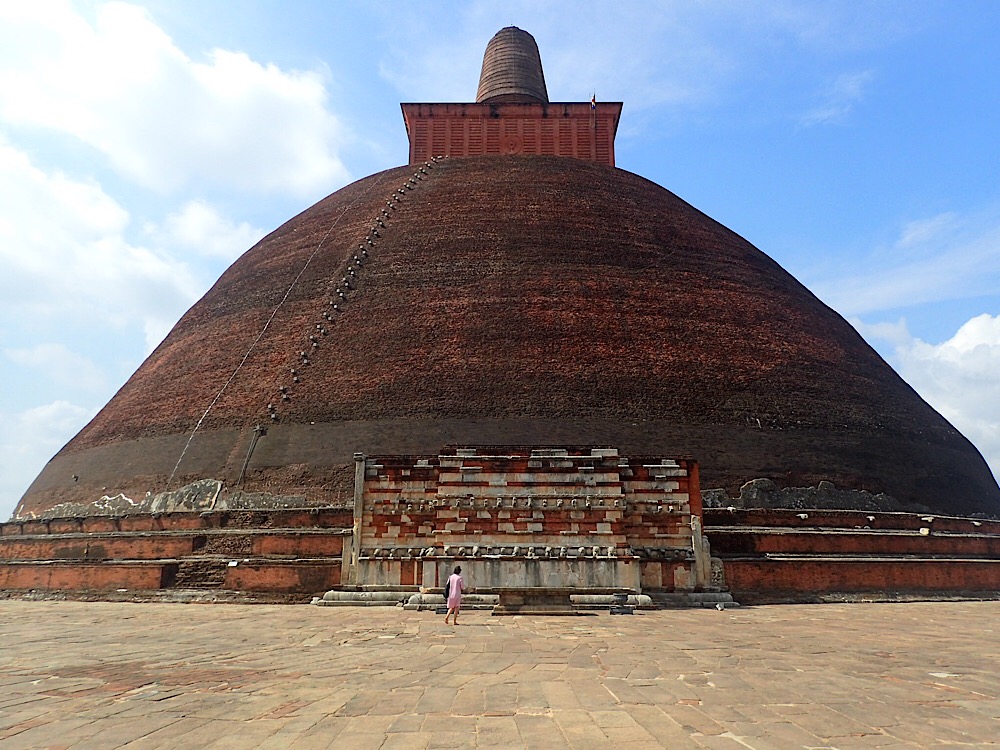
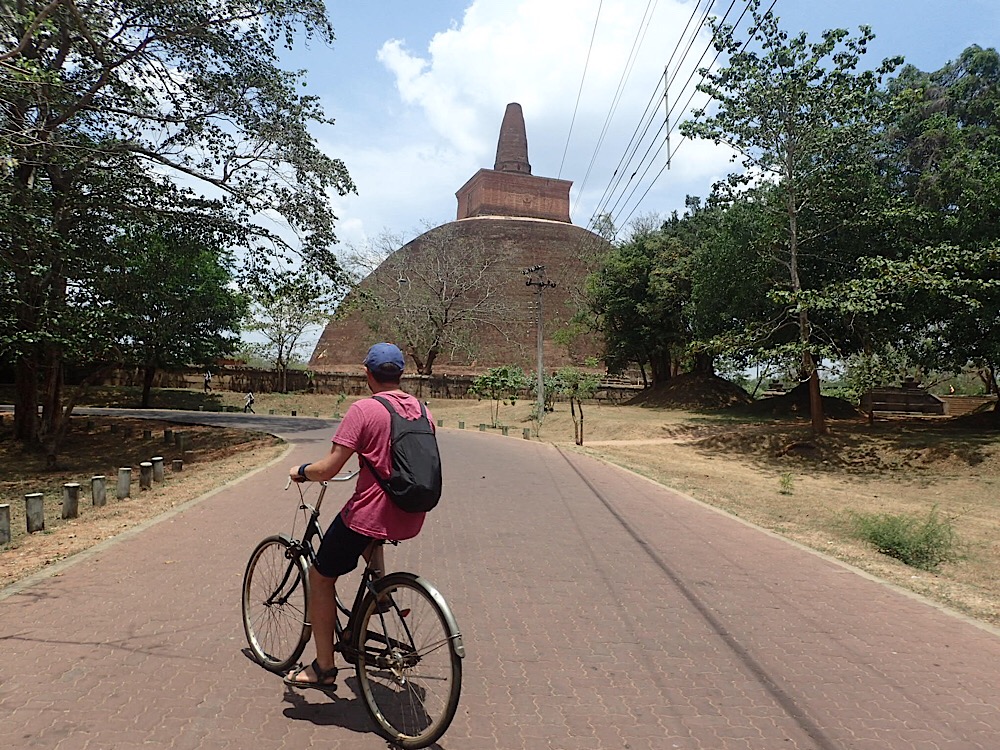
There have been lots of occasions where we’ve felt like the only tourists (or one of a handful of foreigners) and Anuradhapura was no exception despite being a UNESCO World Heritage site. We borrowed bikes from our guesthouse and set out after a lovely breakfast overlooking some rice paddies to explore the ancient ruins and temples of the city. Anuradhapura was the first capital of Sri Lanka and is said to be where Buddhism was introduced to the country, its ancient wonders encompass 2000 year old temples, water tanks and Dagobas that are all spread across a large forested area. We started at Jatavanarama Dagoba (a Dagoba is a solid hemisphere with a spire on top that’s part of a Buddhist temple complex). They are so visually pleasing and you spot them everywhere in S/L but these ones were next level. This one was built in the 3rd Century which means it’s around 1800 years old and originally reached a heady 120 metres which made it the 3rd tallest building in the world at that point (just behind the Egyptian Pyramids) today it’s still an impressive 70 metres and made of 93 million bricks!
As Fred mentioned in the previous blog it’s customary to remove your shoes and cover your legs/shoulders before entering a Hindu or Buddhist temple. Usually this doesn’t pose a problem given most temples are indoors but A/pura is different because they are ancient archeological sites – to say the stone underfoot is hot is an understatement, it’s bloody scorching. Ruvanvelisaya is another temple Dagoba in the complex, a shining white 55 metre high structure, which had lots of people praying around the perimeter with designated areas for offerings of fresh flowers (signifying the temporary existence of natural life and mortality). We arrived here around 11am and despite the AstroTurf(?) and coir matting in places it was a real toe toasting, sole sizzling, heel heating, instep immolating experience… we were cats on the proverbial tin roof.
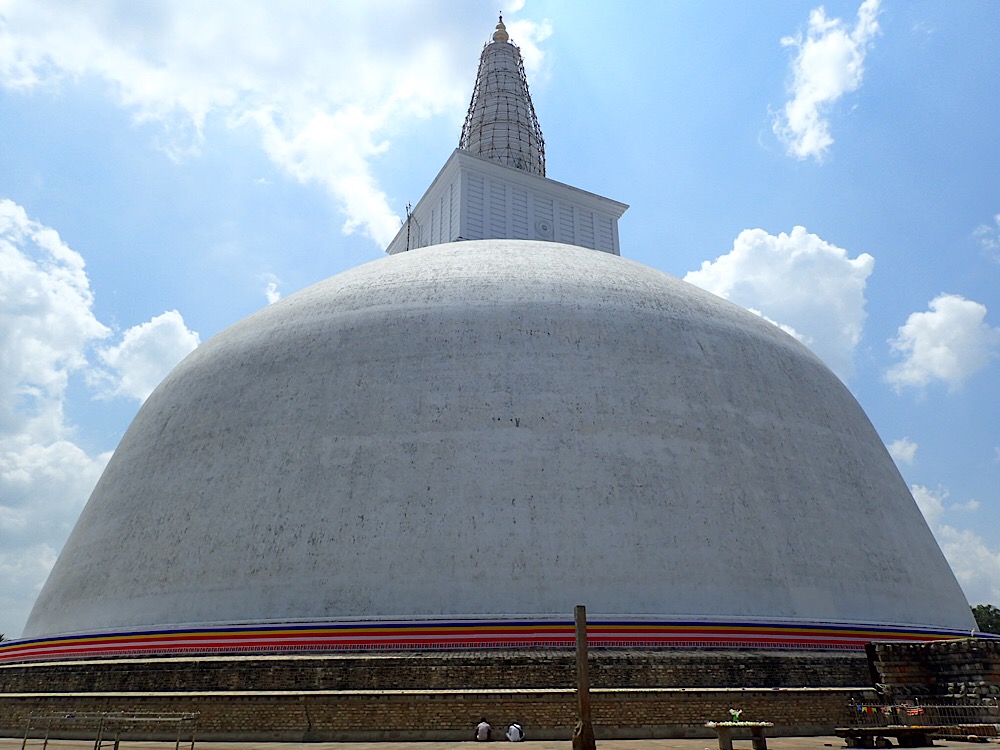
There were more amazing ancient temples and ruins throughout the forest which we explored by bike including Sri Maha Bhodi, a scared tree that’s said to be the oldest historically authenticated tree in the world – with guardians having looked after it for the last 2000 years. It’s set in a serene white walled complex – surrounded by lots of colourful prayer flags fluttering in the breeze, it was a really peaceful setting with lots of tuneful birdsong in the background. We really ramped up the traveller vibes with another cotton bracelet applied by a real life holy man (for a small donation to the temple of course).
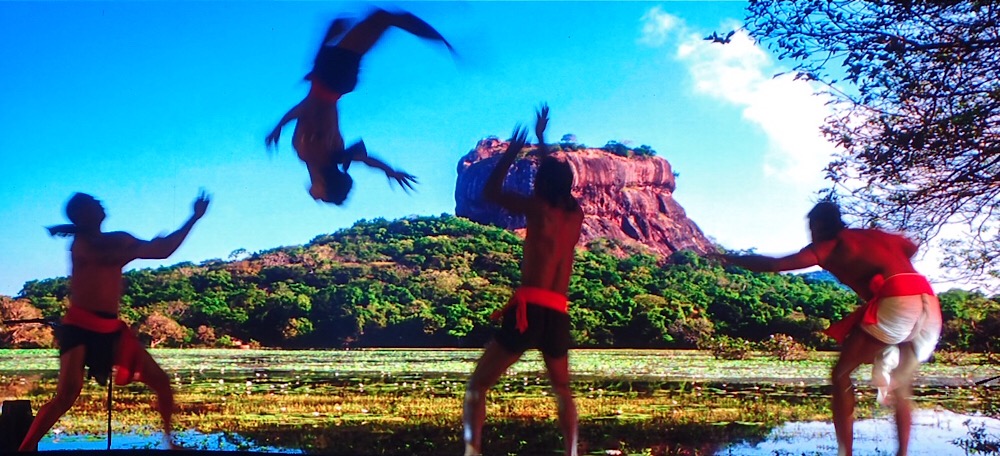
That night we were treated to an exclusive audience with the Sri Lankan Navy’s National Angampora display team (no us neither…) organised very kindly by our guesthouse owner who’d hooked us up with his mate Air Warrant Officer Sanereake. It turns our Angampora is a celebration of ancient S/L fighting techniques, martial arts and self defence and we had front row seats as guests of honour along with the families of S/L Naval Officers and other local dignitaries. The practice of Angampora was banned by British colonising forces when it was discovered as it was considered a threat to British law and order. In some places it was disguised as a dance that included religious stories acted out in elaborate dress and colourful masks. The S/L Navy is single-handedly bringing back the ancient tradition by adding it to their training curriculum with their performing troupe even appearing on ‘Sri Lanka’s Got Talent!’ The performance was awesome – a combination of dancing, drumming, singing, acrobatics and awesome martial art/Bruce Lee style fighting, hand to hand as well as with sticks, swords, axes and shields. The hectic finale included one guy smashing open a coconut with a machete that was resting on another guy’s neck! It was a brilliant insight into the ancient history of the country and something we’d never have had the chance to go along to had it not been for the kindness and hospitality of our hotel owner (and insistent nature – we didn’t really have a choice!) This scenario demonstrated the consistent hospitality we’d experienced all over the beautiful country that’s full of smiles, people who actively want to help you find your way and have an enormously welcoming attitude.
As I write this it’s a couple of weeks after the tragic terrorist incidents that happened across S/L over the Easter weekend. It’s so sad that this has just happened in a country that’s only recently come out of such a long period of war and unrest and that’s still recovering. It is such a beautiful place with it’s colourful temples, towns, unspoilt picture perfect beaches, dense jungle/forest and super welcoming people – I urge anyone who has never visited to not let this put you off. I can’t recommend Sri Lanka highly enough – it’s a truly magical place to explore.
Our time in S/L was coming to an end and after a couple of days in a beach resort we were headed to Colombo for our flight to India. We’d had a lush first four weeks, we are still getting on like a house on fire and with no major tummy upsets! S/L was even more beautiful and exotic than the first time round.
Feeling extremely fortunate that we are on this mega adventure and can’t wait to see, taste and experience more!

 Frabby’s Indo-Afric Tropical Express