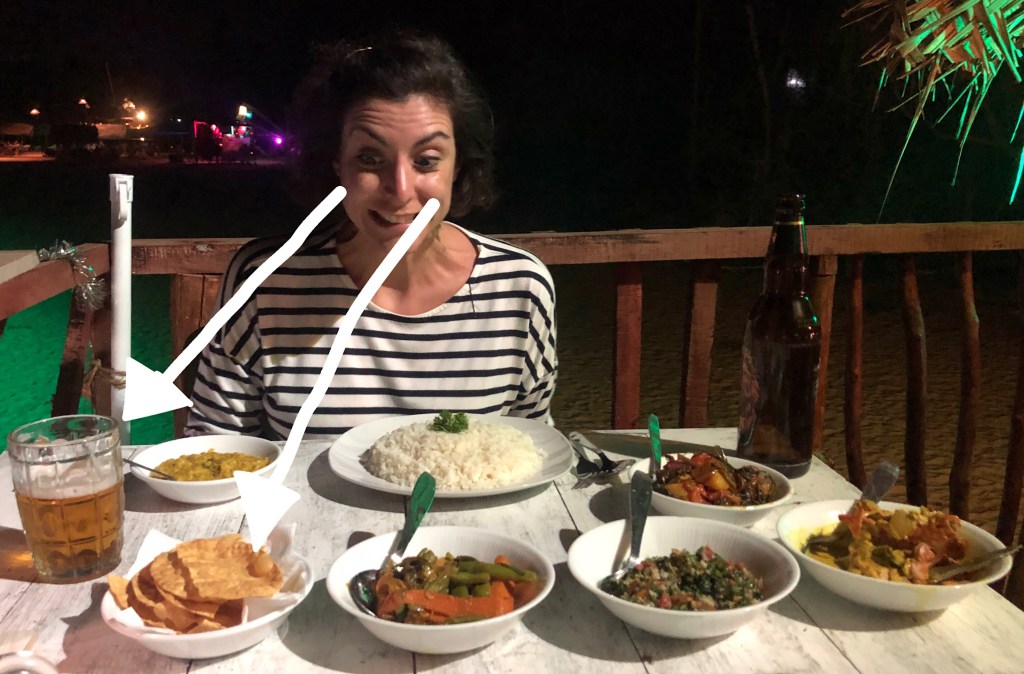
“If I was a Superhero, poppadoms would be my kryptonite”
How we laughed, how we cried! Following a brilliant farewell pub send-off and a resplendent Arsenal victory over Man U, we finally put our money where our mouth was and Brexited to our first stop, Talalla on the south coast of Sri Lanka. Despite spending nearly 13 hours of flight time catching flies, Peahead arrived ravenously hungry, as did I, and we immediately set about decimating a curry. It was at this point that Peahead revealed the golden insight above as to her real weakness – should make “date nights” a bit cheaper.
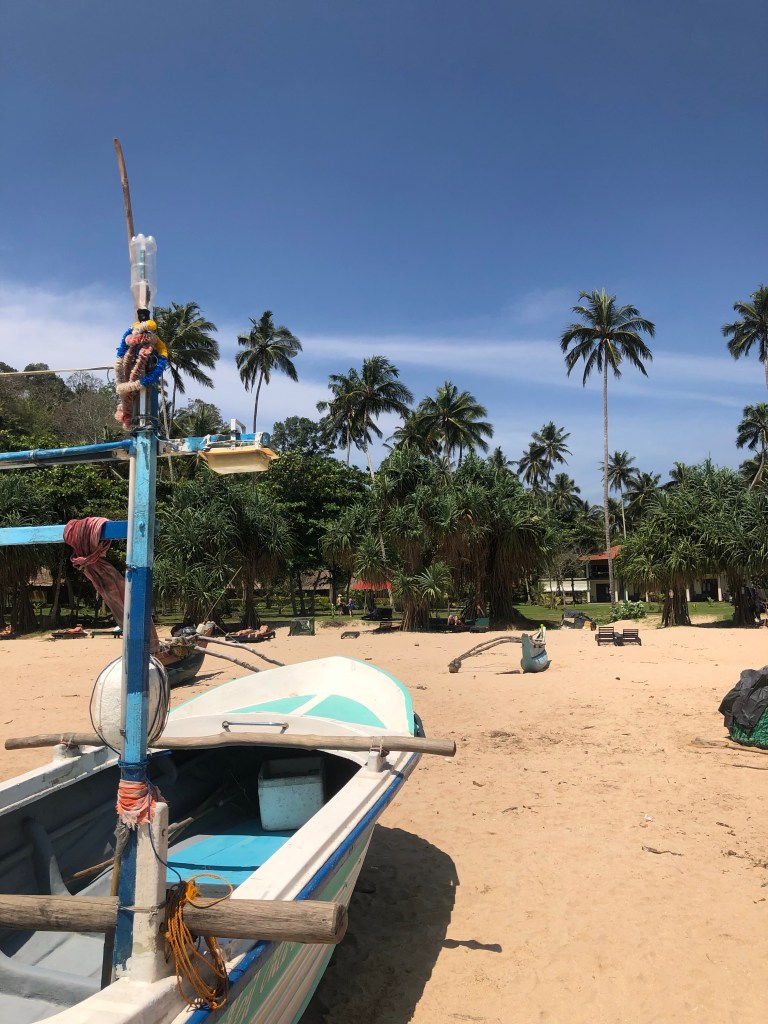
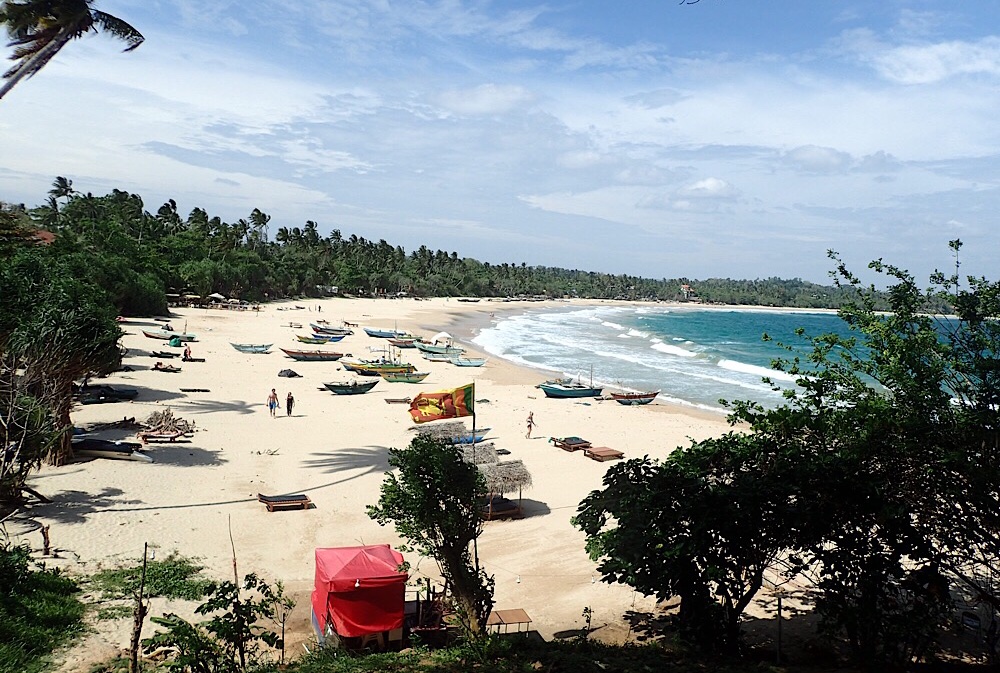
Talalla is a quiet, palm-fringed curve of golden sand near the town of Matara (around a 3.5hr drive from Colombo), nestled in amongst the booming, ever-expanding tourist resorts of the South but, by contrast, is almost completely undeveloped. With its warm, turquoise waters and nothing but a clutch of fishing boats scattered across the beach, it’s a picture-postcard view of a tropical Indian Ocean cove. We knew all of this because we came here on our previous trip to Sri Lanka in 2012 and loved it – it’s beautiful, there’s not much to do because there’s not much there and that was fine by us for our first stop as we looked to get our bearings and our heads around the fact that we were going to be away for six months.
As before, we stayed at Talalla Retreat. Back in 2012, we were blown away by this place – an idyllic set of well-finished, open-sided two up-two down bedroom blocks centred around a refreshingly cool swimming pool set amongst lush tropical forest, complete with monkeys, palm squirrels and all manner of birdsong. Owing to the open sides, you showered in an open air bathroom under the palms and as you lay in bed, you could look up at the stars – lush. Fast-forward to 2019, it had expanded somewhat with more bedroom blocks, including some cheaper options further out from the centre where yours truly settled down for six nights. Despite this, Talalla Retreat remained an extremely pleasant and relaxing place to hole ourselves away for our first week.
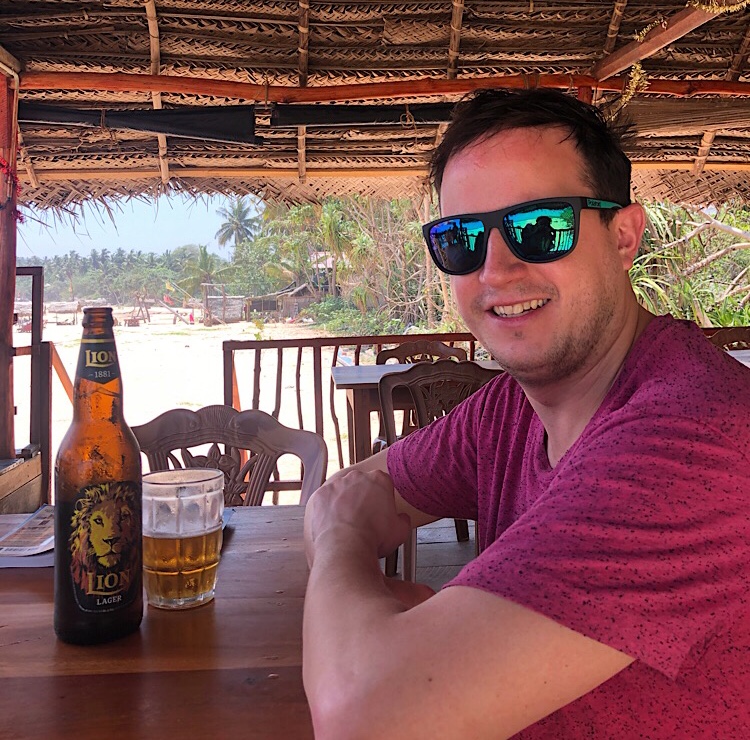
One other change we noticed was that yoga had now become the main event here, and after a day or two of furiously inhaling poppadoms, the deliciously refrescante Lion Lager and intense Bananagrams battles, we decided to get physical, taking daily Pilates and yoga classes for the rest of our stay – ticking off our first backpacker cliché along the way. And it was really good, despite some low-level initial cynicism on my part. Good to get into doing some daily exercise – a commitment we’ve made for the six months – and great to find new ways of exercising, with it being much more physically intensive than I expected.
The meditative/“spiritual” side was also edifying for the most part, especially when sessions were led by an intriguing Kiwi character (maybe Aussie… splitting hairs) who became known as “Brother Blau”. At once a caricature of himself as a zen, blissed-out spiritualist strumming a guitar along the traveller circuit, and yet also incredibly knowledgeable, persuasive, even inspirational at points. Initially mocked by the Peahead for his acoustic rendition of “Brown Sugar” at breakfast on our first day, we soon fell under his spell and levitated out of the shala full of love, harmony and decrying individualistic western constructs.
Having re-aligned our chakras, [in between more Lion Lagers and increasingly fierce bananagrams], we tried our hand at Sri Lankan cookery – cooking courses in each country being another objective for our trip. Our teacher was Nisha, a local lady in her late 30s/early 40s who took us into her kitchen and got us to knock out four curries in around 30 minutes: prawn, okra, pumpkin and tuna fish. As expected, the ingredients were market-fresh and included a number of delicate spices, with fresh curry leaves by the dozen, turmeric and garam masala featuring prominently. What was more surprising was the use of “mustard cream” – a hybrid between Dijon, wholegrain, mayo and American yellow mustard – out of a pot. Mustard is an important flavour in local cooking and this felt like a shortcut for the purpose of our lesson.
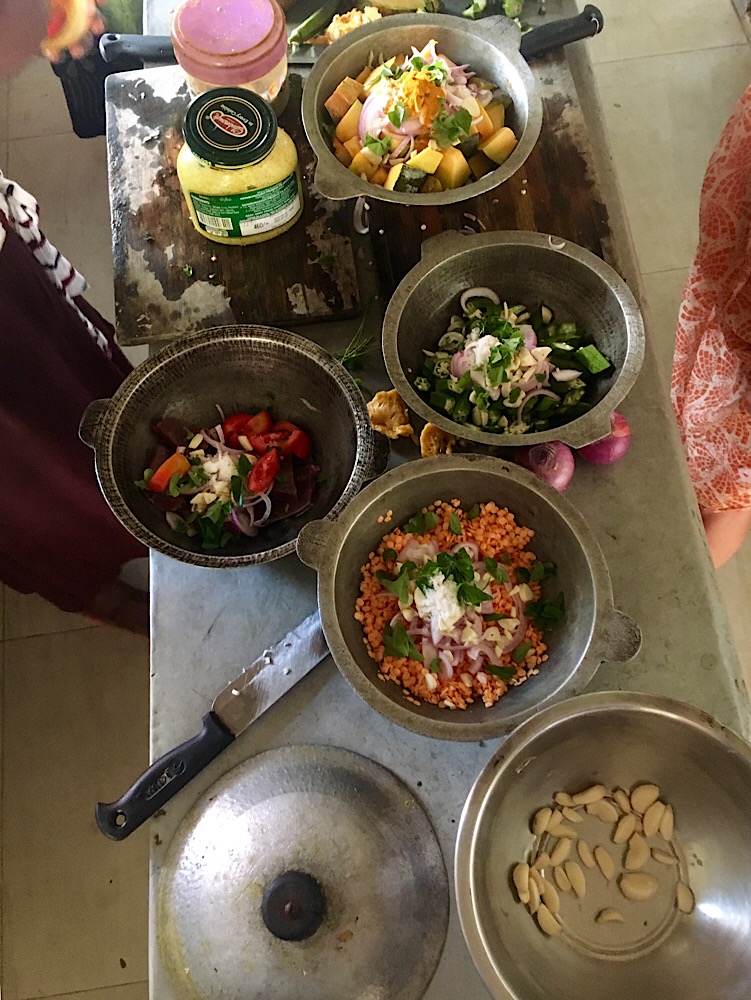
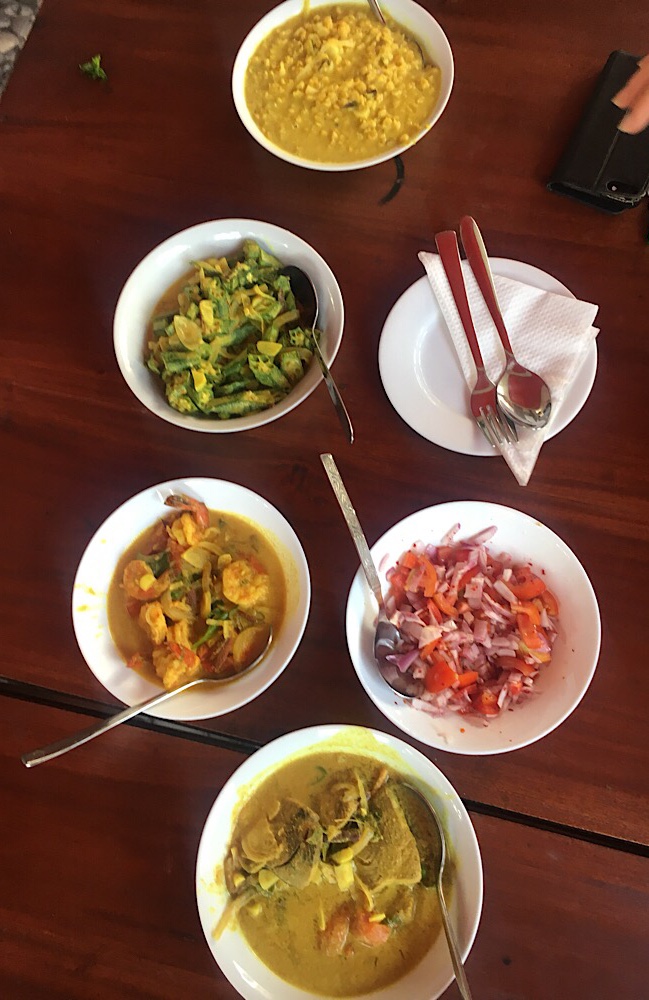
More interesting was the lack of any cooking oil. Nisha just chucks it all in a hot pan, covers it and cooks on a gas burner, adding a little watered-down coconut milk as it goes, before finishing the curry with a thicker coconut cream more like what we use out of a tin back home. The outcome is a pleasingly grease-free, tropical-tasting dish and that combination of curry leaves, coconut (and kaffir lime leaves) really gives a distinctively Sri Lankan flavour. It was a fun experience and we certainly learned a few things, especially on not cooking with oil. There were clearly a few shortcuts taken for the purposes of a short cooking lesson and so we’d like to test out marinating the food for longer and also adding more heat (Nisha told us at the end that she’d dumbed down the chilli for us philistine westerners, and we now ask for “Sri Lankan style” when eating out as a result).
That pretty much brought the curtain down on Talalla for us as we forayed into the hills the next morning. Bouncing around in the back of a Toyota Hi-Ace for 6.5 hours, we reflected on a sunny first week, where, in different ways, we had at once got more than, less than and exactly what we had expected. Talalla was the same blissful place we’d known from years before, we’d made new discoveries as to Pilates and yoga in particular, yet the hotel seemed to have lost some of its sheen. It had switched from being a relaxing bolt-hole where you could do some yoga if you wanted to, to being a yoga retreat where you could opt out of the yoga and kick back and have a normal holiday, if you wanted to. This meant big groups on week-long courses, buffet dinners in the evening and generally gave a slightly timetabled, resorty feel at points. It is nonetheless a very special place to stay, especially if you can stay in the nicer rooms, and we were glad we came. We’d still heartily recommend it for a few days for anyone on a shorter holiday.
In pursuit of enlightenment
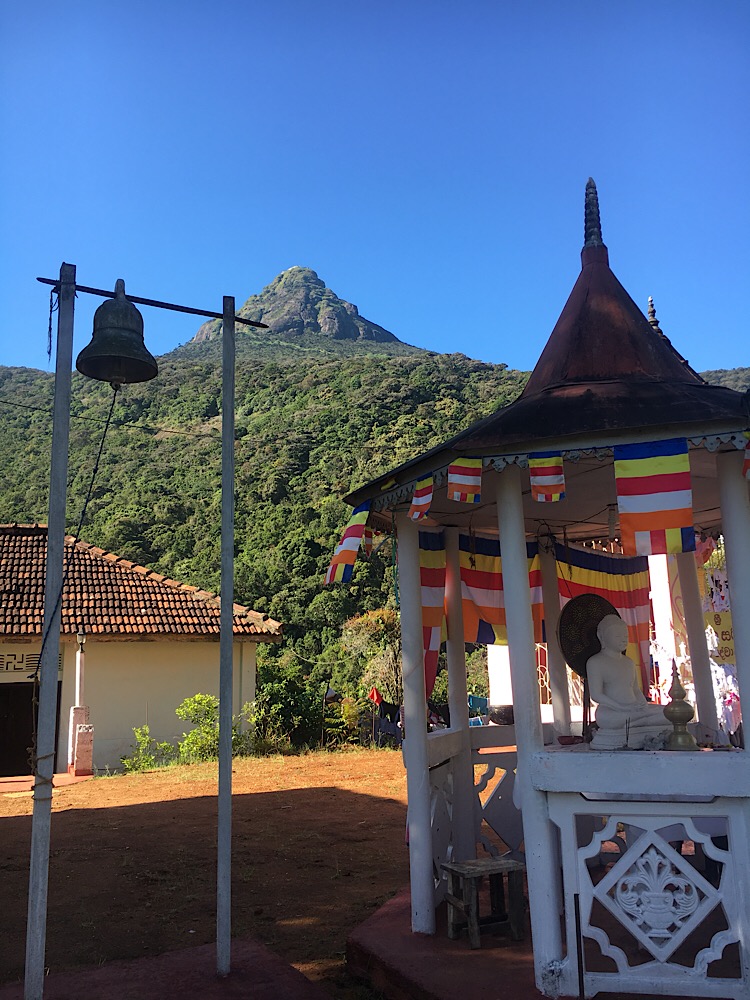
Our next engagement was to climb Sri Pada, aka Adam’s Peak – a holy mountain in the southern hill country, around 70 miles north of Talalla. Various religions attach significance to this place. It is said that this was where Adam first set foot on earth following expulsion from Eden for various misdemeanours. For Buddhists, this is where the Buddha left earth to enter Paradise and so is the site of mass-pilgrimage.
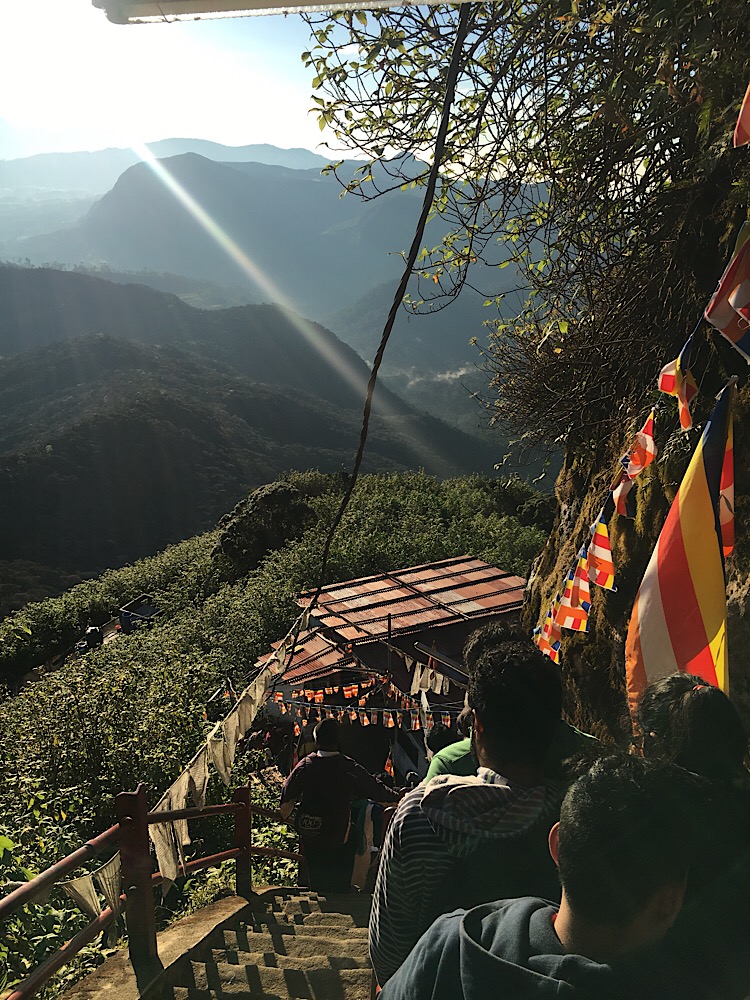
To access it, we weaved through mile upon mile of emerald tea plantations to a listless dust-town called Dalhousie and having settled down for some early shut-eye, we jumped out of bed at 2am to start our ascent in the relative cool of the night. Described as “moderately tough” by the somewhat hit-and-miss Lonely Planet, we soon discovered that the 5000+ steep stone steps were going to pose more of a challenge than we’d bargained for. Powered on by Lemon Puff biscuits and a couple of litres of water, we hauled ourselves up the seemingly endless staircase passing hundreds of locals and tourists along the way. Among these were countless little old Sri Lankan women, which put me and my incessant groaning and sweating into context. There were also strings of tea shops, shrines and stacks of locals sleeping piled on top of each other in shelters having presumably decide to split the climb either side of a fairly average-looking kip.
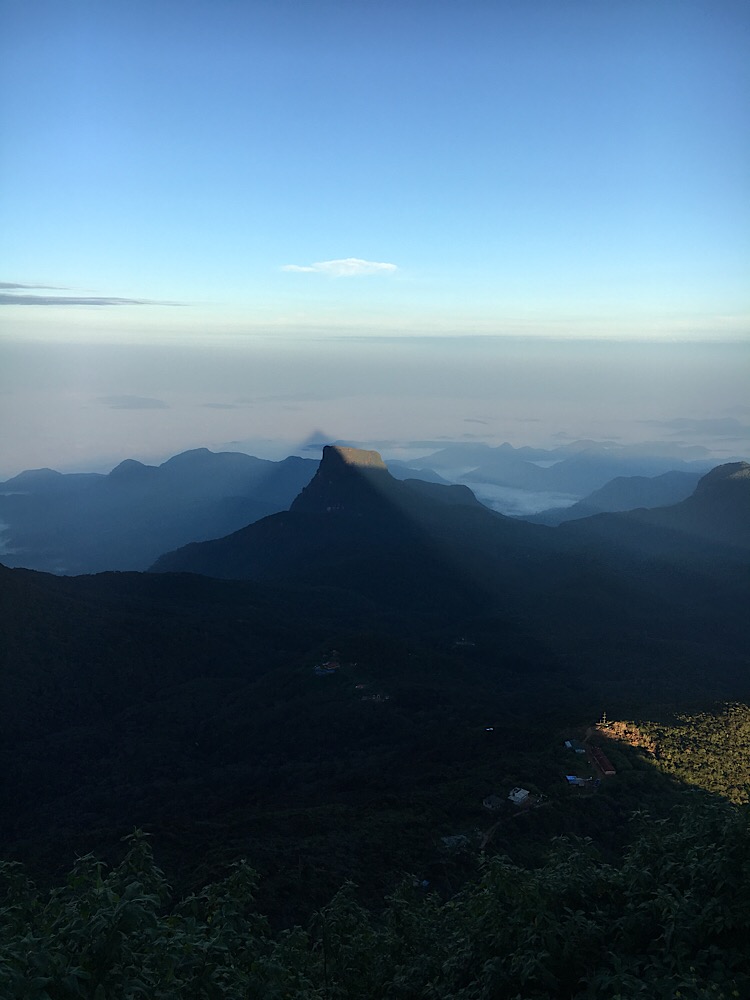
Arriving at the top at around 5am, we took off our shoes as we entered the temple perched on the crest of the hill and huddled together to keep warm as we waited for sun to rise. After an hour, people started jostling around and we found ourselves staring out into the darkness towards the East. Slowly, faint hues of red and orange started to colour the sky before the sun exploded onto the horizon. Cue mass photo-taking and more jostling from the tourists. One Irish chap who clearly knew his onions and had taken up a prime position was rather unfairly criticised for being too tall by some shorter German girls. Still – an otherwise beautiful scene and once the sun had come up further, we could see for miles all the way to Colombo more than 60 miles away and all the way out to sea. Below us the lower mountains in the range were shrouded in cloud, giving the feeling we were floating on a sea of our own. Adam’s Peak has a very pointed top and this results in a giant, mystical pyramidal shadow being projected into the distant clouds as the sun comes up. Add to this the ringing of bells and rituals carried out by the monks at the top and it makes for a really atmospheric, spell-binding experience.
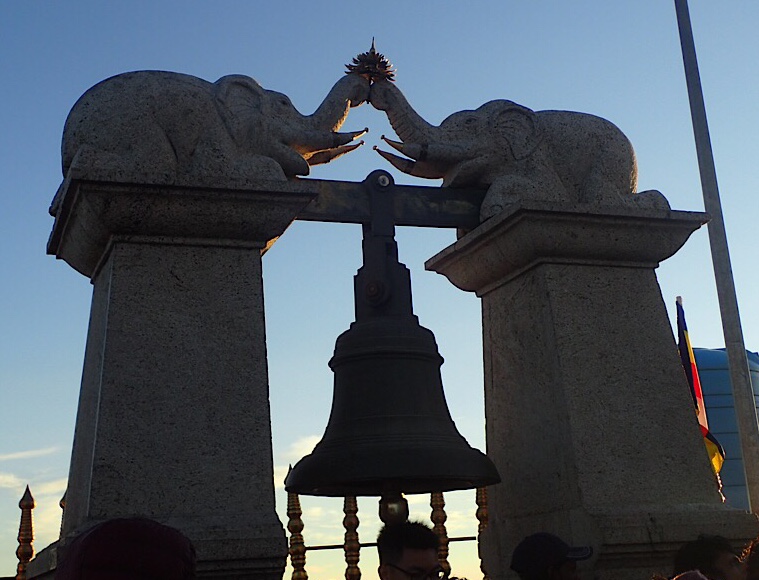
Having upped our karma from climbing up, we soon started to head down in the heat – thankfully much easier, especially upon getting a free foot massage at the bottom from some sales reps who successfully persuade us to purchase the balm they were peddling. Peahead also bought a Buddhist friendship bracelet and may now be Buddhist – it’s hard to tell for sure – but either way, cliché #2 was in the bag.
As far as the eye can tea:
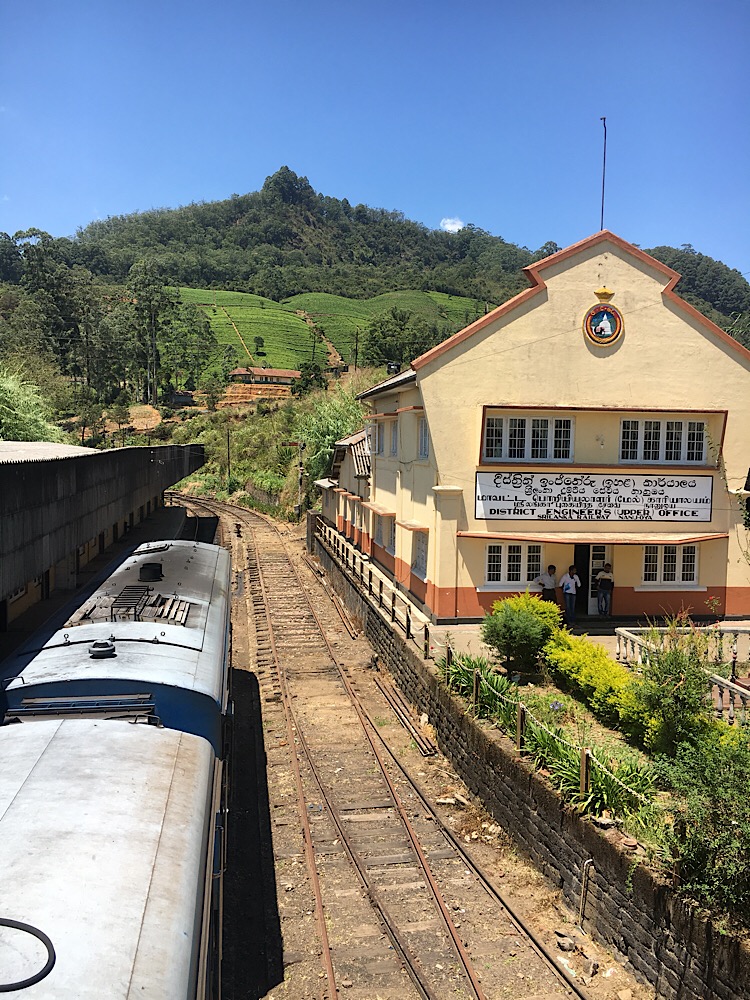
About two hours by train to the East of Adam’s Peak is the town of Nuwara Eliya, nicknamed “Little England” due to its cool, cloudy climate up in the hills combined with its Victorian English village architecture and feel. It is in the heart of tea country and comes complete with red post boxes, a golf course, race course and a number of old school hotels that resemble either Alpine lodges or Faux Tudor manners. Since Gaby is a fervent colonialist and I like a cup of tea, we decided to stop by for a couple of days.
First, though, we needed to take the train. Sri Lanka’s railways were originally installed by the Brits back in the 1800s and it appears no upgrades have taken place ever since, much like National Rail in the UK, which made it comfortingly familiar. Where it does differ, and how, is in terms of scenery. Instead of trudging through innumerable post-Brexit model towns such as Walsall or Newport, you get to rumble across some of the most breath-taking, eye-popping landscapes you are ever like to see, certainly on a train: an endless carpet of bright green tea estates and burnt orange soil, set on dramatic mountain scenery under bright sunny blue skies, pot-marked with remote villages and technicolour temples (mainly Hindu).
The train clings perilously to the cliff edge that the rails were somehow squeezed onto, and with the carriage doors open and it being standing room only, tourists are especially keen to sit in the doorways with their legs dangling down the side of train and the breeze in their hair. Very pleasant, until the train passes a raging trackside bonfire at which point their pins are almost instantaneously incinerated, as very nearly happened to some (Aussies I think – karma in the land of the Buddha?).
Upon arrival, we immediately threw ourselves into ticking off the various colonial sights, including strolling through the rather beautiful golf course, the bizarre and dishevelled Royal Turf Club and their very own Victoria Park before the main event: afternoon tea at The Grand. This hotel is probably what you’d expect: set on its own driveway with lawns and manicured gardens, it is kind of grand with its high ceilings, wood panels and billiards room, but also a bit dated and forced with sort of mock-Tudor architecture and 60s film posters on the wall in the bar. It doesn’t quite come together but the absurdity of it, especially in the middle of Sri Lanka, makes it a fun place to be.
Tea was served and we guttled a tiered cake stand of bite-size treats: smoked salmon and cucumber sandwiches, handmade pastry cups filled with sweet and savoury fillings (crabstick with chilli sauce, or strawberries and cream) and other cakes, washed down with very fine Sri Lankan tea (local Orange Pekoe black tea for Peahead, Superior Ceylon for me). Sri Lanka is the fourth biggest producer of tea but is higher quality and attracts a higher market price than that of its rivals. Taken on its own without milk (or sugar), it is delicate and delicious.
Taking the opportunity to make use of the superior-grade facilities on offer before leaving (a throwback to my student days and the Saturday morning coffee at the Charlotte Street Hotel), we spotted the vintage cocktail lounge and vowed to return the next day.
The following day, after a hike through the tea fields to the pleasant Lover’s Leap waterfall and a nice but fairly unremarkable tour of the Pedro Tea Estate factory (still using Victorian-era machinery), we found ourselves in the 19th Hole pub at the Glendower hotel, whereupon we embarked on a mini-pub crawl from one English-themed hotel pub to the next, taking in an Indian for dinner along the way. Delicious and disgracefully British, but when in Rome…
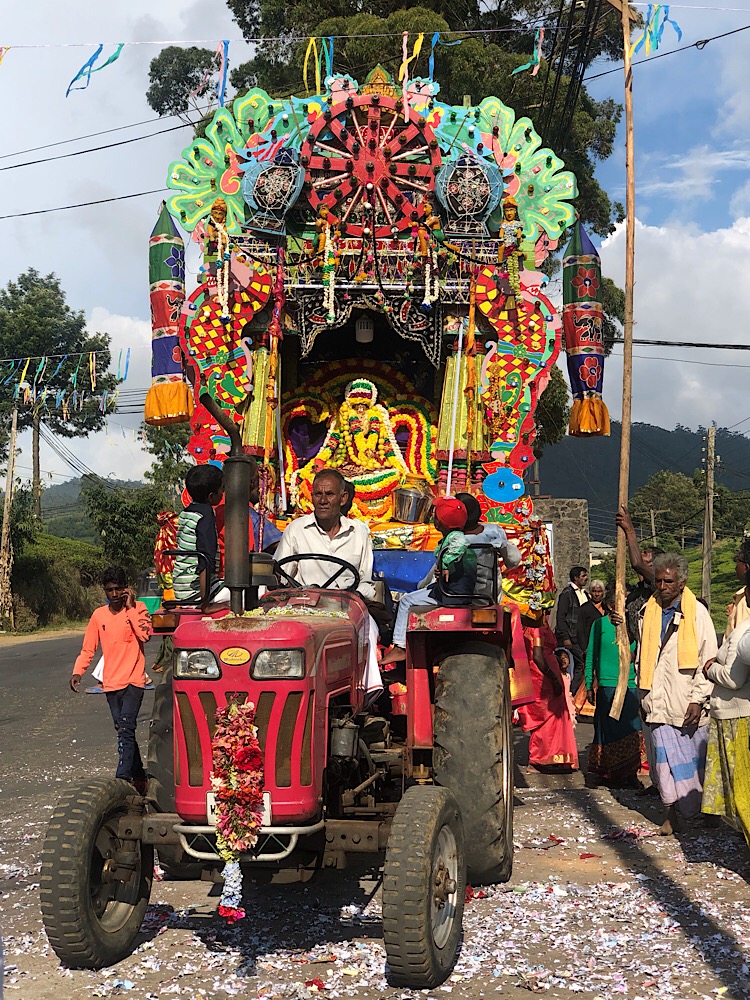
Royal & Ancient: Kandy & Sigirya
Having exhausted all of our colonial options in Nuwara Eliya, it was time to go. We had had fun but frankly much of the original village has been absorbed by the new town, which is fairly dusty and unpleasant, and a lot of the original features and character are now lost. The chocolate box English village we expected isn’t really there to see anymore and I probably wouldn’t go back.
So, we jumped back on the train for four hours, heading northwest to Kandy – Sri Lanka’s second city. To keep Peahead at bay, I invested in a selection of “short eats” at the station. These are hand-sized snacks to be eaten on-the-go (almost the Sri Lankan equivalent of a sandwich). They include samosas, dosas and various other forms of what is essentially potato curry (usually veg) wrapped in roti or pastry. Tasty, cheap and typically Sri Lankan. The fun thing with these is you never know how spicy they are going to be until you take a bite – ranging from a light tickle of chilli to taste-bud tingling.
Eventually we lurched into Kandy and headed straight for the main sight: The Temple of the Sacred Tooth Relic. This is where one of Buddha’s teeth is supposedly kept and it is said that whoever holds the tooth has the power to rule the country. It is a very holy site for Buddhists and Sri Lankan Buddhists are meant to make at least one pilgrimage to here in their lifetimes. Following Gaby’s tabletop-dancing at the 19th Hole, we were also in need of some karmic redemption.
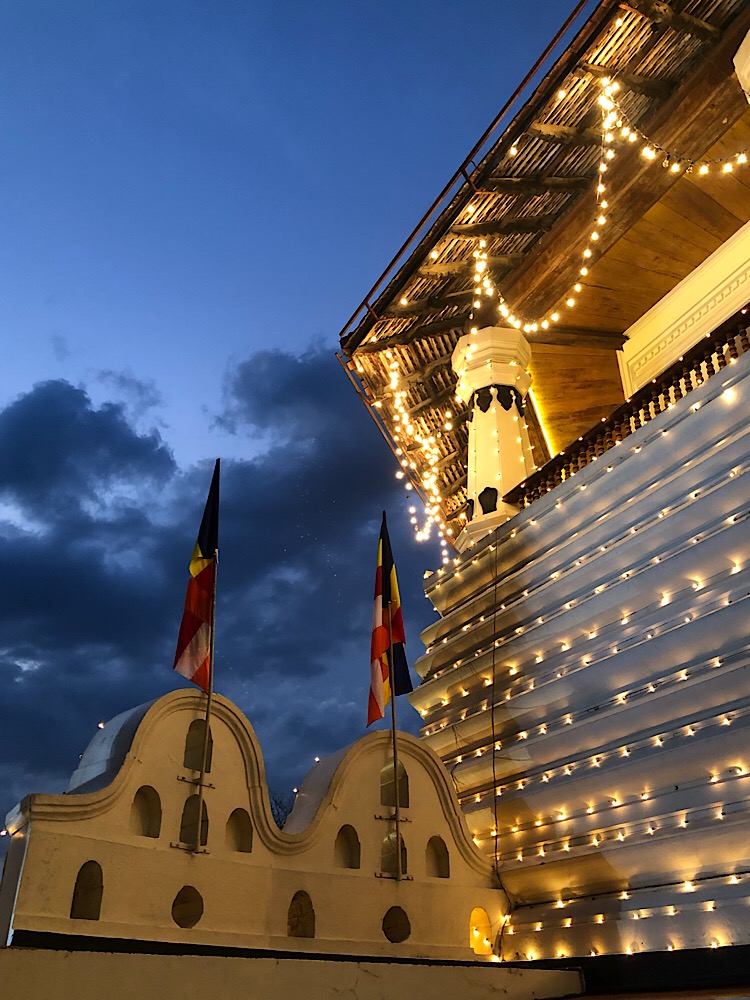
Entering shoeless just before sunset, the temple is an imposing, fortress-like building which is fairly plain and whitewashed on the outside, but beautifully decorated on the inside, with colourful ceramic walls and ceilings, gold and ivory ornaments, natural, unfinished wood and low lighting. The inner temple, where the tooth is kept, is striking with a traditional oriental architecture that is classically associate with a Buddhist temple and a beautiful gold roof donated by Japan. In the outer wings there are gardens and a museum full of donated Buddha statues and other artefacts which was fairly interesting.
All in all, an atmospheric and mystical place which we would have hung around longer in (especially as the Buddha tooth is only viewable at certain points in the day when the monks make an offering) – but the place was rammed with Sri Lankan schoolchildren who were more interested in repeatedly asking our names than in the big man’s gnasher, and with little chance of seeing it ourselves, we left the building. It was now dark and the temple was beautifully lit, while the skies were filled with hundreds of enormous fruit bats, slowly flapping their wings as they menacingly moved above us. It was a nice surprise to walk back out into a completely changed environment and we will make sure to visit more places just before sunset in future.
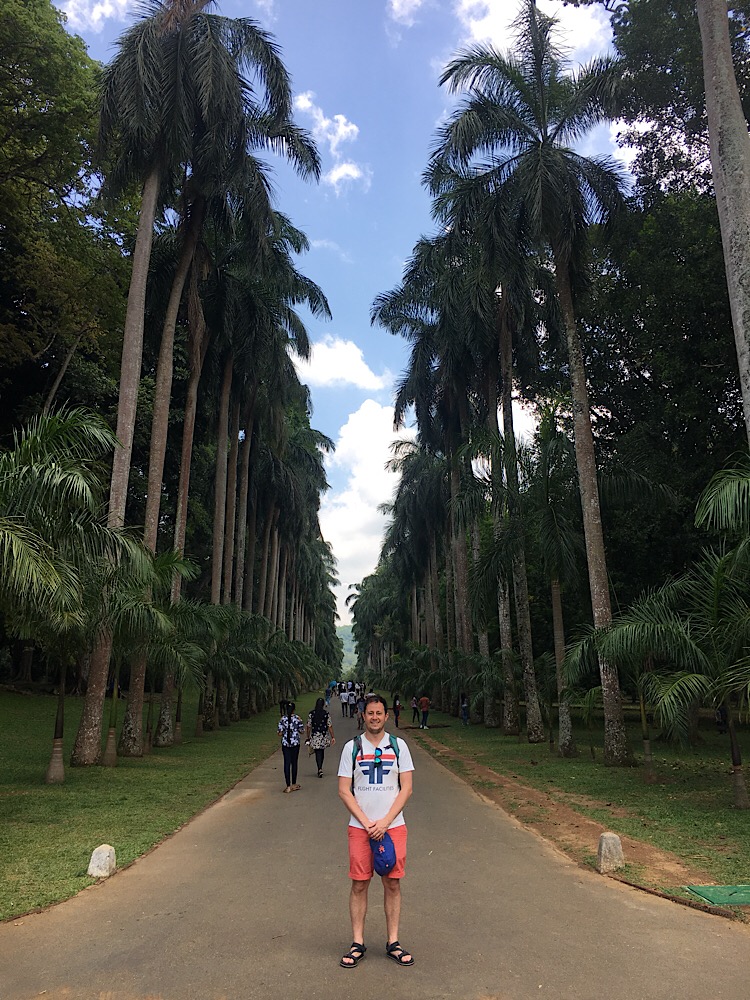
Despite its size, big, bustling Kandy does not have a huge amount of sights and didn’t seem the sort of place to hang out for a few days – so we left the next day, but not before visiting one other very fine spot: the Royal Botanic Gardens. Frankly, Kew Gardens is being given the run-around by this place. It is best described by photos, but these gardens are exploding with tropical life and kept beautifully. There are palms of all sorts everywhere, extraordinarily bright flowers, grasses, spice plants, cacti and orchids. Added to this is amazing birdsong, stacks of monkeys and thousands of fruit bats hanging asleep in the trees. If the Queen had a tropical residence, the grounds would look like this. Well worth a visit.
Alas, onwards to Sigiriya, a couple of hours northeast of Kandy and home to Sri Lanka’s #1 tourist attraction: Sigiriya Rock. This is a vast chunk of red rock dramatically rising from the plains which was the site of an ancient palace and/or monastery depending on who you believe. All quite Indiana Jones and even more so due to Sigiriya being in the heart of the country in a jungle at lower altitude than Kandy – hot and sweaty. This was not helped by the fact that, after a couple of weeks abroad, my stomach had appeared to have joined UKIP and was instantly deporting anything foreign. I thought that lot loved a curry?
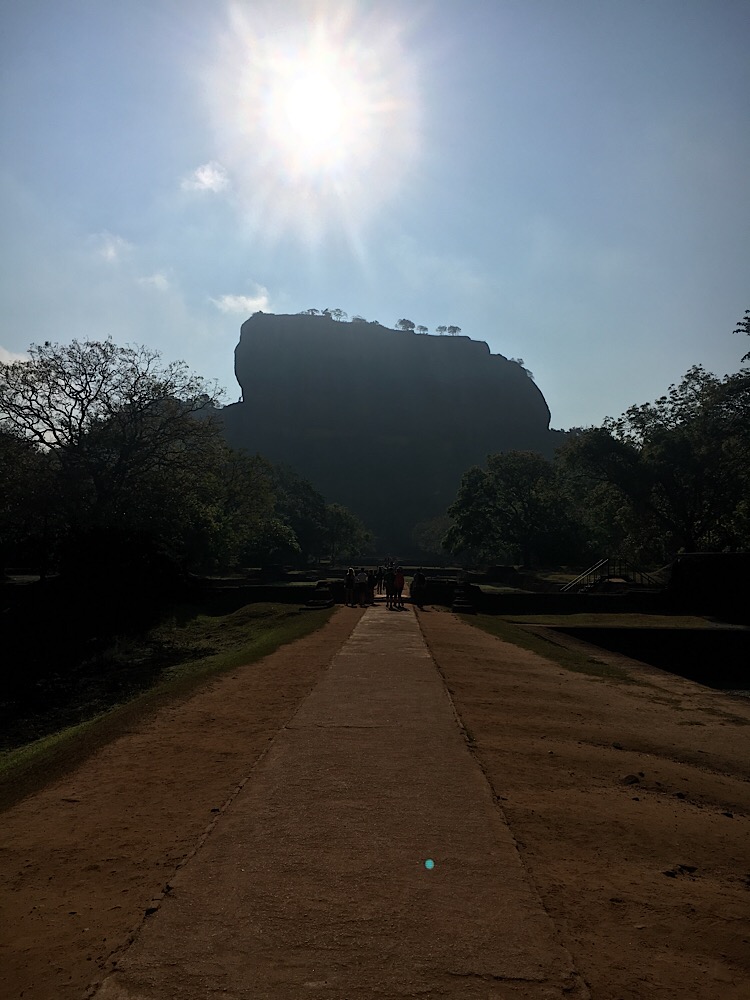
Starting early the next day to beat the crowds, we strolled through what had once been the pleasure gardens of the palace, made up of symmetrical water features most of which were now dried out. Then a clamber up the rock itself via a cave full of ancient frescoes of nymphs (possibly as old as 5th century), in amazing condition – the colours still vivid. Equally impressive was the very Sri Lankan tour guide in front of us who was rattling off fluent Italian to his clients. We’ve since seen this in Russian and French and while there’s no reason a Sri Lankan tour guide shouldn’t be able to do this, it is a bit bonkers at first sight and it’s very impressive. They may well be self-taught and it demonstrates how tourism is evolving quickly here.
The next stage up we encountered the legendary, enormous stone lion paws carved out of the rock. There had once been a vast, entire lion statue here that served as the entrance to the main palace at the top of the rock – you would enter through its mouth, but only the paws remain. A final climb up another set of stairs and we make it to the very top of the rock, where the original palace/monastery once stood.
A relief to feel the breeze and to see the 360 degree view of the beautiful surrounding jungle countryside, which extends as far as the eye can see from this lofty perch a couple of hundred metres up. Up there, we also have a nose around the ruins of the former palace, including an immense reservoir and a few other bits and bobs. It probably was a stunning complex, but there actually isn’t much to see now – the view is the main thing.
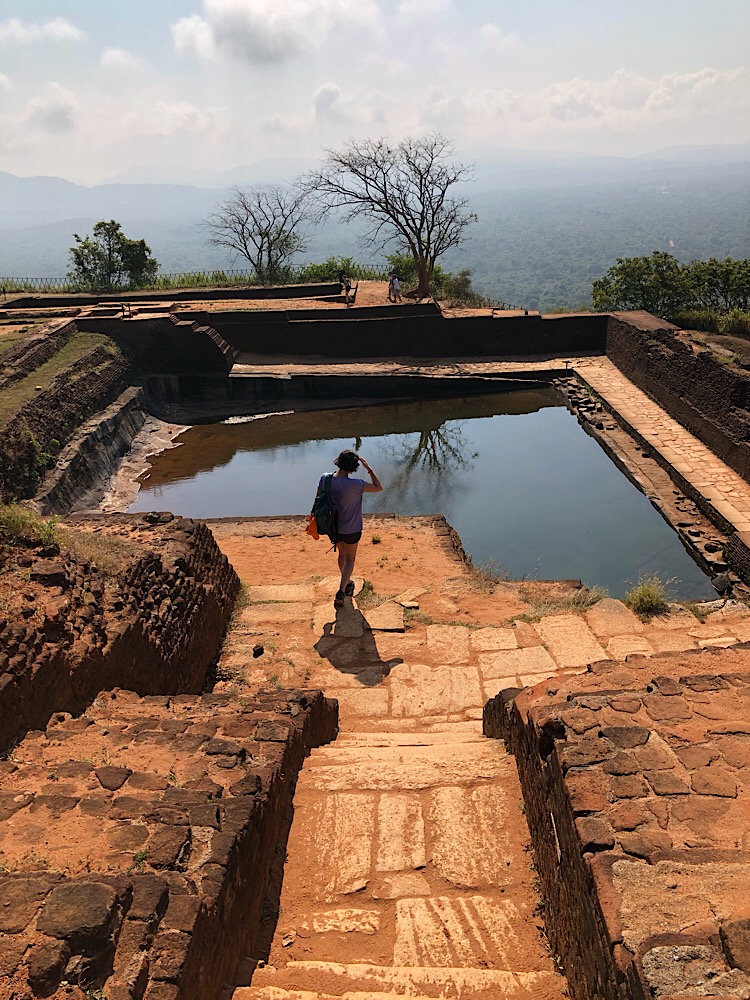
Which is just as well as my stomach was definitely not feeling strong and stable, and there were no facilities – ancient or otherwise – on the top of the rock (which apparently is a key fact for those who argue it must have been a monastery rather than a palace)! Time to get down, get sorted and move on to our next destination. One little known fact about Gabs is that she is part-lizard. Not only does this explain her small head, but it also means she requires regular, intense sun-bathing sessions, ideally in a sandy environment. It had been a week since the beach and she was starting to wane, so it was back to the beach…
With two weeks under our belts, we’ve done, seen and learned a lot – obviously we’ve loved it. It definitely hasn’t sunk in yet that we are away for six months. It feels more like we are on an adventurous holiday. I’m hopeful this realisation comes soon as it will not only feel absolutely lush (!) but also will help me to fully relax and clear my head. Putting my phone away is something I need to do to disconnect and also enjoying each day as it comes, rather than always thinking ahead. Perhaps this is part of being institutionalised in an office worker job over 10 years, or maybe just in my nature, but I’m sure it will happen at some stage and it will feel great!


Stay tuned for the next post, coming in hot from Peahead!

 Frabby’s Indo-Afric Tropical Express