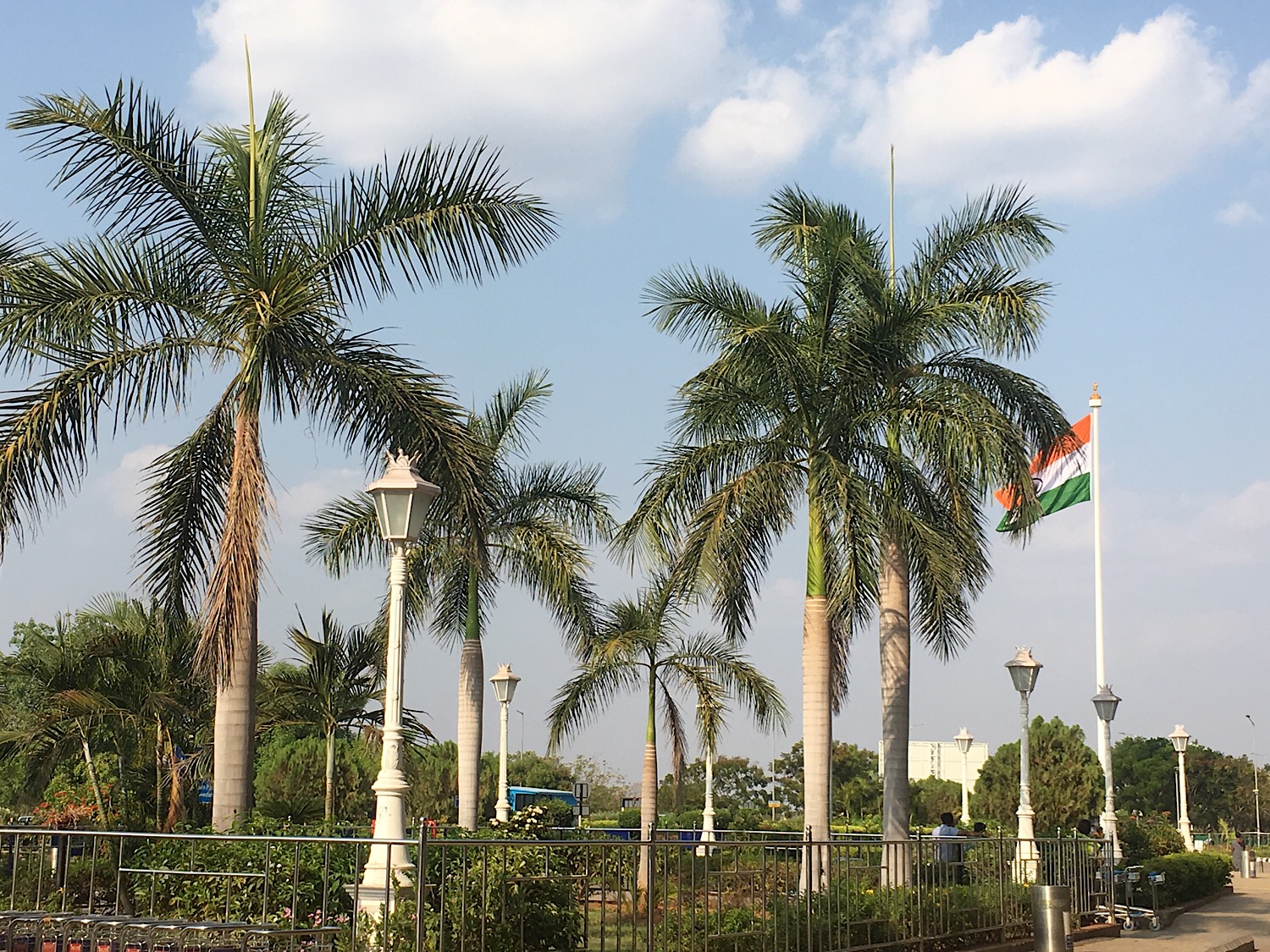
“Red! Hot! Spicy!” were the words that greeted us as we boarded our Spicejet flight from Colombo to Madurai. Excited as we were to be heading to India, we were also sad to leave Sri Lanka, so as a parting shot, Peahead managed to paralyse the entire airport security corps with her Kindle which they handled extreme bafflement as though it had descended direct from Alpha Centauri. Despite multiple attempted explanations of this device, the Bandaranaike airport elite division ultimately concluded that they were never going to understand what it was, so waved us through and we clambered up into our Bombardier Dash turboprop headed for the brilliant madness of India.
Historic Madurai is one of India’s oldest cities, dating back millennia to the ancient times of the Romans, Persians and Chinese where it was an important trading post (spices) on the silk route. It is also one of the only human settlements globally to pre-date Dot from EastEnders.
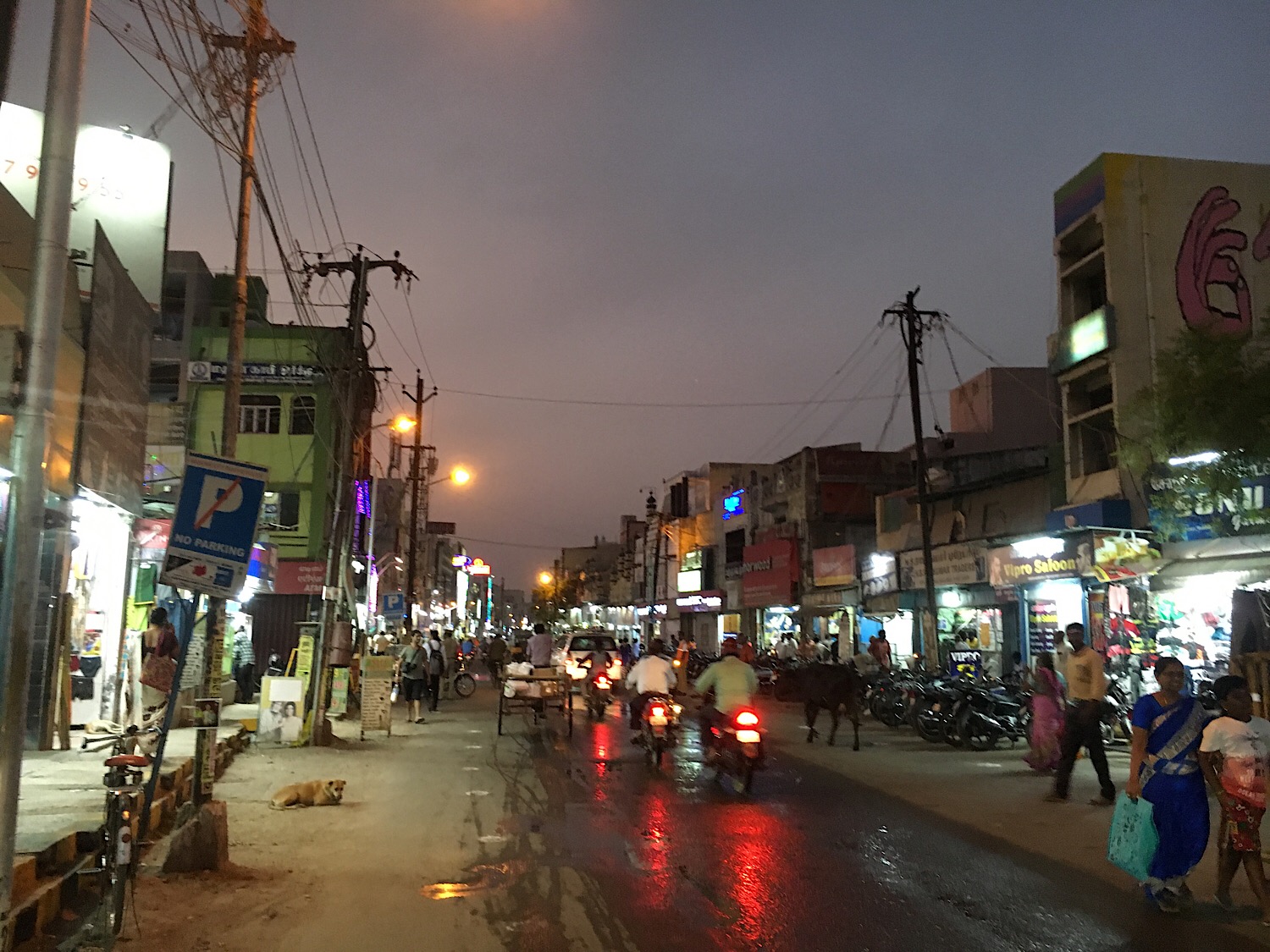
We had chosen Madurai in the South of India (Tamil Nadu) on a bit of a whim, mainly because it was conveniently located as a launchpad for our Indian odyssey and you could fly there from Colombo, so we were a tad apprehensive on arrival about what this particular Indian box of tricks might hold. We really knew very little about it other than that Rick Stein had stopped here on his India series – so it can’t be that offensive, right?
What better way, then, to throw ourselves into the chaos than to hit the town on a “foodie tour” of Madurai?! The use of the word “foodie” had a strangely mixed effect on me: at once comforting – it implied we’d be in for a tasty evening pitched at Birkenstock-clad, Guardian-reading, western liberal metropolitan elites looking for an authentic (but safe) experience of India that they could casually drop into dinner party conversations once securely reinstalled in Stoke Newington – and at the same time, slightly embarrassing, in that I then remembered that we were exactly the target market. Note to self: must be more dangerous
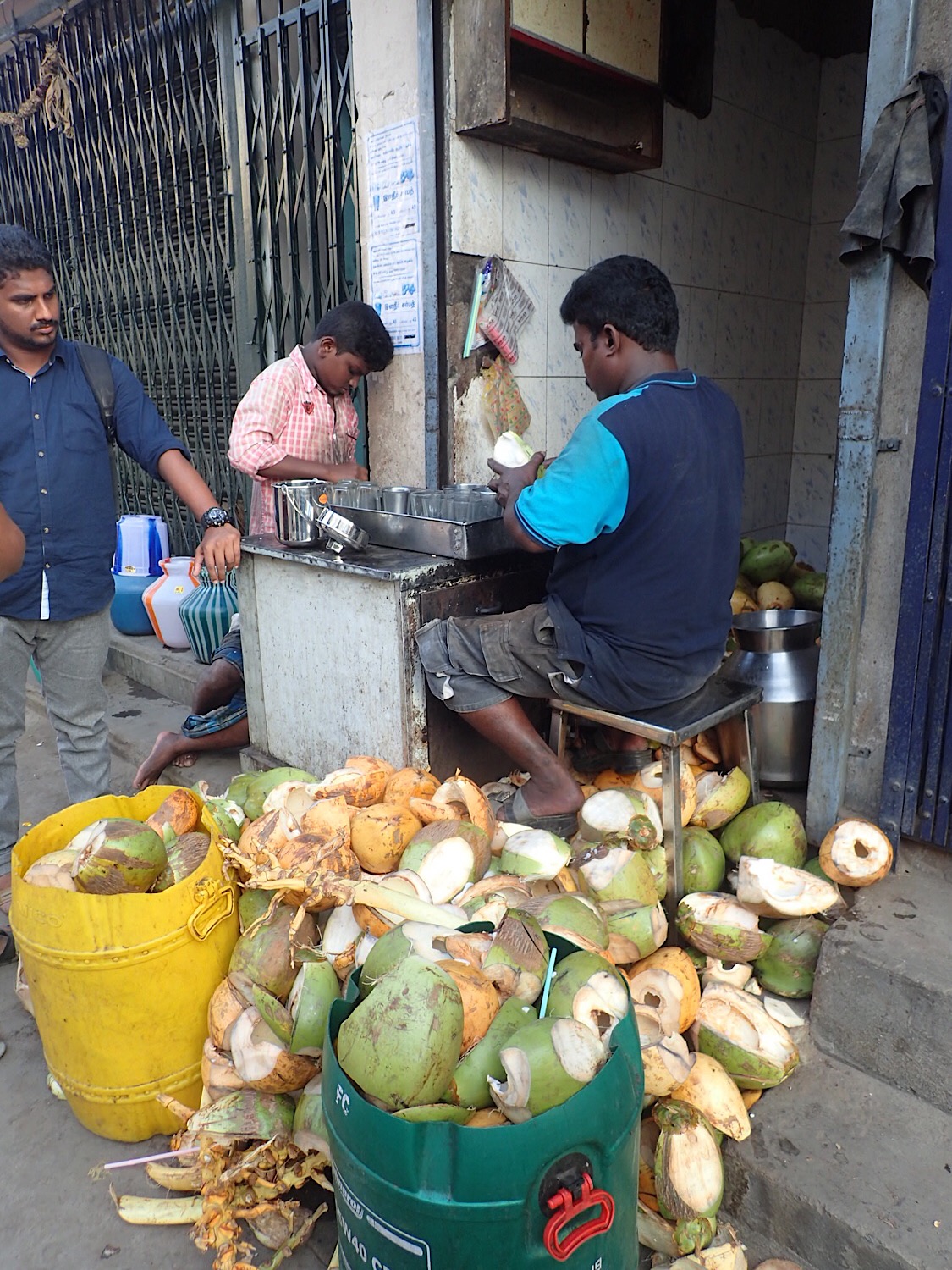
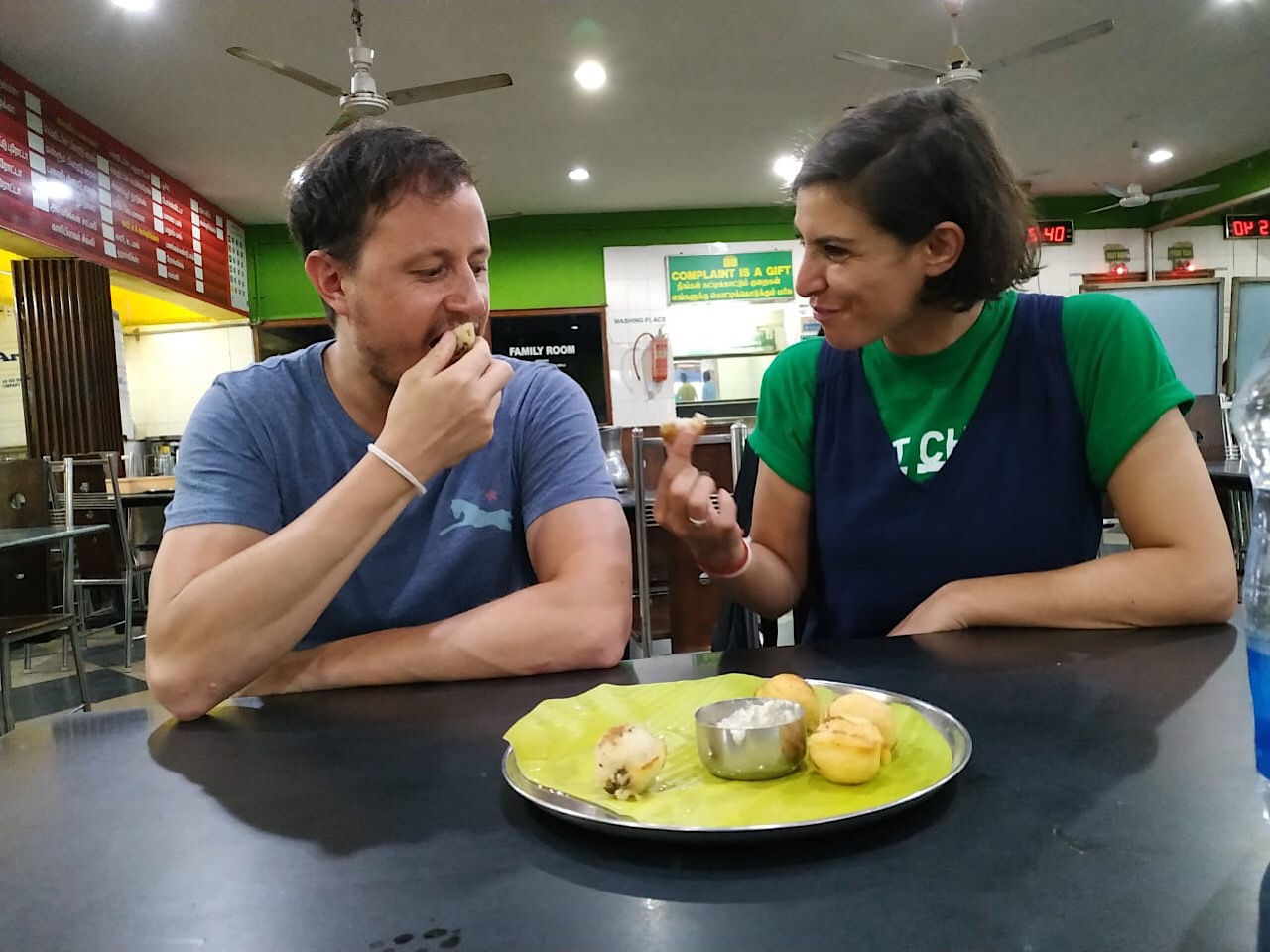
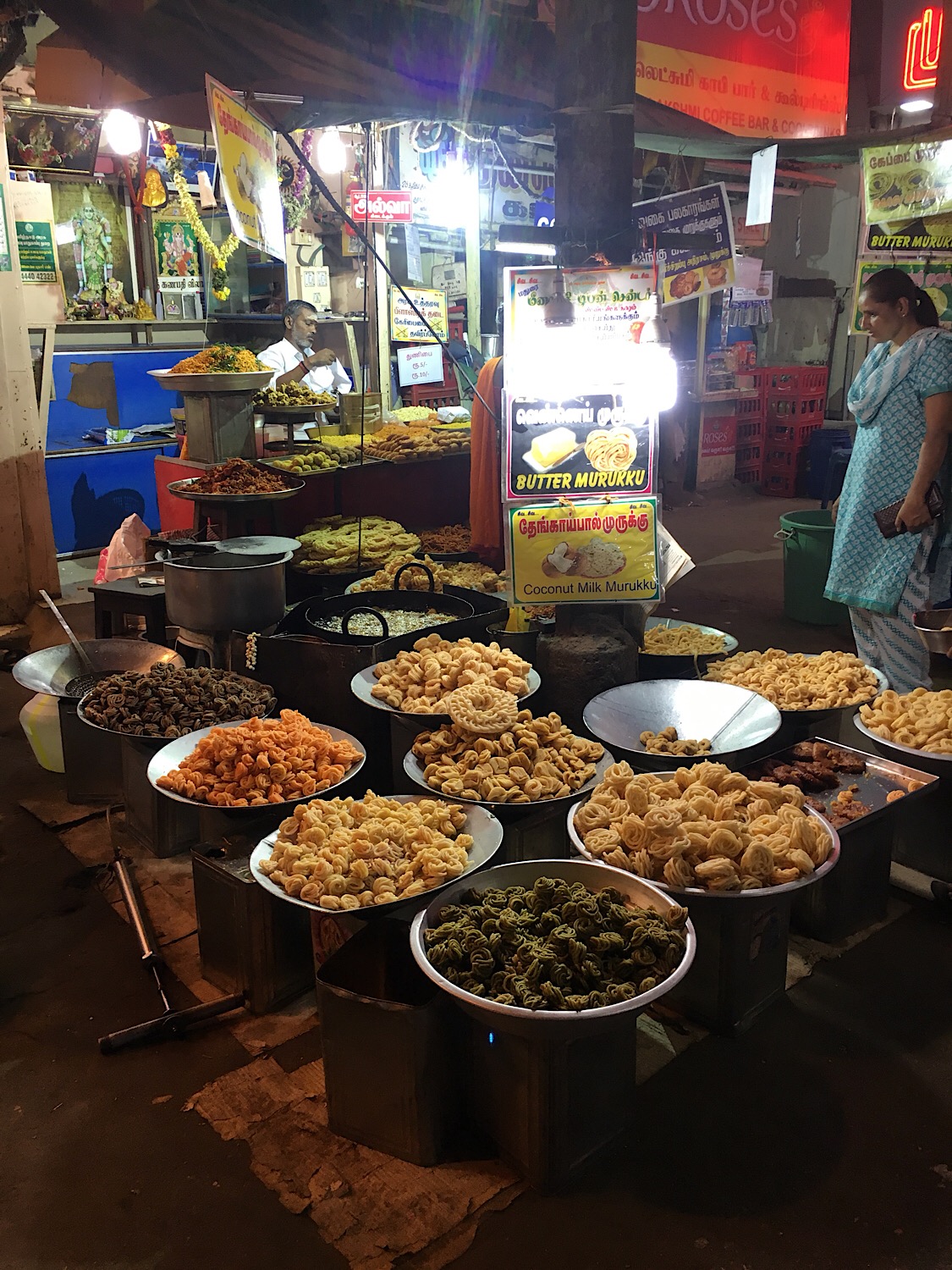
And so off we trotted, whisked from restaurant to street food cart to venues resembling neither, all in the safety of an air con private cab, naturally. It was brilliant! I don’t actually remember every single morsel we tried (this was conveniently emailed to us the following day), but highlights included “Paniyaram”: deep-fried chickpea balls (about golf ball-sized) which came in both sweet and savoury form, with the sweet one being the real champ due to the delicate cardamom spicing. Another real treat was a truly wondrous semolina dosa, wafer thin, crisp and containing cashew nuts, with a quasi-honeycomb, lattice structure in places. So good we went back for lunch the next day. Other bites, of varying quality, included a tasty deep-fried millet puff from an enterprising gent who placed his cart at the doors of the temple – collecting orders from worshippers on the way in for pick-up on the way home after presumably intensely famishing temple sessions – and “the famous Jigarthanda”: condensed milk churned with ice cream and agar agar (small jelly chunks which reminded me of tapioca)a fairly odd ice cream, affogato-like dessert which apparently has now become the official pud of Madurai.
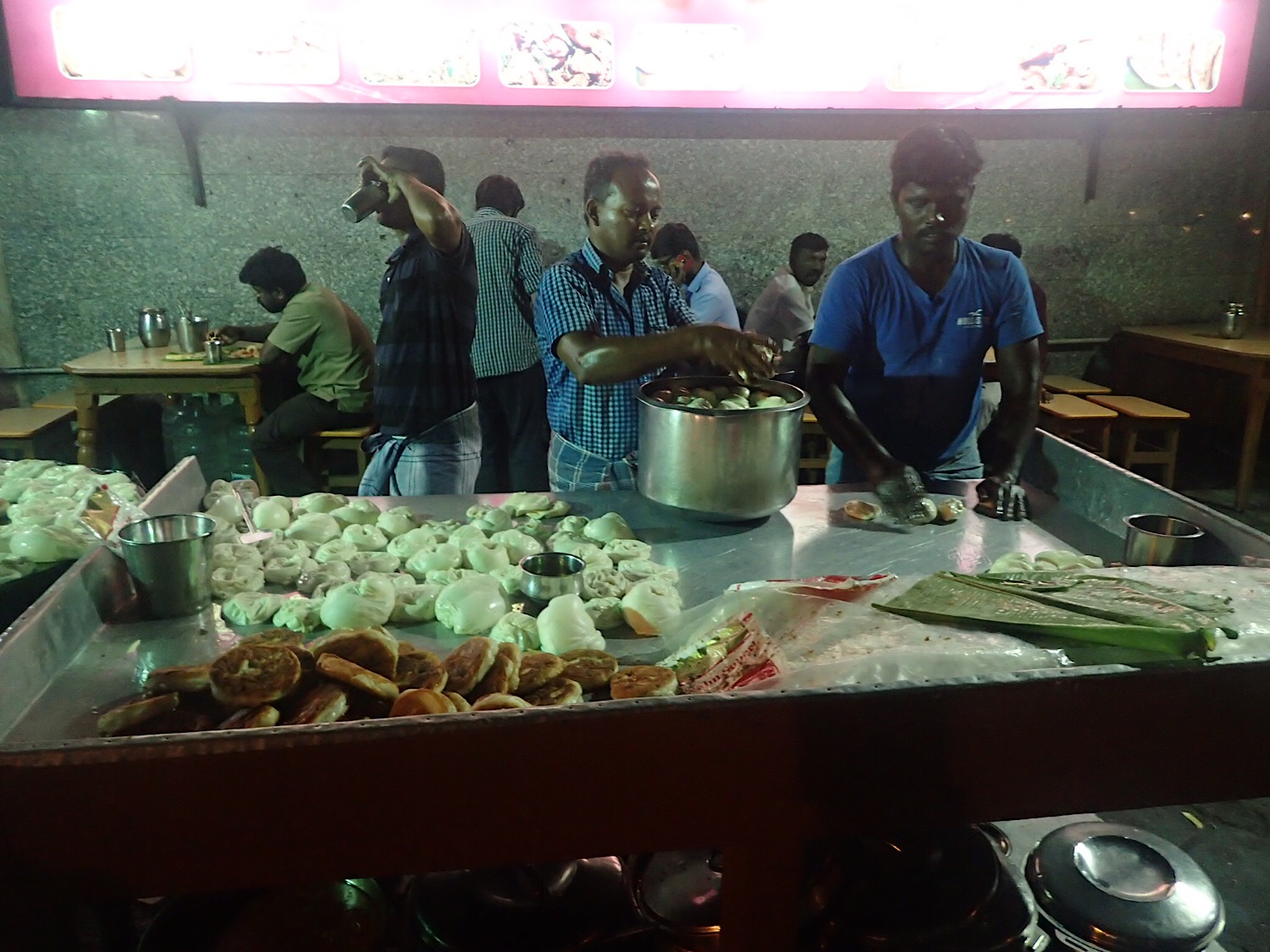
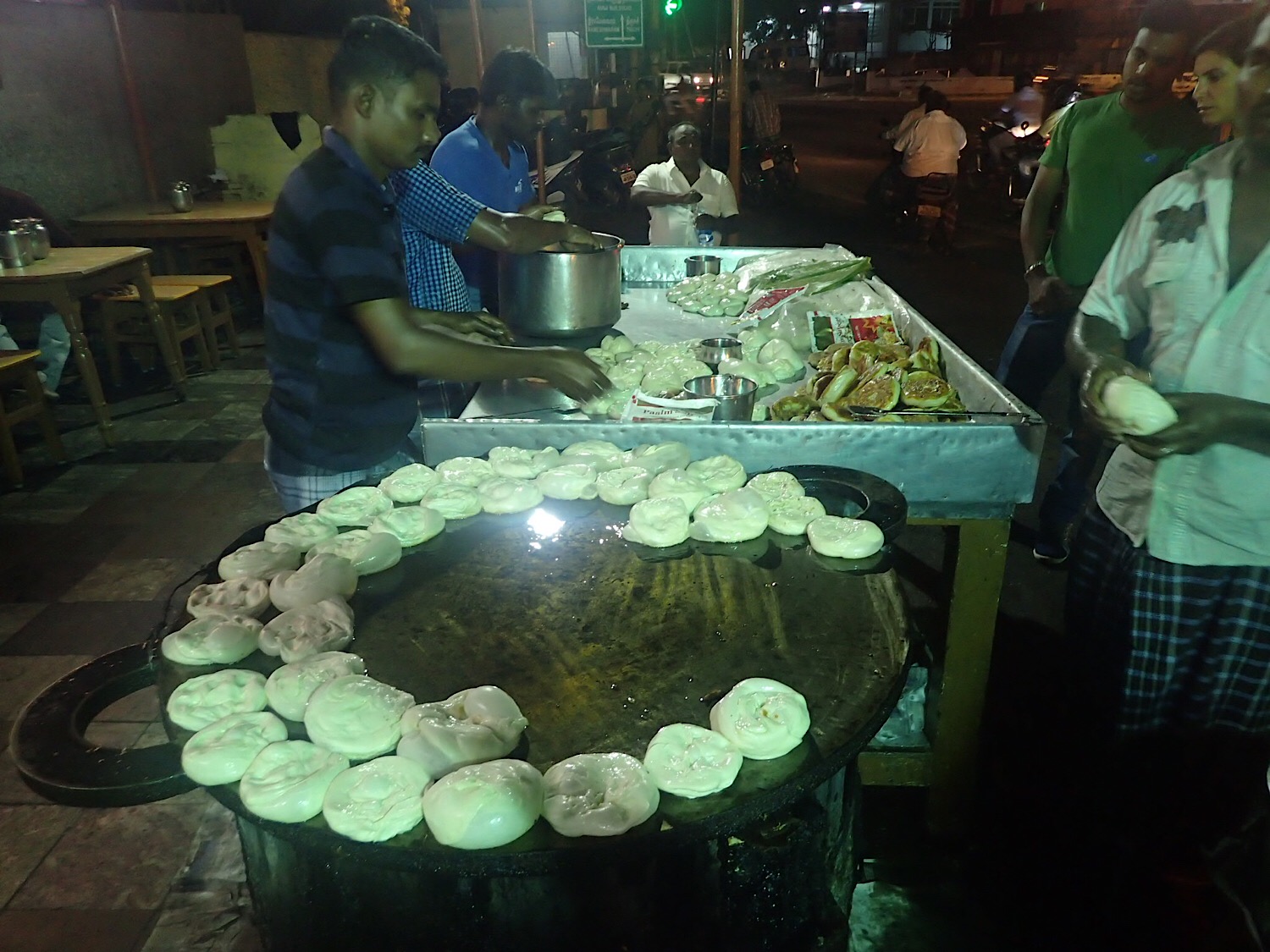
Hands-down, top dog, however, was unquestionably and indisputably the roadside bun paratha stand. This place was a cathedral for gluttony, immense satisfaction and cardio-vascular complications. Set on the edge of a somewhat disorderly, major roundabout, was a small outdoor area where four men were throwing dough, like a pizzaiola, until it was almost see-through thin, before folding and scrunching it back up into a bun full of air pockets and the size of a large muffin. These were then lobbed onto an oil drum hot plate with a fire raging inside and a lake of ghee simmering on top and heaving with these small bundles of pure delight. Once cooked through, crisped and browned on the outside, one of these would be served on a banana leaf (like everything in Tamil Nadu) alongside a small saucer of “gravy” for dipping (essentially a liquid curry with small food chunks). I had “mutton” (which is actually goat) and Gabs had veg.
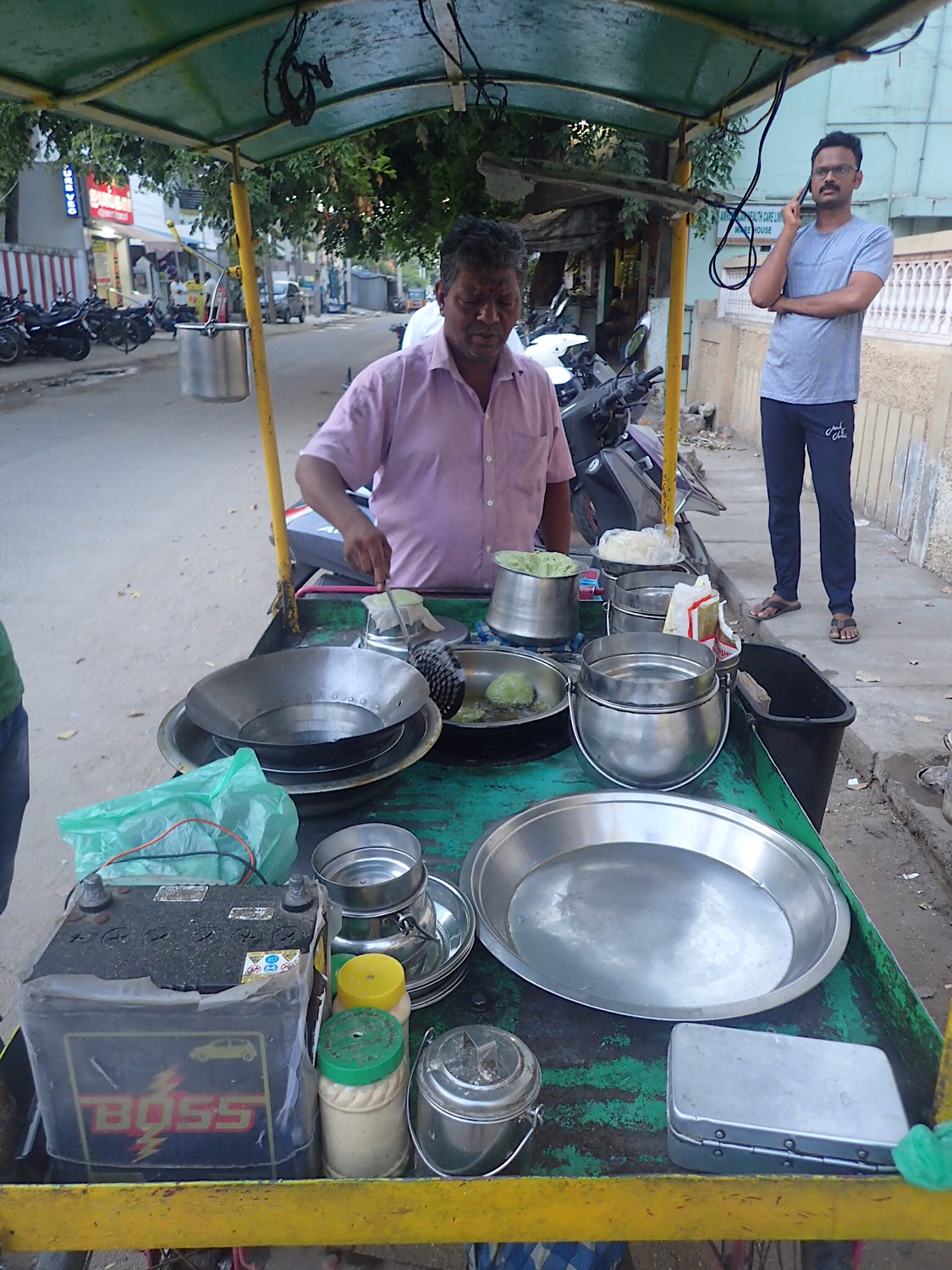
Hands-down, top dog, however, was unquestionably and indisputably the roadside bun paratha stand. This place is a cathedral to gluttony, immense satisfaction and cardio-vascular complications. Set on the edge of a somewhat disorderly, major roundabout, was a small outdoor area where four men were throwing dough, like a pizzaiola, until it was almost see-through thin, before folding and scrunching it back up into a bun full of air pockets and the size of a large muffin. These were then lobbed onto an oil drum hot plate with a fire raging inside and a lake of ghee simmering on top and heaving with these small bundles of pure delight. Once cooked through, crisped and browned on the outside, one of these would be served on a banana leaf (like everything in Tamil Nadu) alongside a small saucer of “gravy” for dipping (essentially a liquid curry with chunks). I had “mutton” (which is actually goat) and Gabs had veg.
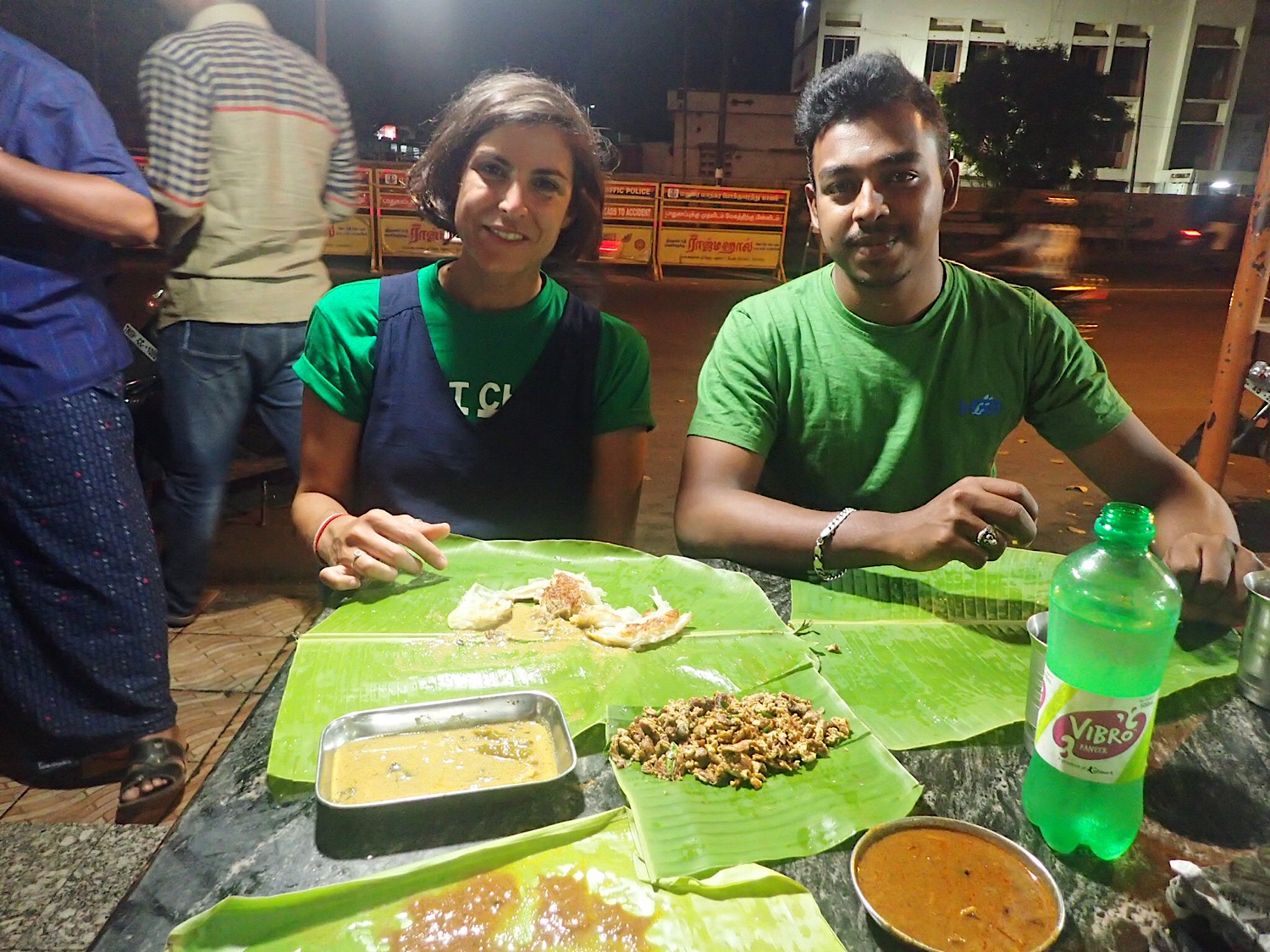
But the Paratha was what it was all about. Tearing into one of these beauties ticked all the right sensory boxes: hot, feather-light, crispy, crusty, buttery and satisfyingly filling. I just asked Peahead to describe the feeling: “It was like climbing into a freshly-made bed with the pillows fluffed up,” Amen to that.
Peahead became frenzied as she devoured hers, urgently lining up to guttle another. Around us, taxi drivers and other locals peeled off the roundabout to collect stacks of the buns wrapped in newspaper for their families at home, or maybe just for themselves. We got to eat ours straight off the pan – a real treat. This really felt like a locals’ hangout and it’s not hard to see why. After a couple more stops, we called it a night and headed back, splitting at the seams.
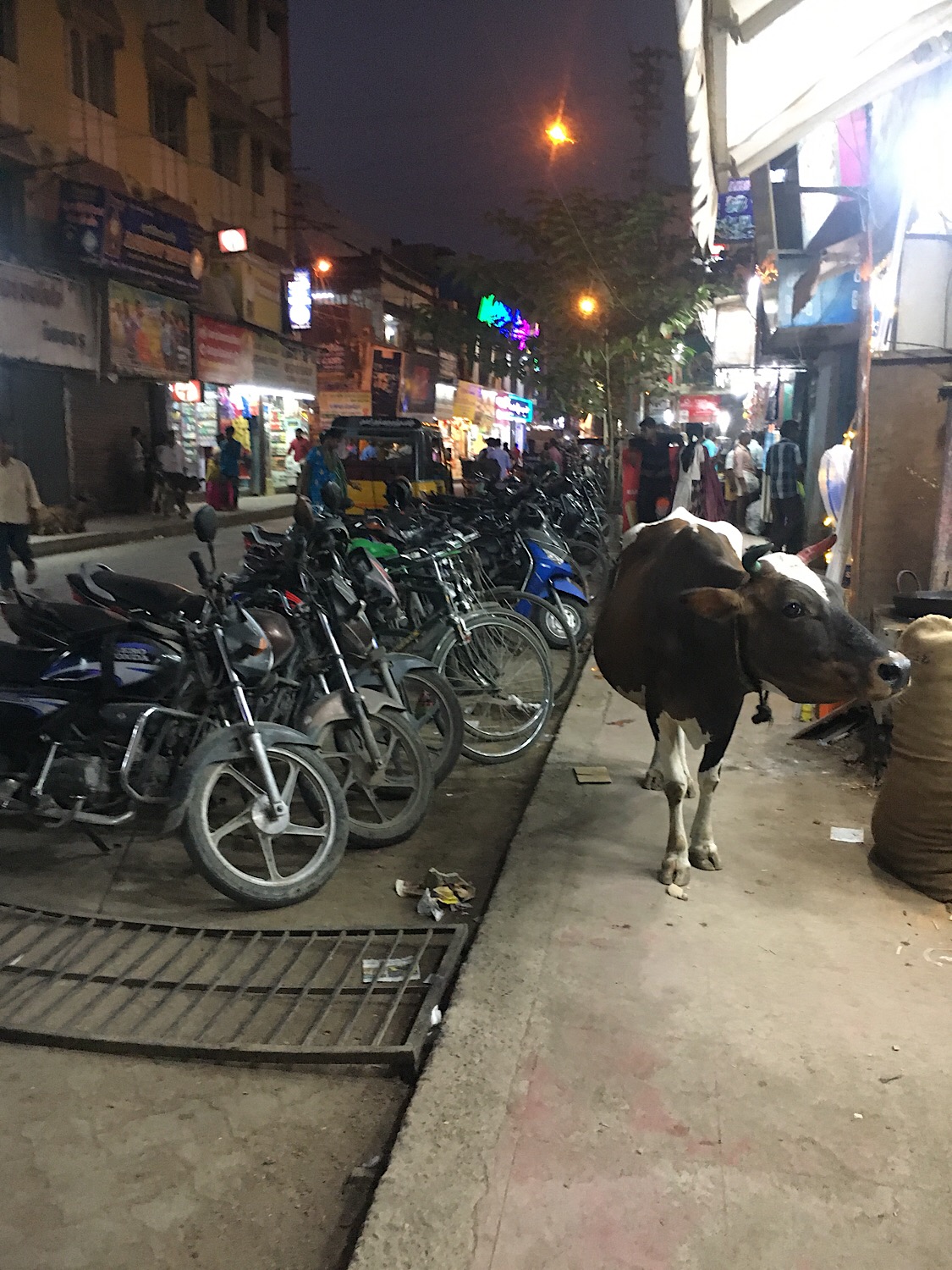
The next day we headed into the city on our own and I have to say I found it a bit much initially: people regularly approaching for money, fumes and traffic everywhere, maps and directions not making sense… Welcome to India. I knew it would be like this and perhaps I should have prepared myself for it a bit more, but it really hit me. Time for a lunch break.
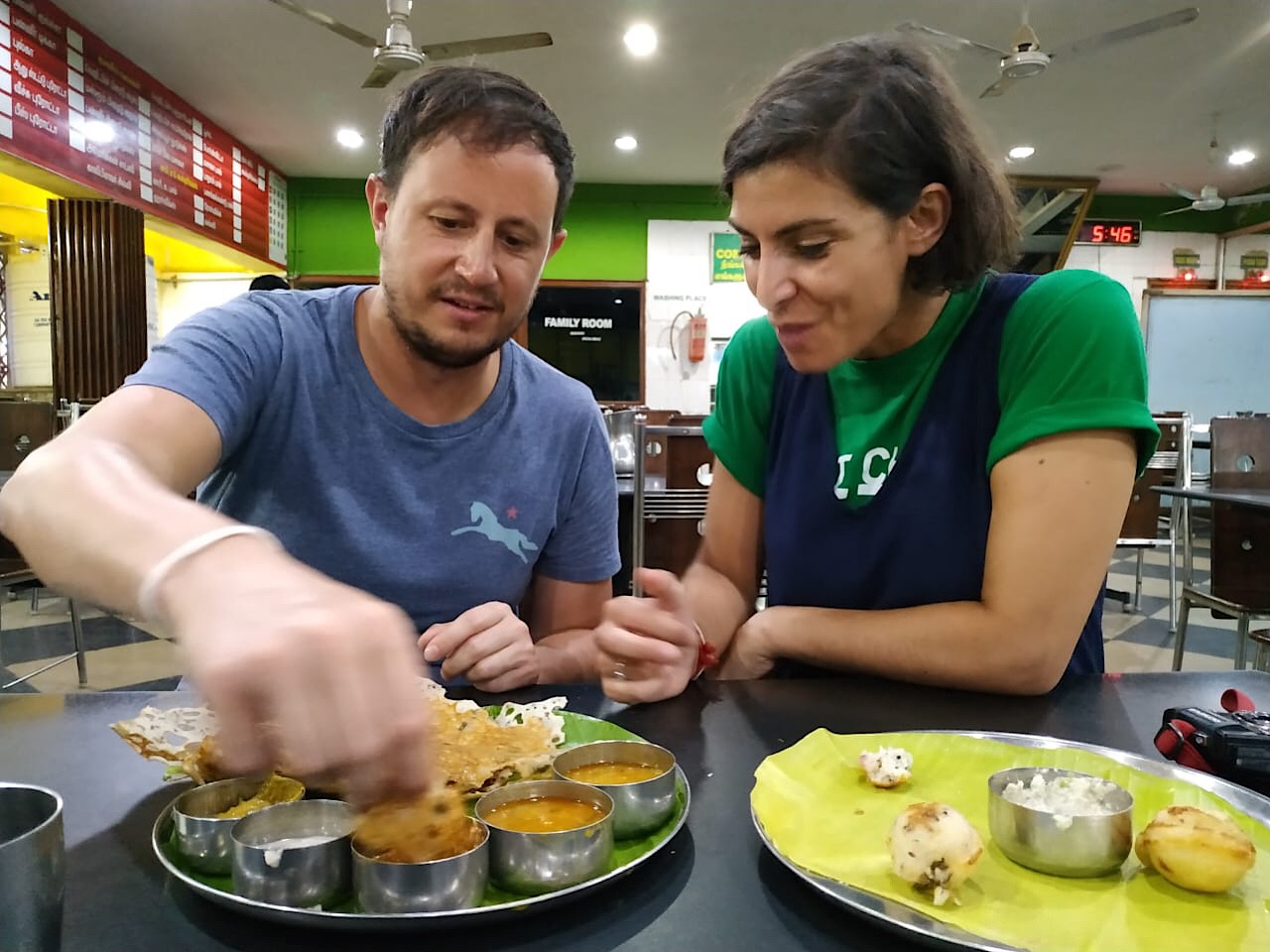
Following a delicious £1 thali at the dosa restaurant from the night before (dosas only served at night unfortunately), we hit the Gandhi museum. Gandhi is (unsurprisingly) everywhere in India and Madurai lays its claim to the big little man on the basis that this was where he first decided to adopt his trademark white cloth get-up (Dhoti). The museum itself tells the story of India’s struggle for independence, told across a series of not particularly easy-to-follow wooden storyboards, but the overall message comes across loud and clear: the British were absolute colonial bastards and after much heroism and loss of life, India finally was given independence, with the British then strongly complimented for their gracious departure on the final storyboard, which rather jarred with the absolute savaging dished out on all of the preceding boards! It was pretty uncomfortable reading, but we learned a lot (including the origin of India’s flag and its spinning wheel at the centre). That said, I probably wouldn’t go out of my way for this museum.
Our evening was spent in the and around the temple area of Madurai.
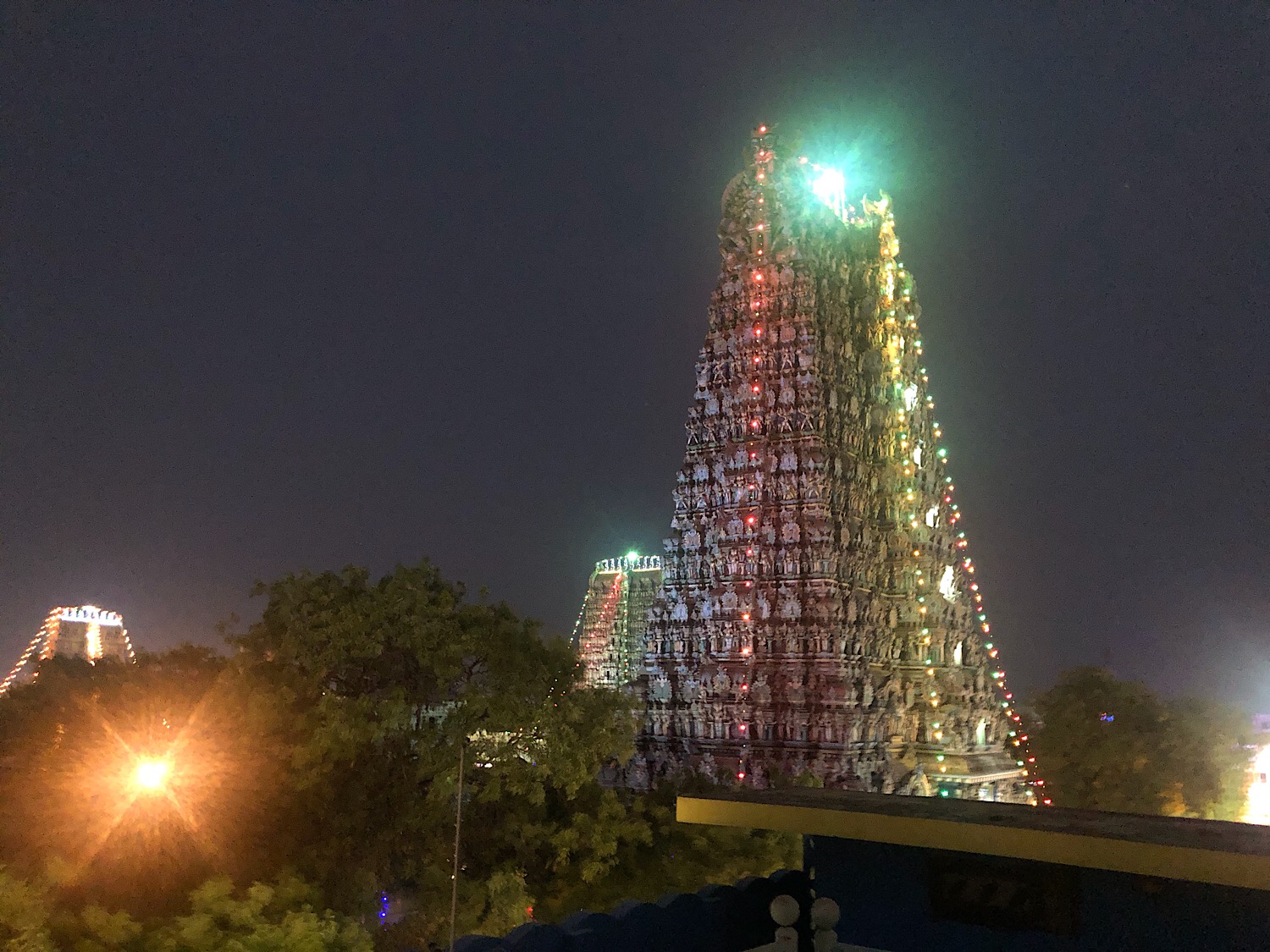
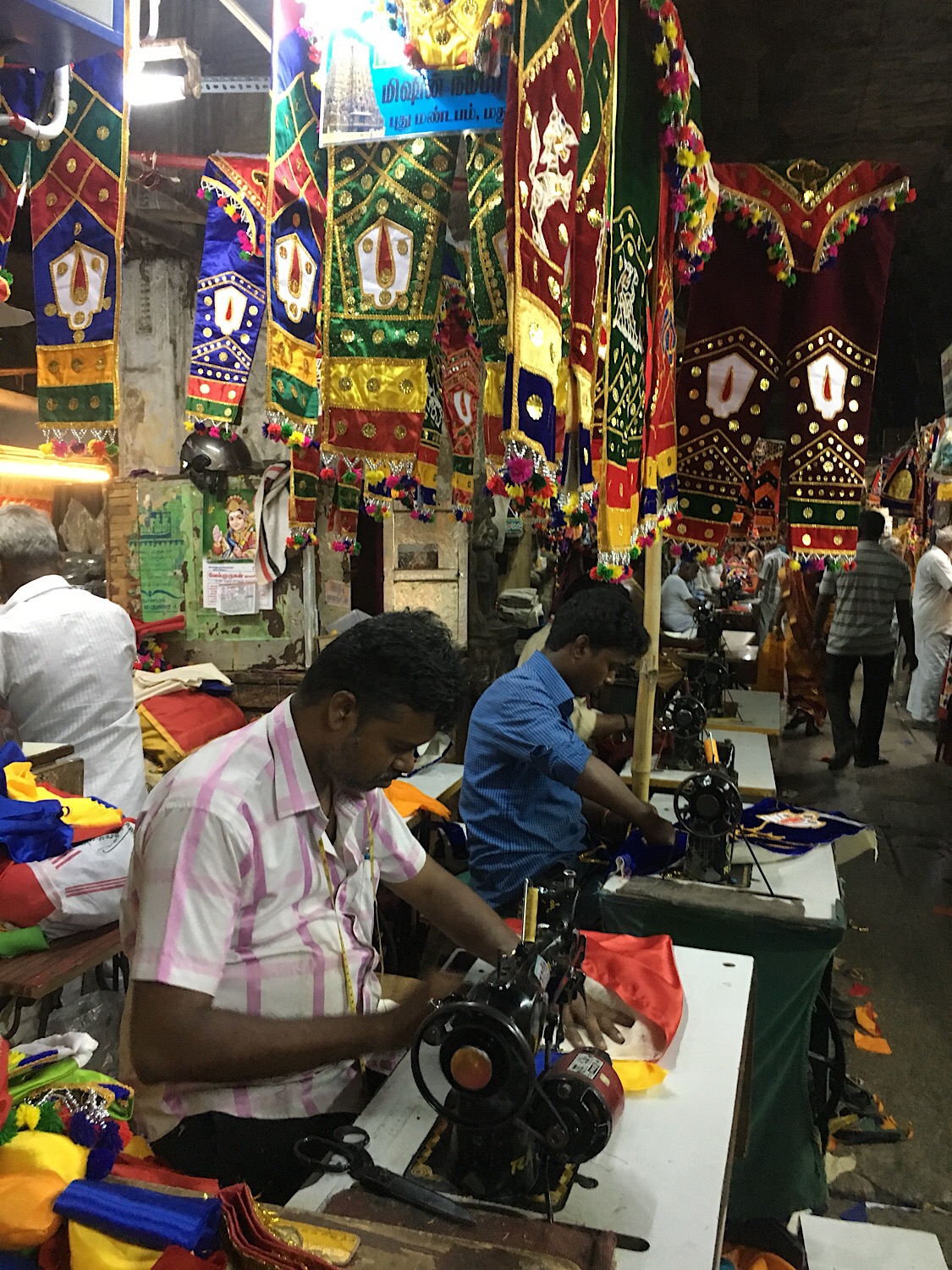
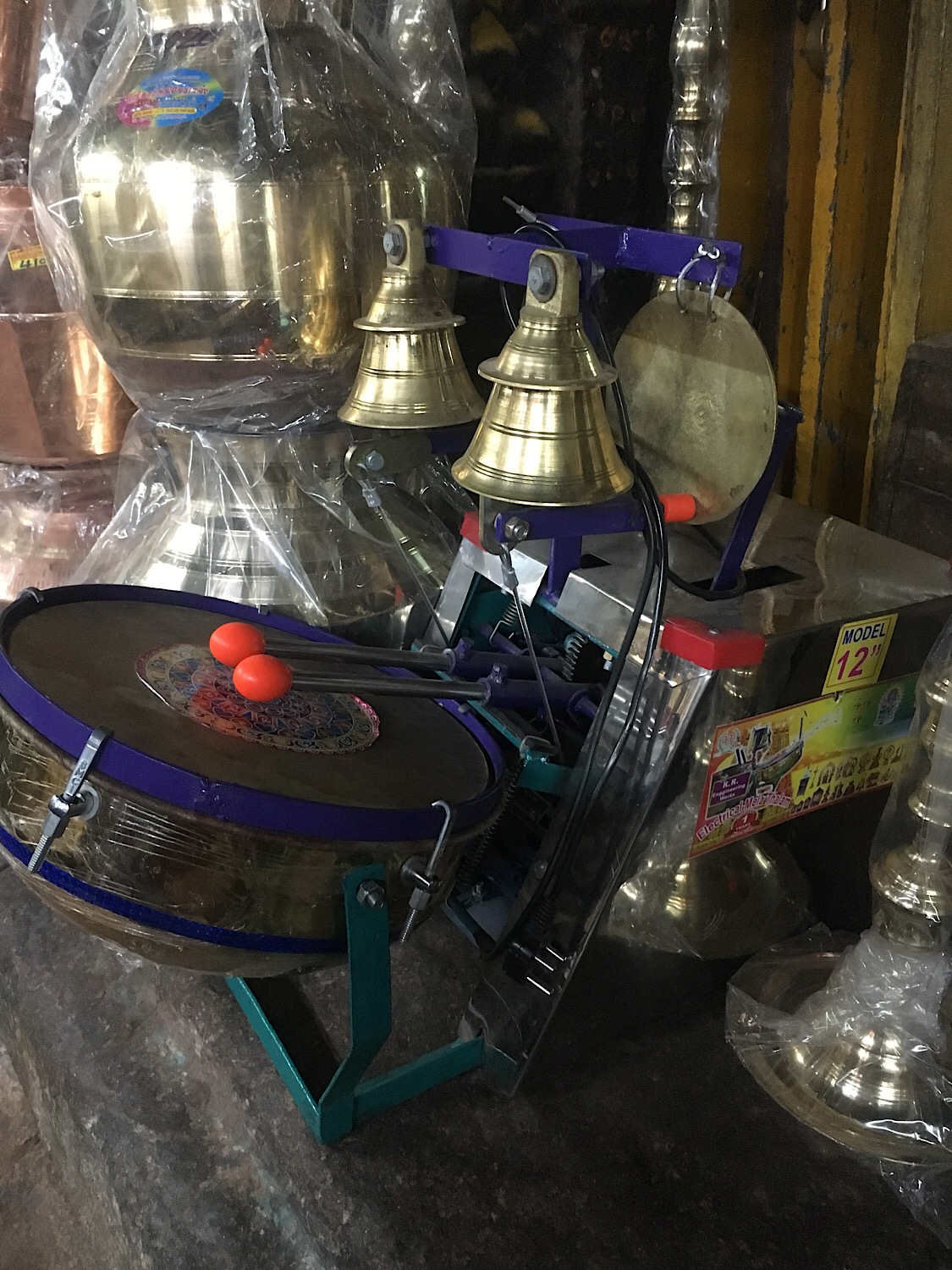
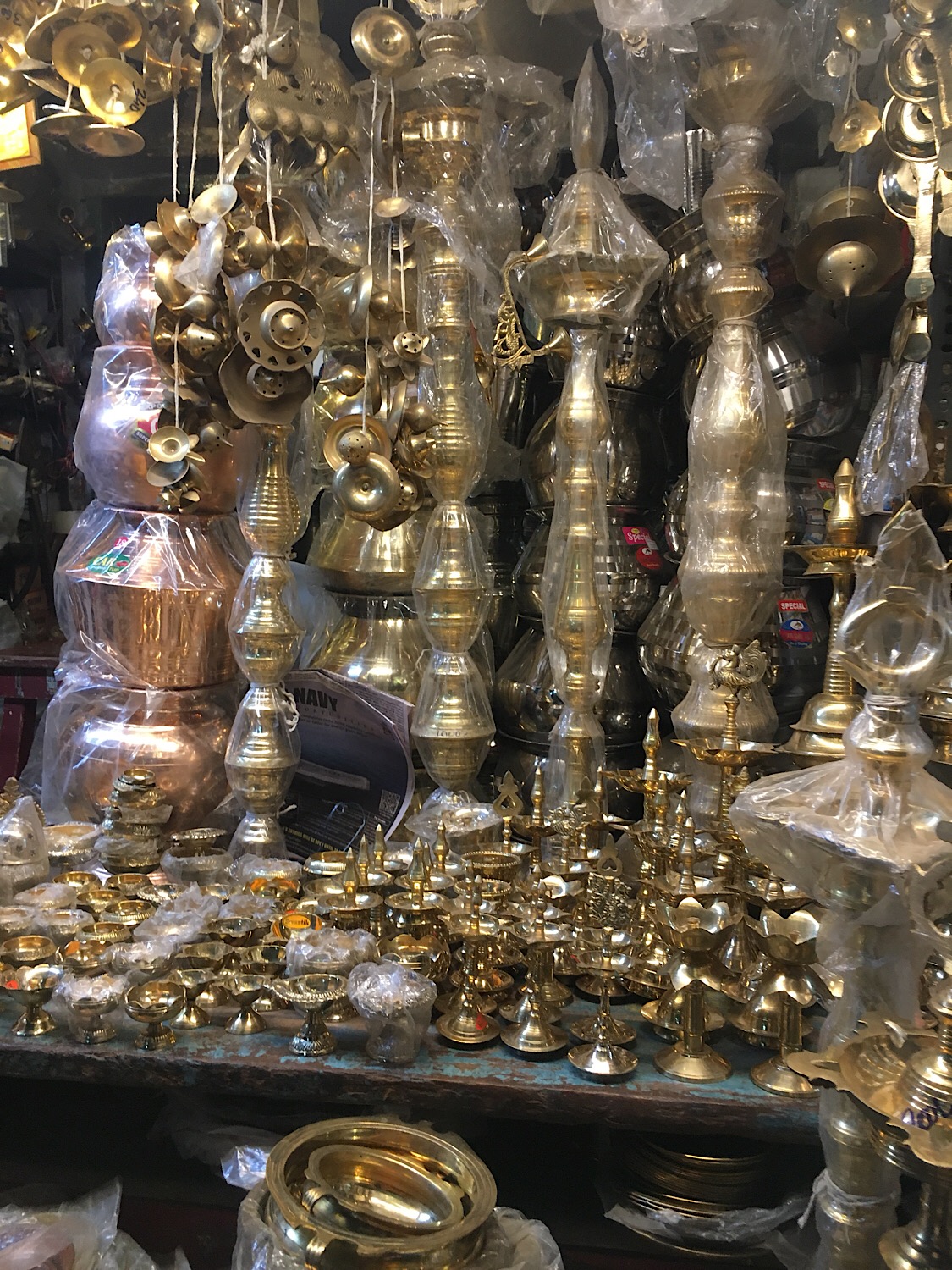
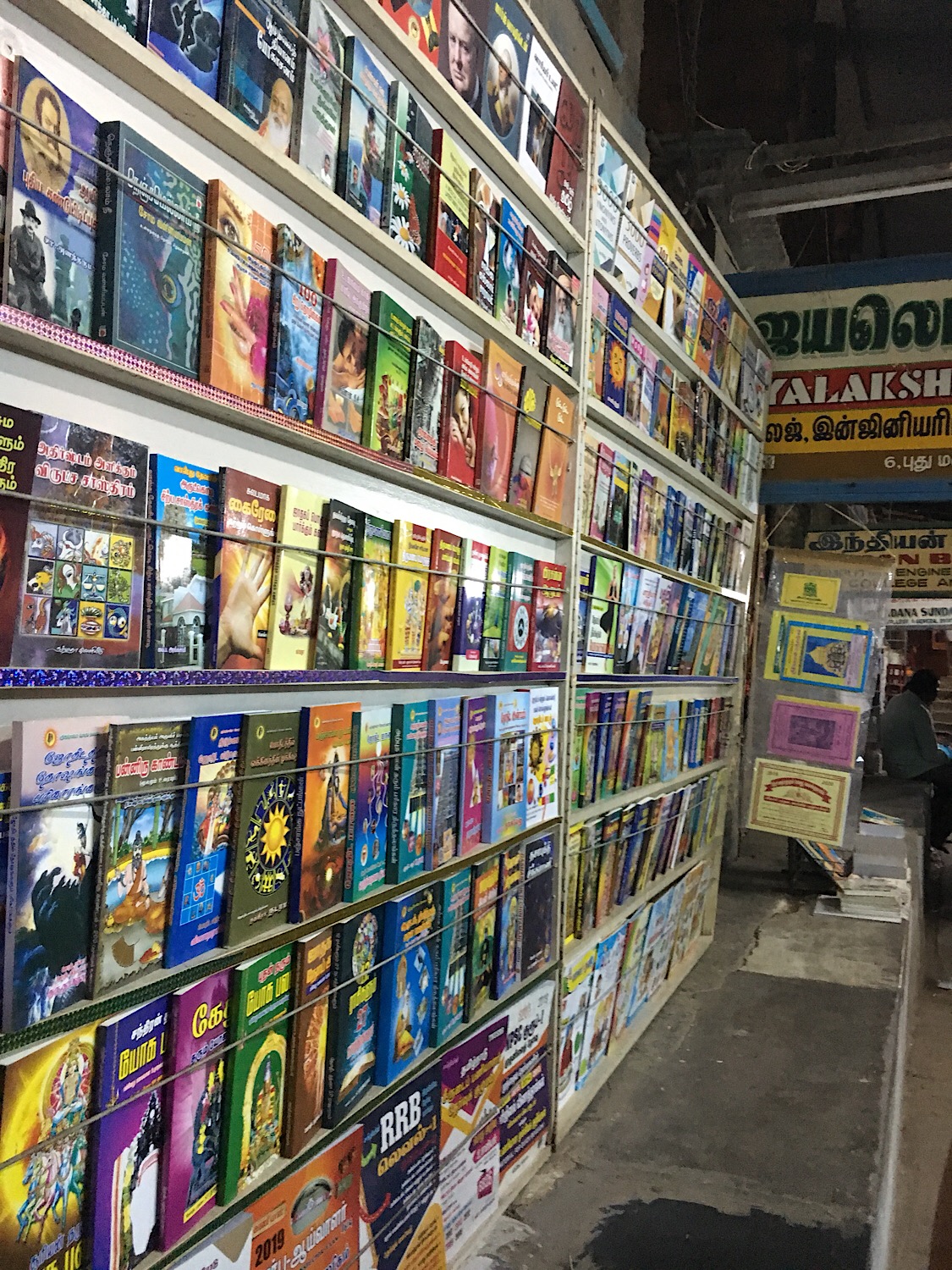
First up in this ancient part of town was the bazaar which was housed in almost certainly the grandest market place building I have ever seen. Divided into four quarters – religious paraphernalia; cookware; tailoring; and books – hundreds of stalls are wedged into a colonnaded, open sided hall. Each column was ornately engraved with gods and demons. It was as if it had once been part of the temple and then given over for use as a marketplace. We had a good mooch. Peahead played off a few of the tailors against each other, prices toppling to a fraction of the first offer, before deciding not to buy anything at all, which pissed them off but was quite pleasing to watch. We then hotfooted it across the road to the temple itself.
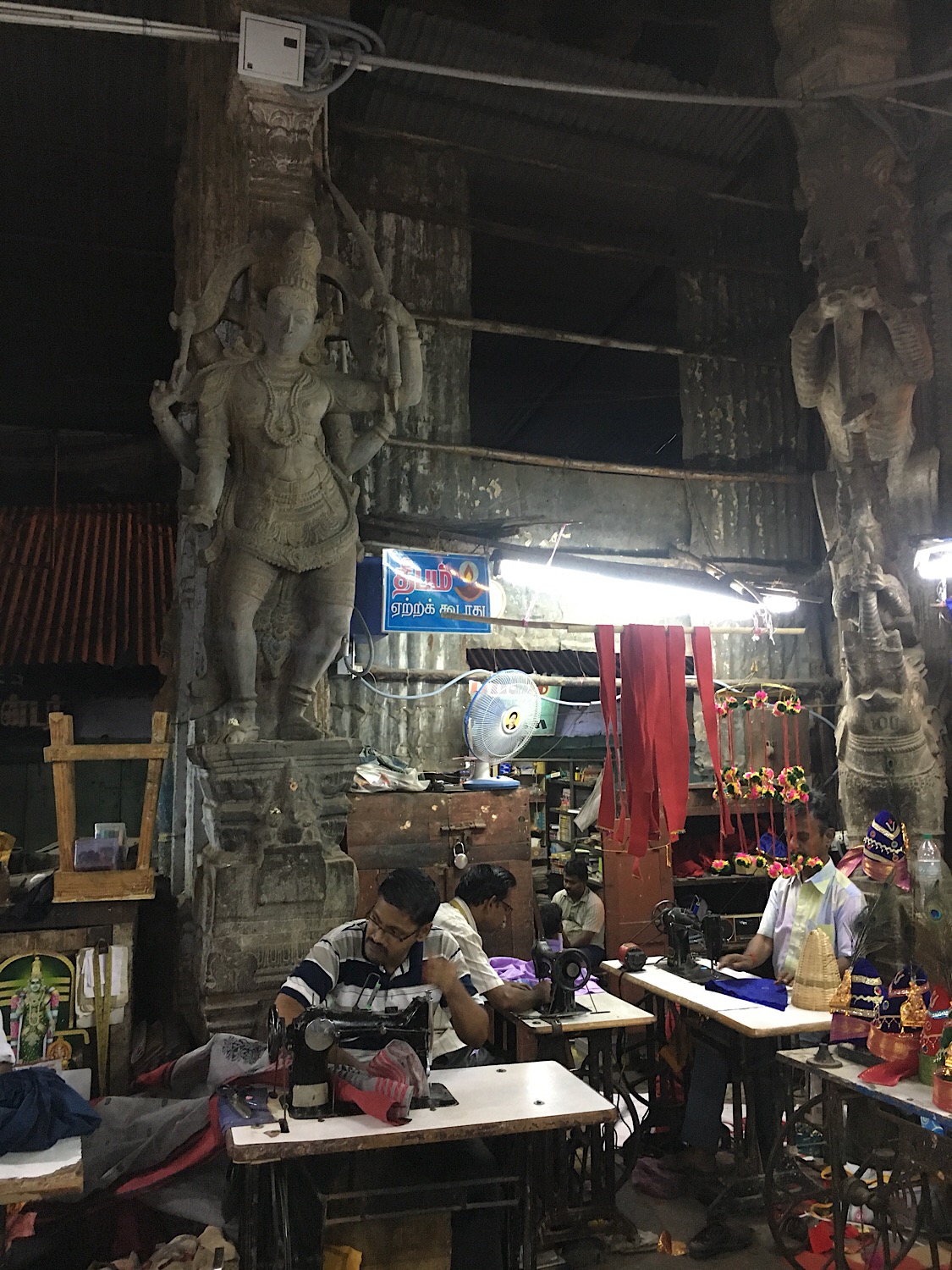
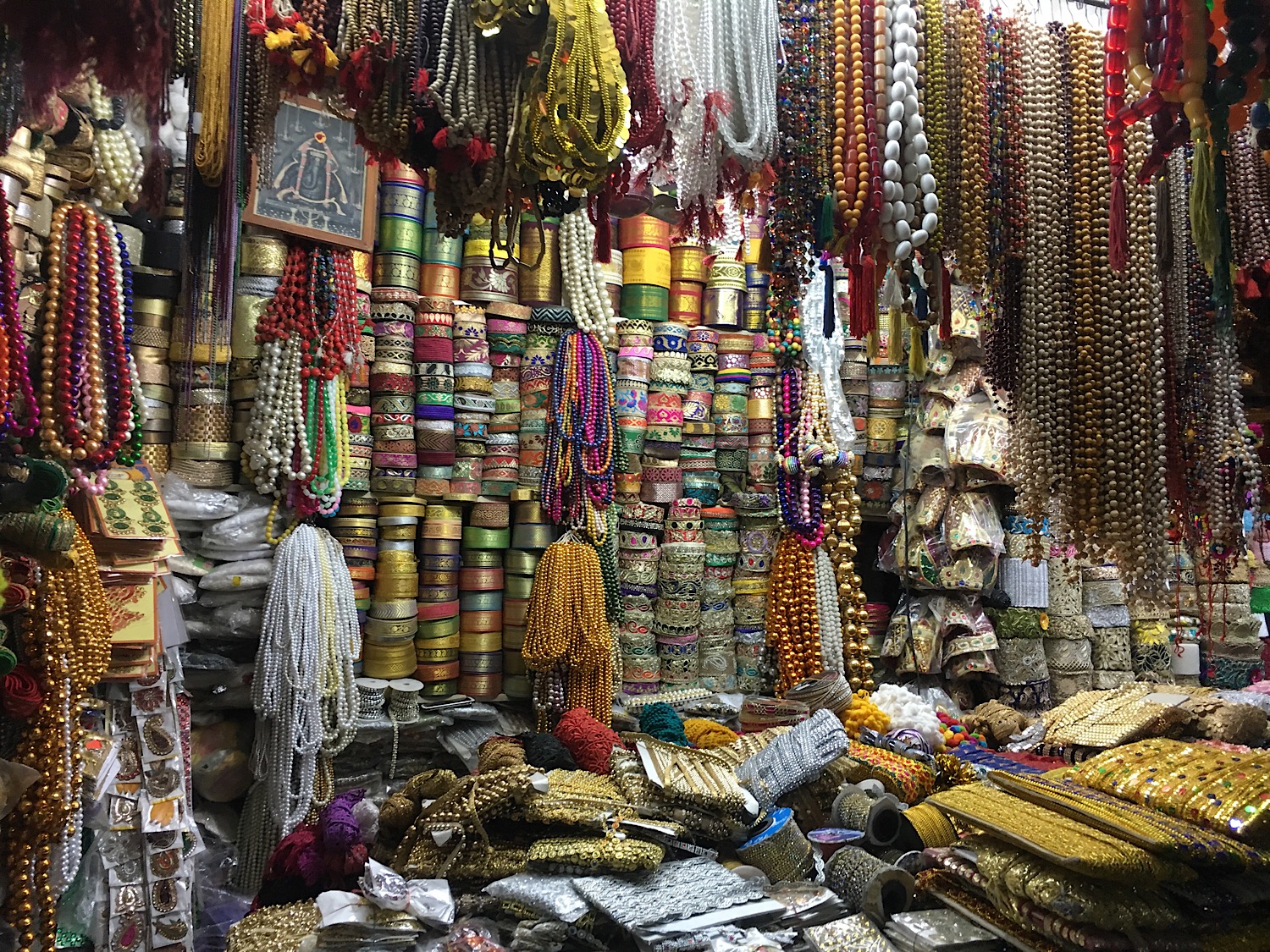
Dominating the Madurai skyline are at least four enormous pyramidal temple towers made up of thousands of painted statues of Hindu deities and demons. The detail is phenomenal and, when freshly painted (once every 12 years), it would be eye-popping. We were there at the end of a 12 year cycle, so it was looking a bit washed out but still a dramatic sight nonetheless. The inside of the temple was also grand, containing an enormous water tank which was very restful to sit beside. Elsewhere, there were extravagant shining gold statues of cows, lions and other animals as well as statues of the gods that are used for processions. To top it all off, the whole place was rigged up with chintzy festoon lights which climbed the height of each tower, flashing different colours. It was odd but lightened up (literally) what might have otherwise been a very solemn atmosphere. After about an hour, it was time for dinner (a delicious Chicken Tikka + beer for me) before hitting the hay.
‘Allo ‘Aloo: A little corner of France in India
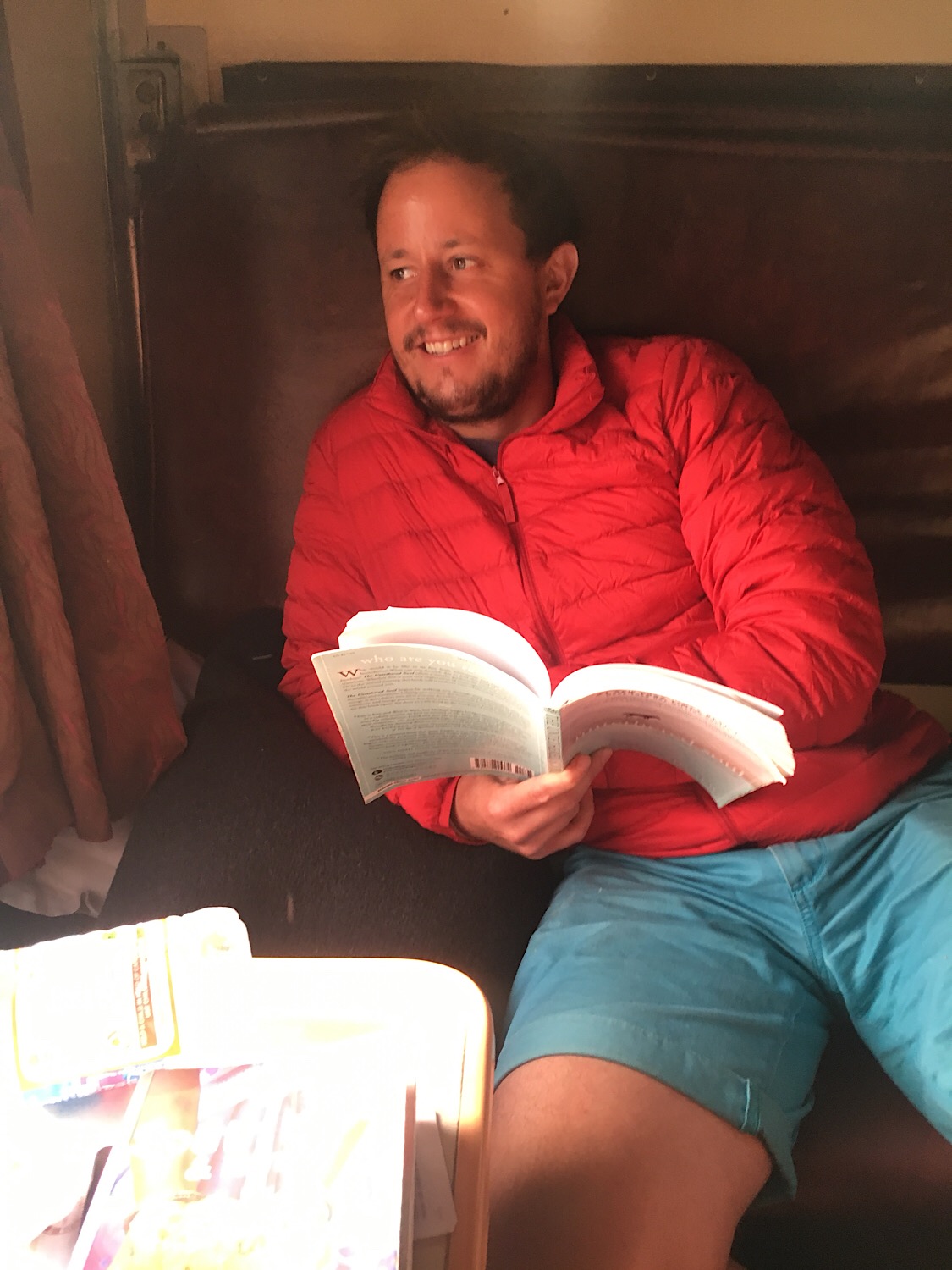
Next morning we were up early to catch our first Indian train of our trip. Booking an Indian train online is a process I would not wish on anyone, not even Jacob Rees-Mogg, and if US Military Intelligence are looking for an upgrade on waterboarding for those detainees that are really hard to crack, this might well be just the ticket, if you will. I had strongly considered prematurely ending both the trip and my life due to Indian Railways’ website a few days earlier, but thanks to some help from a man named Raj Yadav, here we were bombing along to our next stop, Pondicherry. We sat in Third Class AC, where we each had a bunk. Despite it being around midday when we boarded, everyone in the carriage seemed intent on trying to out-sleep each other, so our six hour journey was spent mainly in the dark, playing scrabble and eating biscuits.
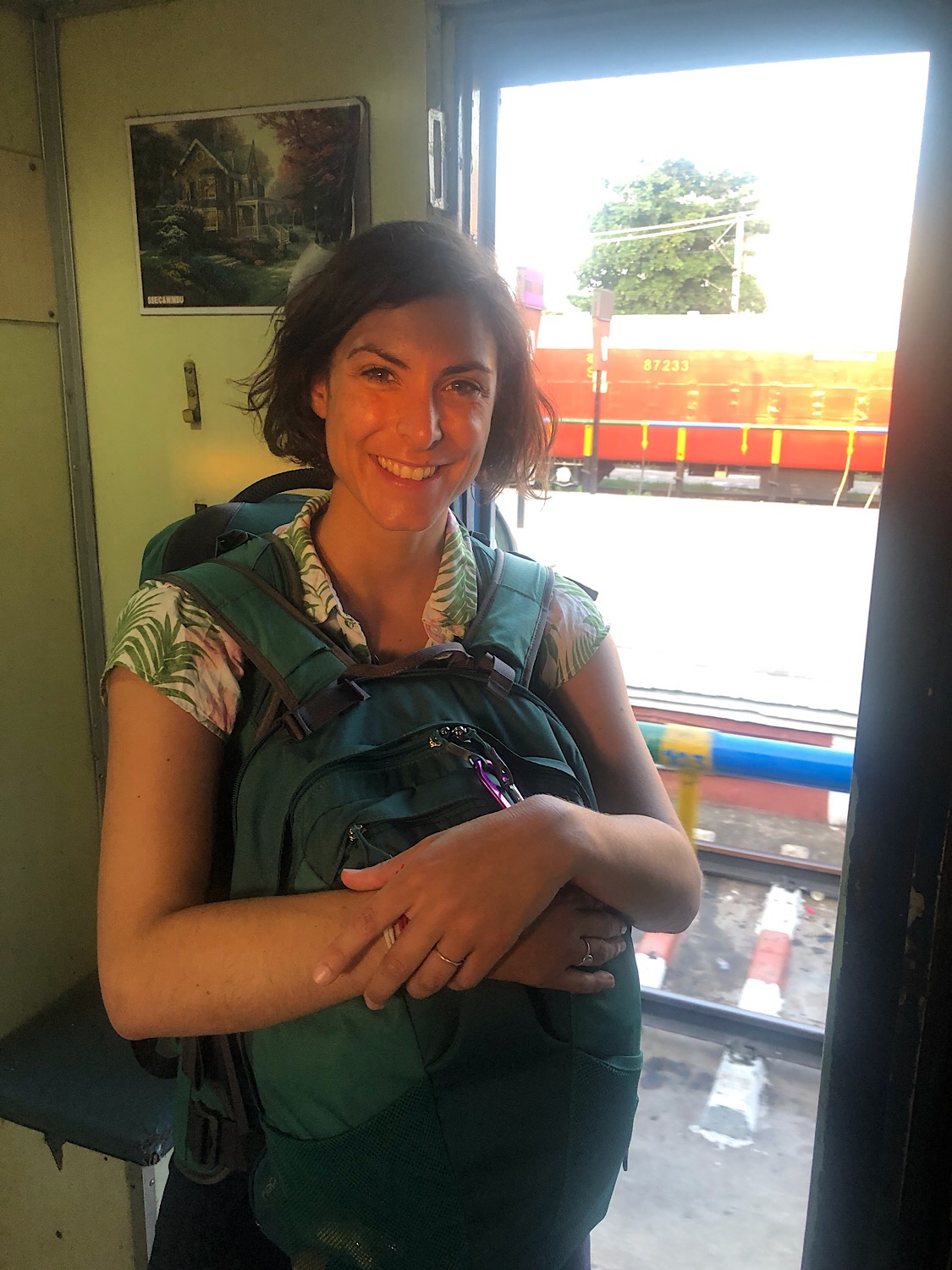
Six hours flashed by surprisingly quickly before we alighted at Villupuram Junction and were whisked off to Pondicherry in a white knuckle taxi ride in which we nearly crashed at least three times. It was good to get to bed that night.
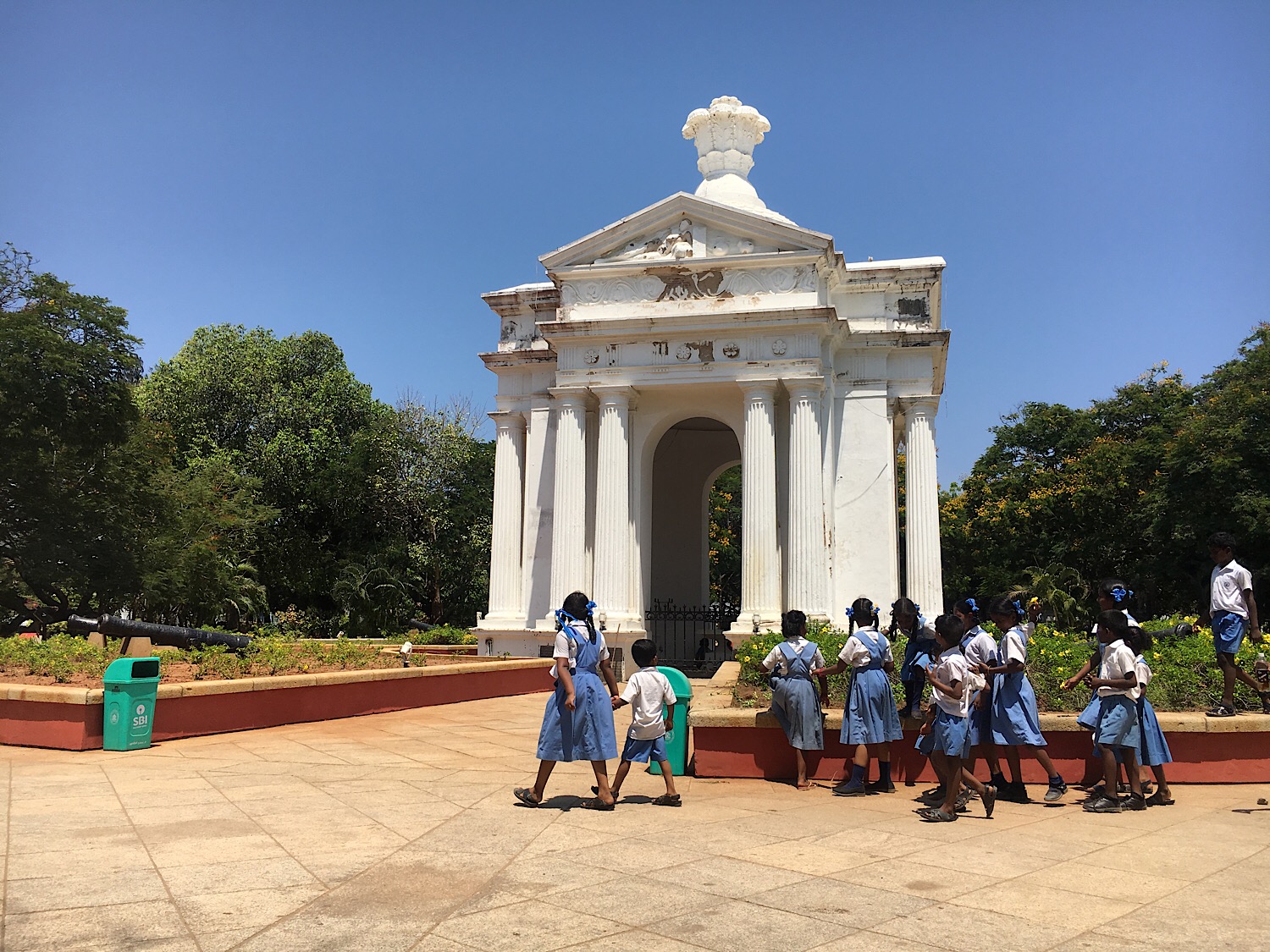
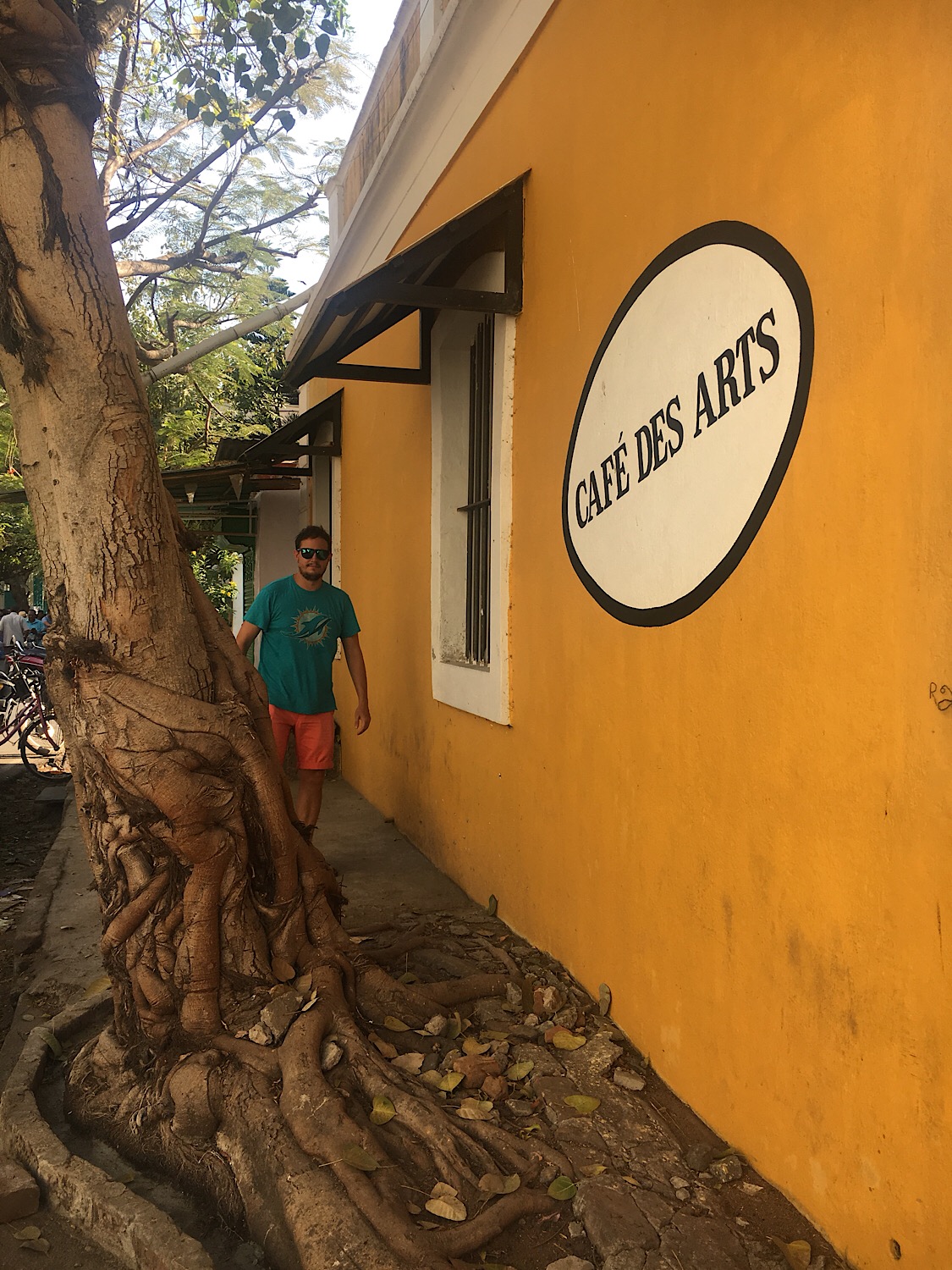
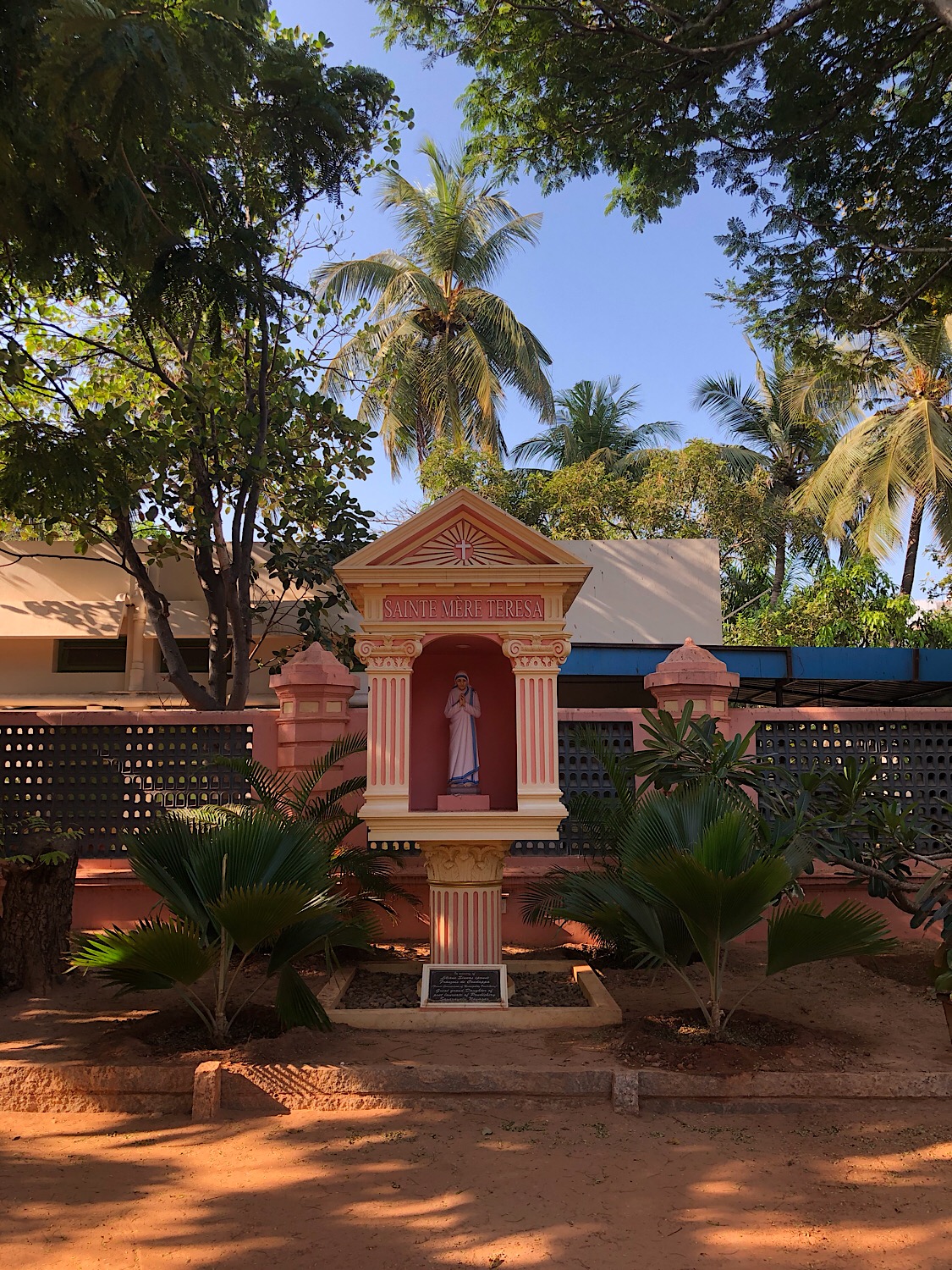
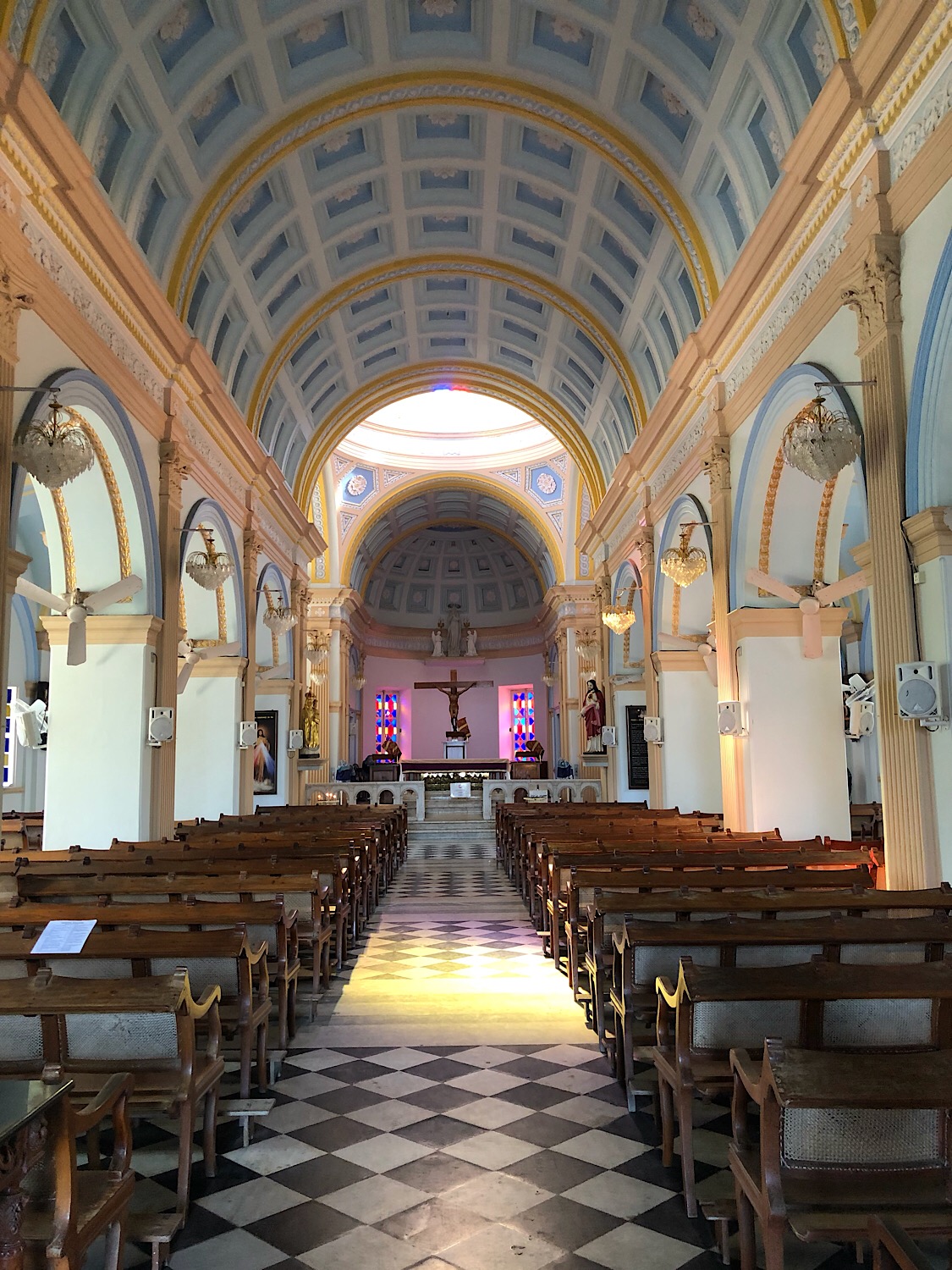
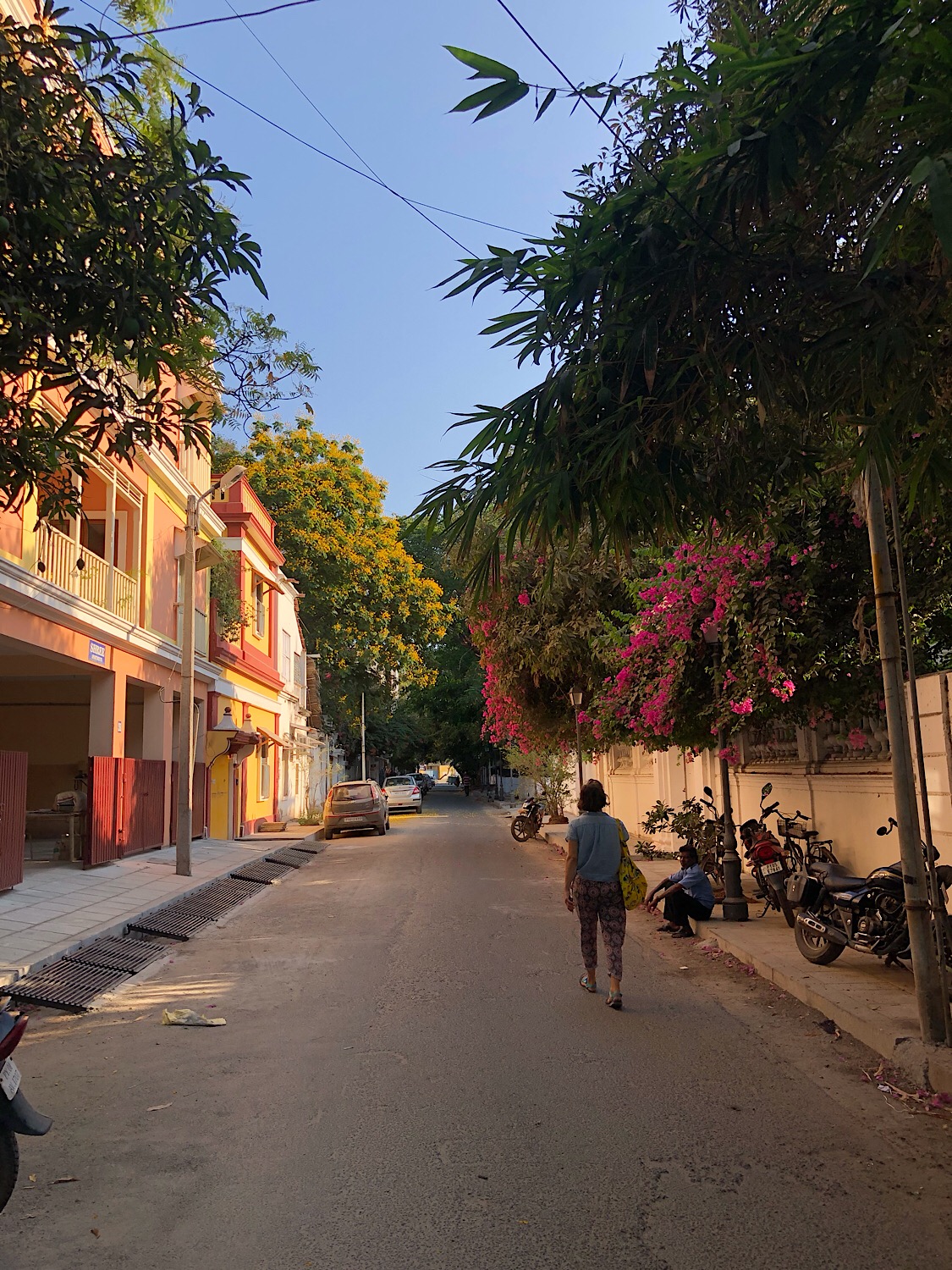
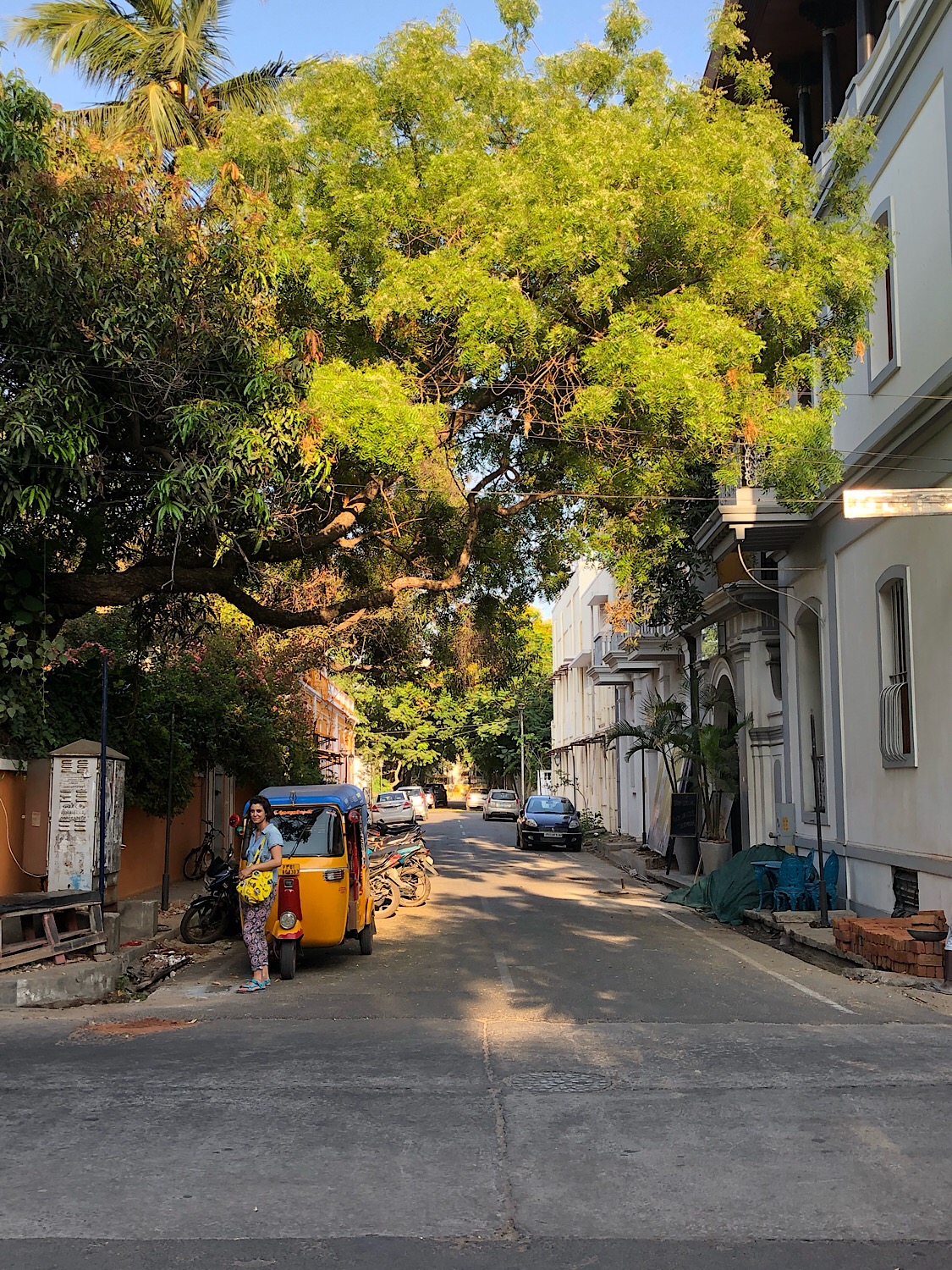
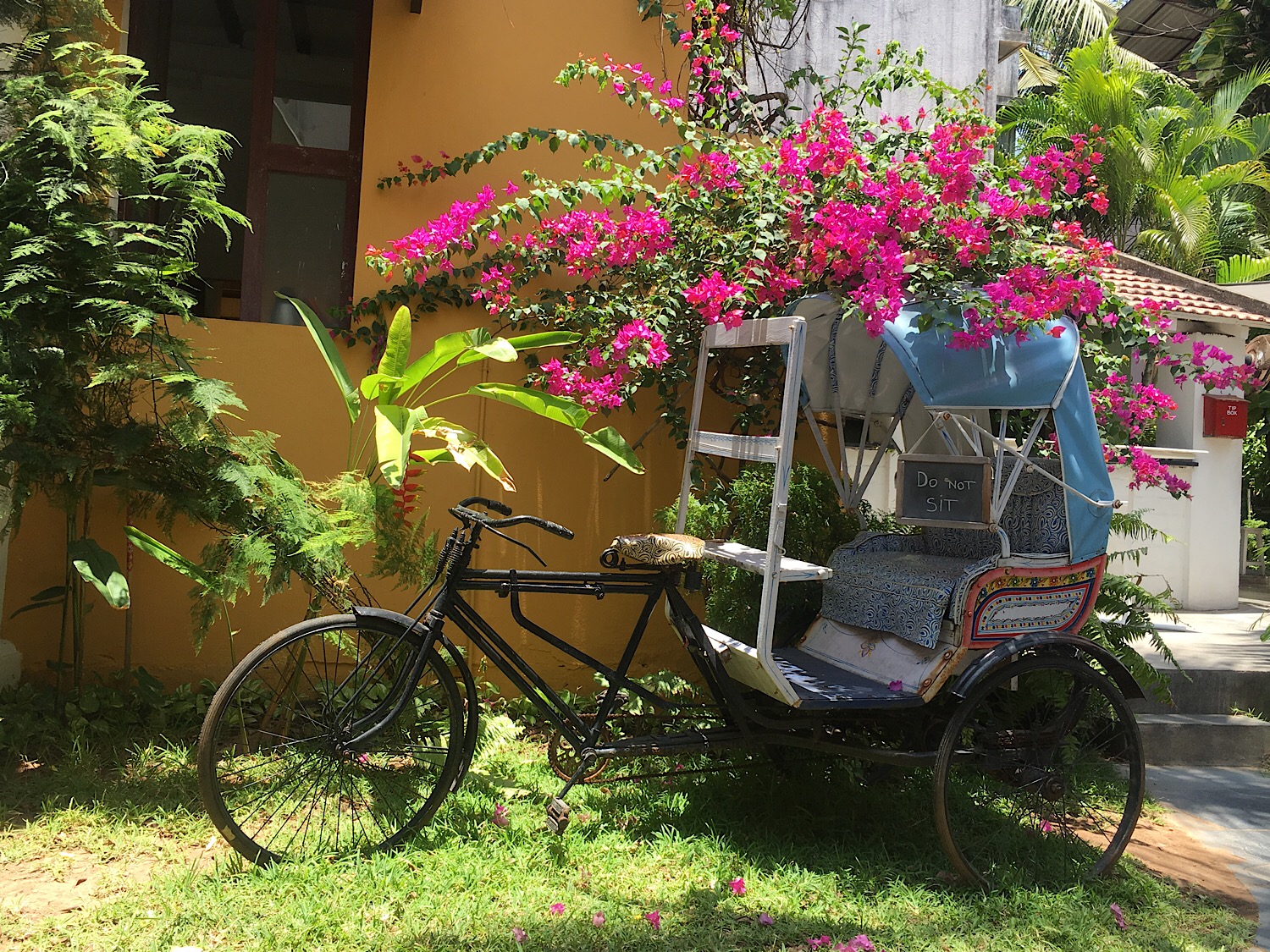
The next morning, we got out into the sun early and down to the French quarter. Pondicherry is located on the south eastern coast of India and was a French colony until 1954. Strolling down the seafront or the plain tree-lined avenues, it felt like we were in Nice. The less-than-exemplary driving on display only added to the sense of familiarity. We just ambled around for the day, having croissants and baguette for breakfast, popping in and out of very trendy, stylish boutiques and discussing whether we should just pack it all in and live somewhere sunny, possibly Barcelona, probably Ibiza. Bougainvillaea spilled everywhere, the sun shone and everything moved a little slower and was frankly very civilised. It made for a nice contrast from the madness of Madurai. A local wished Gaby “bonsoir” and with that, we headed to bed (not with the local).
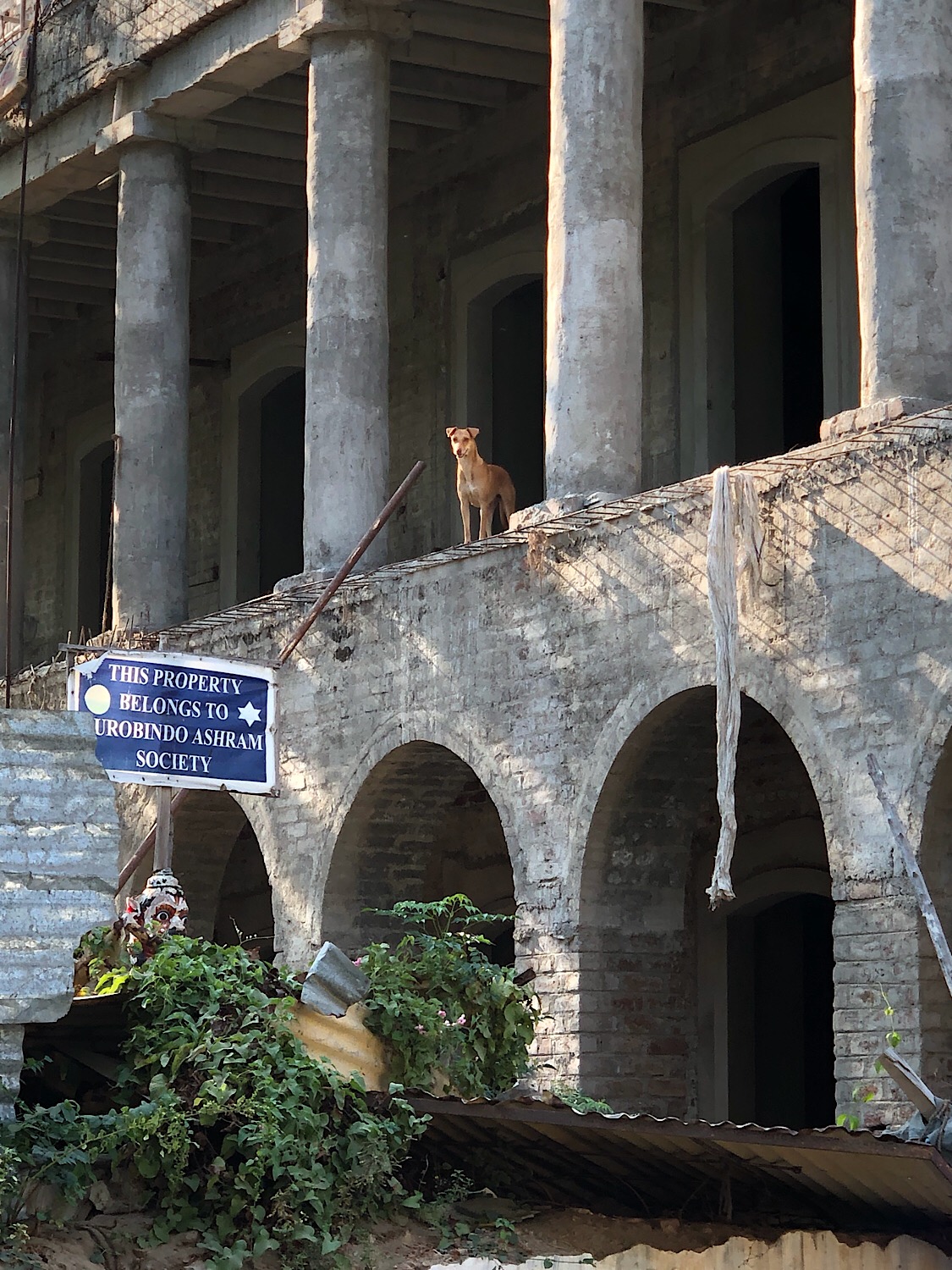
Day 2 followed a similar pattern in the morning, with a visit to a local craft paper factory run by acolytes of Aurobindo (a sort of cult leader who had a local commune, Auroville, established in his honour). The real highlight was, however, our cooking class, run by the Franco-Indian cultural centre.
Asking a Muslim to buy Prawns 🦐
The second instalment in our cooking class series, this Indian edition was the one we were probably most excited about. Run by a lovely local lady, the first task was to choose our menu. Madurai, and especially Paratha bread, was fresh in our minds. That went straight on the list. Alongside this were added a Chettinad Veg curry a milky sweet pudding then we had to choose what we wanted for the main dish. I pushed for Chicken tikka but was rebuffed. With Gabs not eating meat, it became a straight choice between fish and prawns – both great options since we were on the coast. There was only ever going to be one winner there: who doesn’t love a prawn ruby?!
Shopping list complete, off we trotted to the market which was mad, brilliant, chaotic, smelly, overwhelming and everything you’d expect. Divided into sections for the different foodstuffs (meat, spices etc), we made straight for the fruit and veg quarter where we were greeted with an over-abundance of everything. Lots of produce we recognised and plenty more we didn’t. The stalls were often arranged into sub-sections, for example four or five tomato salesmen were placed in a line, each with a local lad sat in a mound of fruit watching YouTube. One guy was really digging some WWE. From their somewhat casual style, it seemed more likely they were engaged in a price fixing cartel rather than cut-throat competition with each other. No one seemed bothered though, and we grabbed some toms, coconut, un ripe mango, cauliflower, spuds, fresh chillis, coriander leaves, onions, fresh tamarind and banana leaves to eat off.
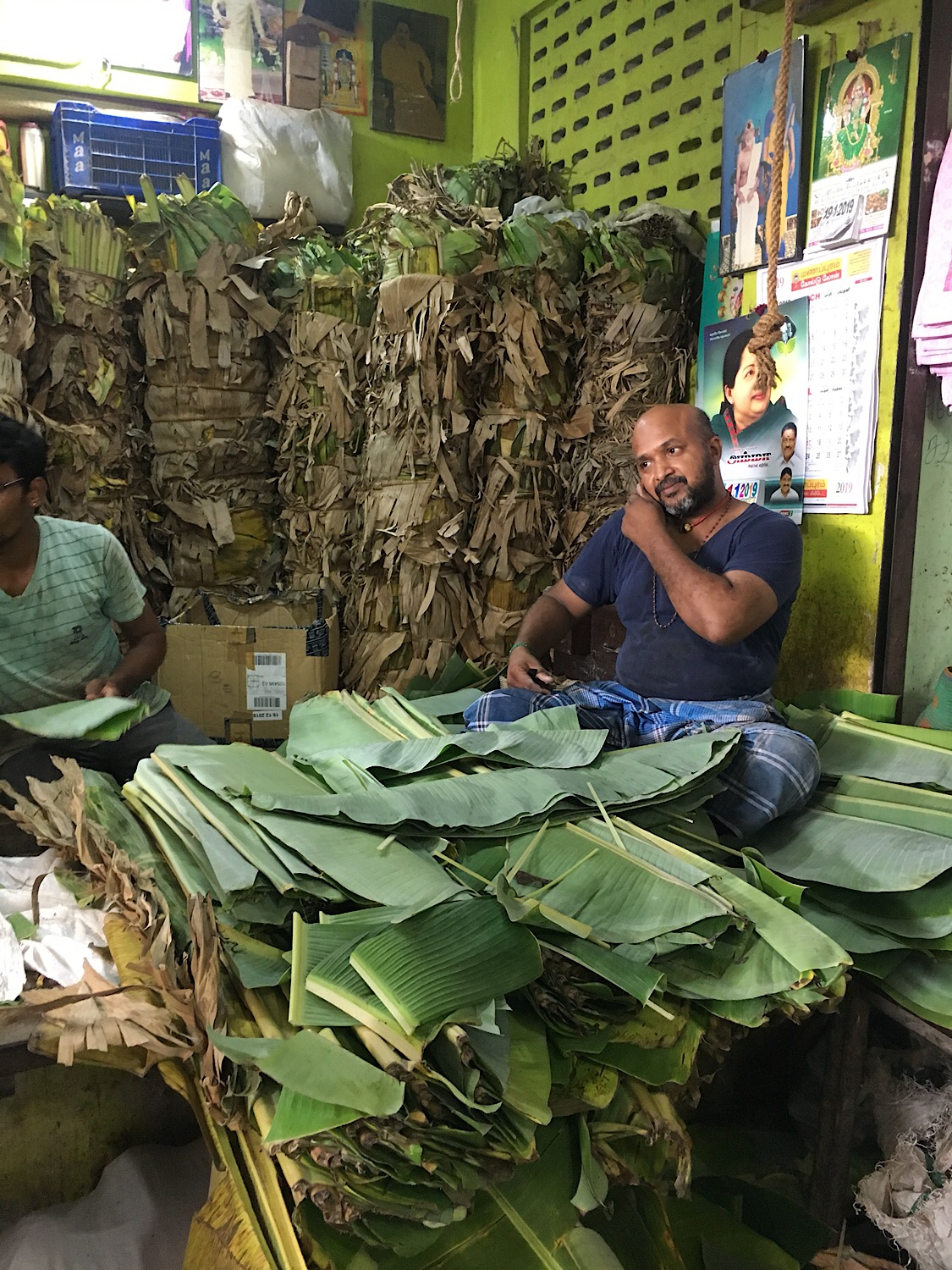
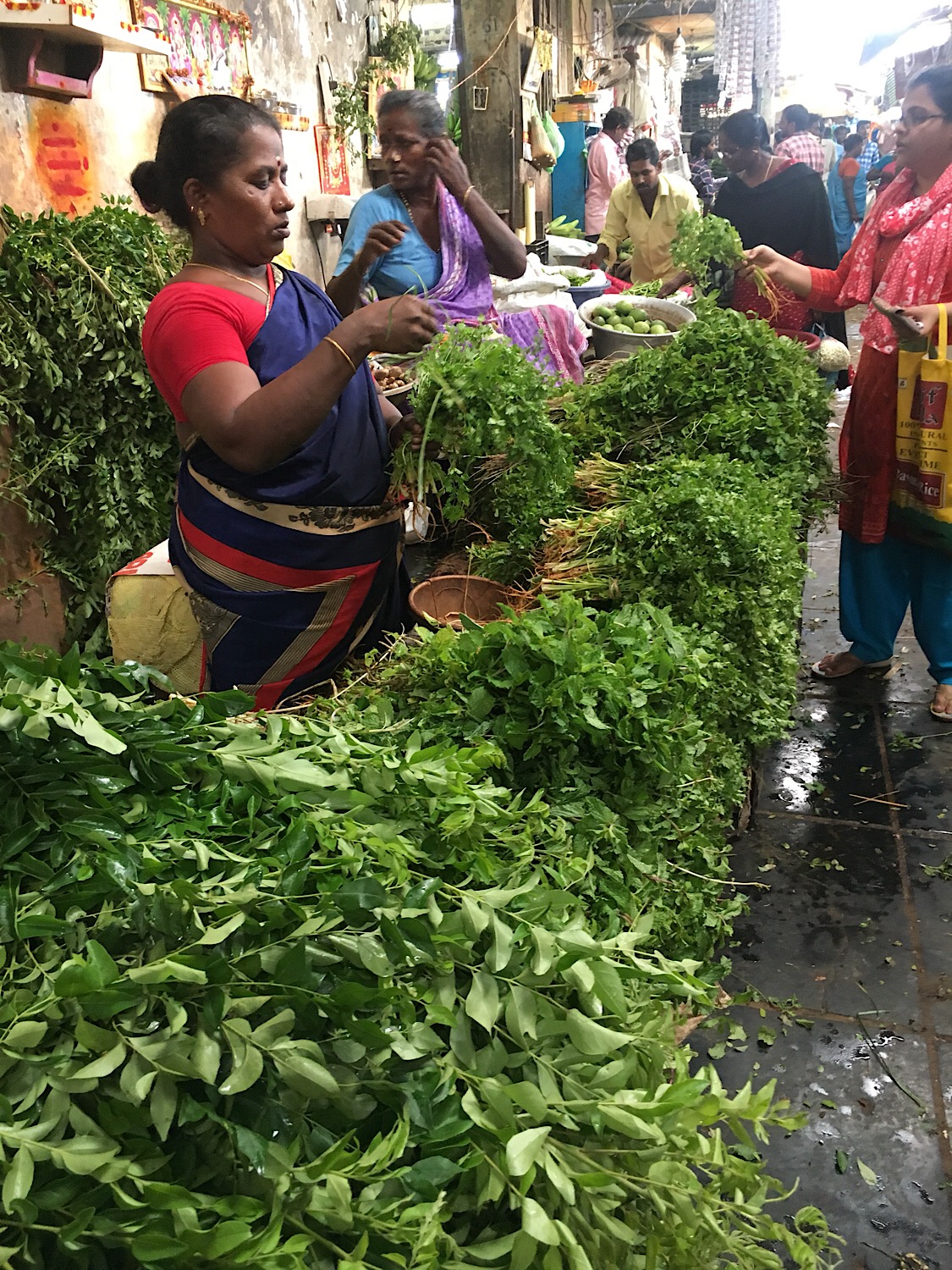
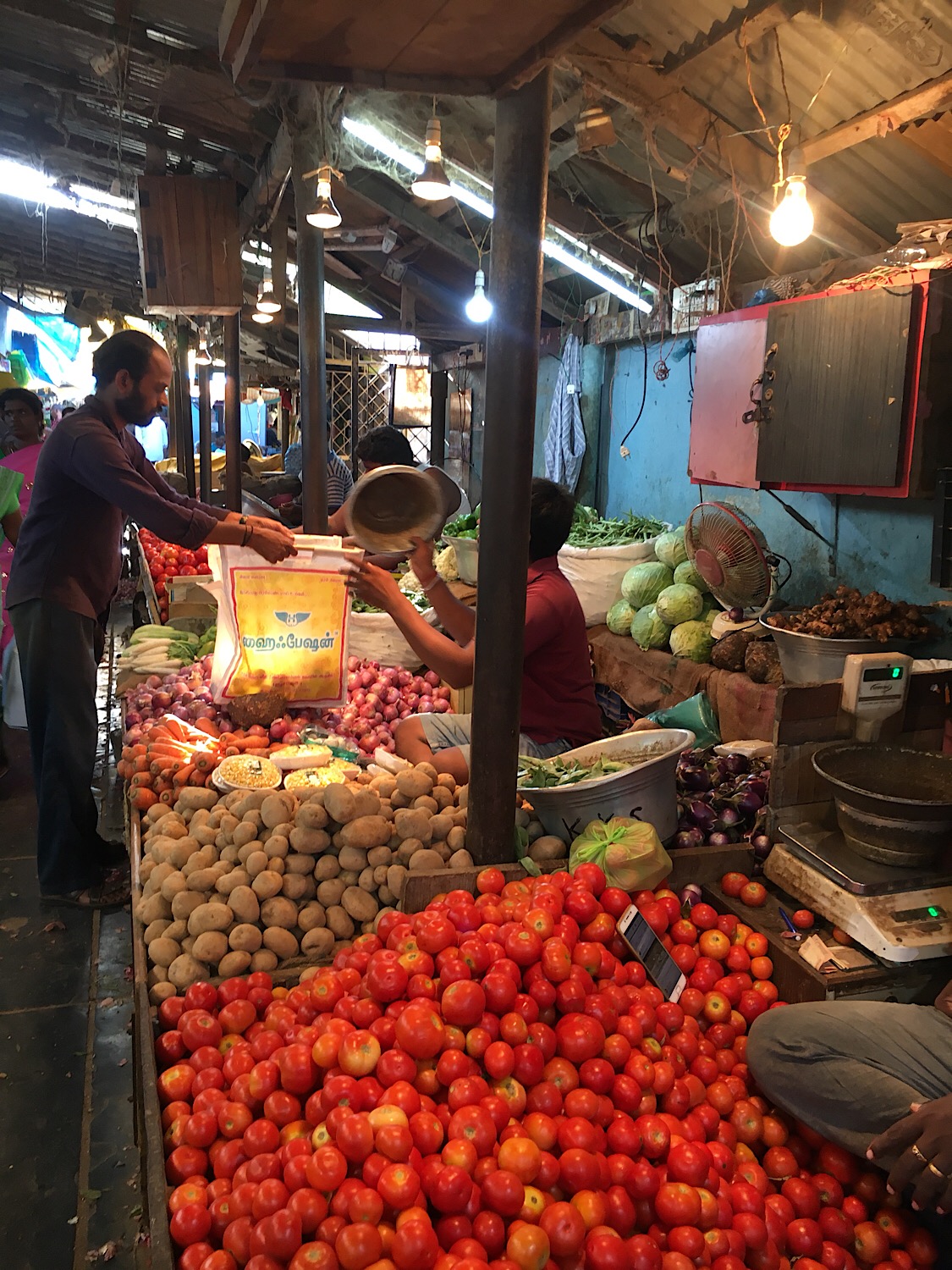
Next we shot off to the fish quarter. Housed in a sizeable, high-ceilinged hall, it was eerily quiet and empty that afternoon, the morning market being the peak time. It was also crawling with cats on the lookout for a morsel or two. Sat around were a few old battle-axes pushing their last bit of stock of the day. These ladies did not seem to have reached the same sort of gentlemen’s agreement that their tomato-peddling compadres had and were shouting over each other in an attempt to win our business. Ideal conditions, you might think, for picking up some fresh juicy prawns at a very nice price. Not so much. In front of each of these bickering barterers was a small mound of scrawny, stinking prawns above which swirled a tornado of small flies who were absolutely loving it. Something of a “Hobson’s Choice” with little to differentiate the slimy mounds. One key difference we noticed, though, was that one of the mounds of prawns lay in a shaft of southern Indian sunlight and had turned pink, having slowly cooked during the day. All other things being equal, surely go for the fresher prawns that hadn’t been slowly warmed in the sun?
Not so. Our lovely guide plumped for the pinker, warmer and presumably cheaper option. Peahead and I were dismayed. Food poisoning can be very serious, especially in a country without sit-down loos and bog roll. Surely we had to speak up?! Utterly bemused and utterly English, we gagged, smiled and said, “Looks great!” as we trotted out of the market back to the cooking school for our very own Last Supper.
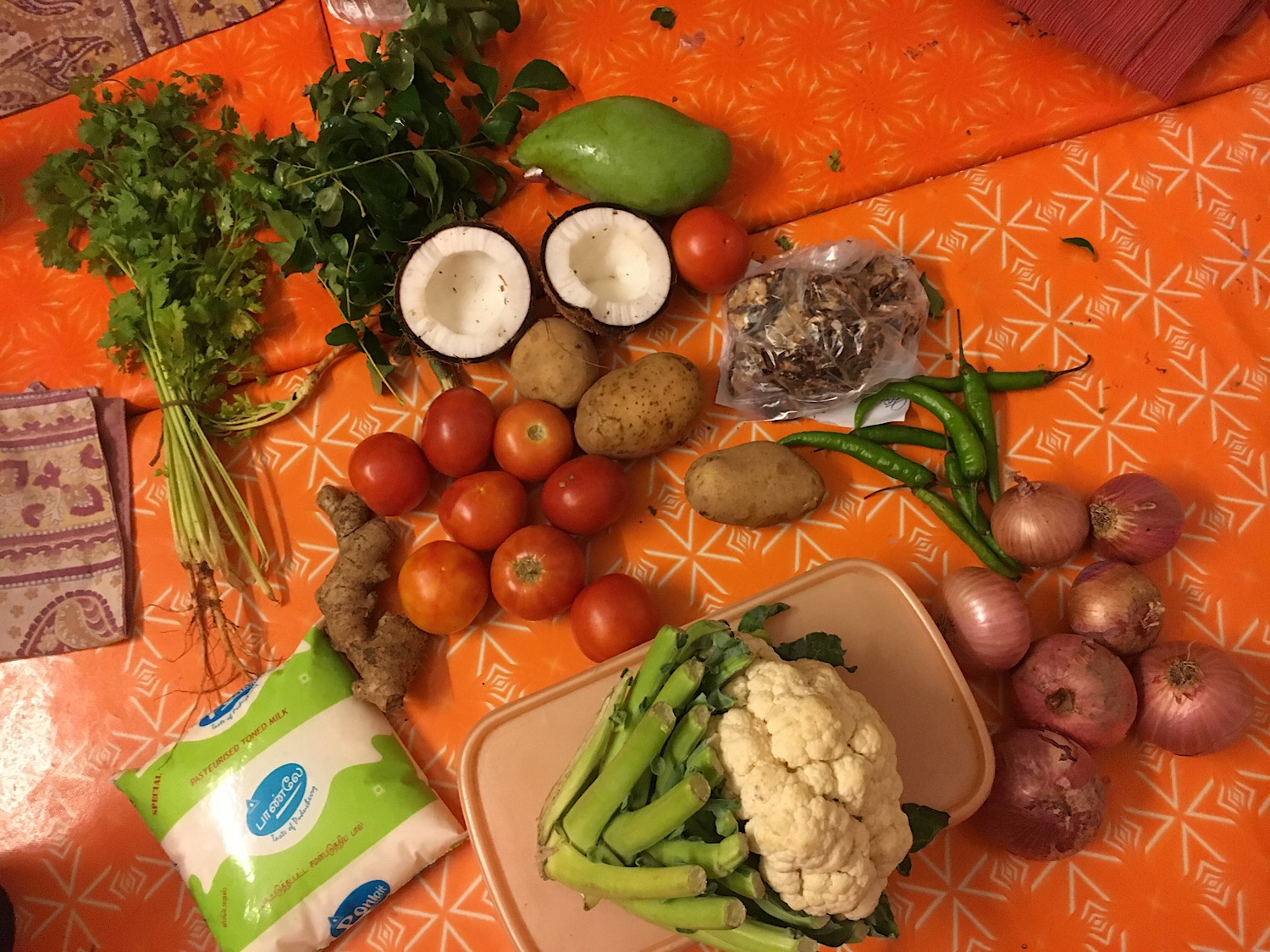
Back at the ranch, we set about chopping and dicing the veg. Mercifully, the prawns had been handed to the housekeeper to take care of. We focused on getting everything ready – it helped to keep our minds off the impending dysentery. The gas hob roared as we fired it up and chucked the ingredients into the pot. First up was the veg curry – a quick dry fry of the usual spices, then in went the cauliflower, potatoes, tomatoes and onions all into a pressure cooker. Quite a useful bit of kit that turned out super flavoursome, fully cooked curry in a fraction of the time it would normally take. You judge when it’s cooked by the number of whistles (or vizzes in Indian English). Next up was “Crustacean Roulette” – spicy, sour prawn curry, made using a blitzed up mix of tomatoes, shallot, garlic, ginger and fresh coconut to which you add chilli, fresh tamarind and unripe mango for added zing (perhaps her choice of prawns was also made on this basis). The prawns reappeared having been washed and peeled by ‘the housekeeper’, whom we never met. There were considerably fewer prawns than we’d started out with as apparently the HK had discarded ‘the bad ones’. We were unsure whether to feel reassured by this and were surprised there were any prawns left, but, in for a penny, in for a pound, we tried to put our fears out of our mind and chucked them into the pot.
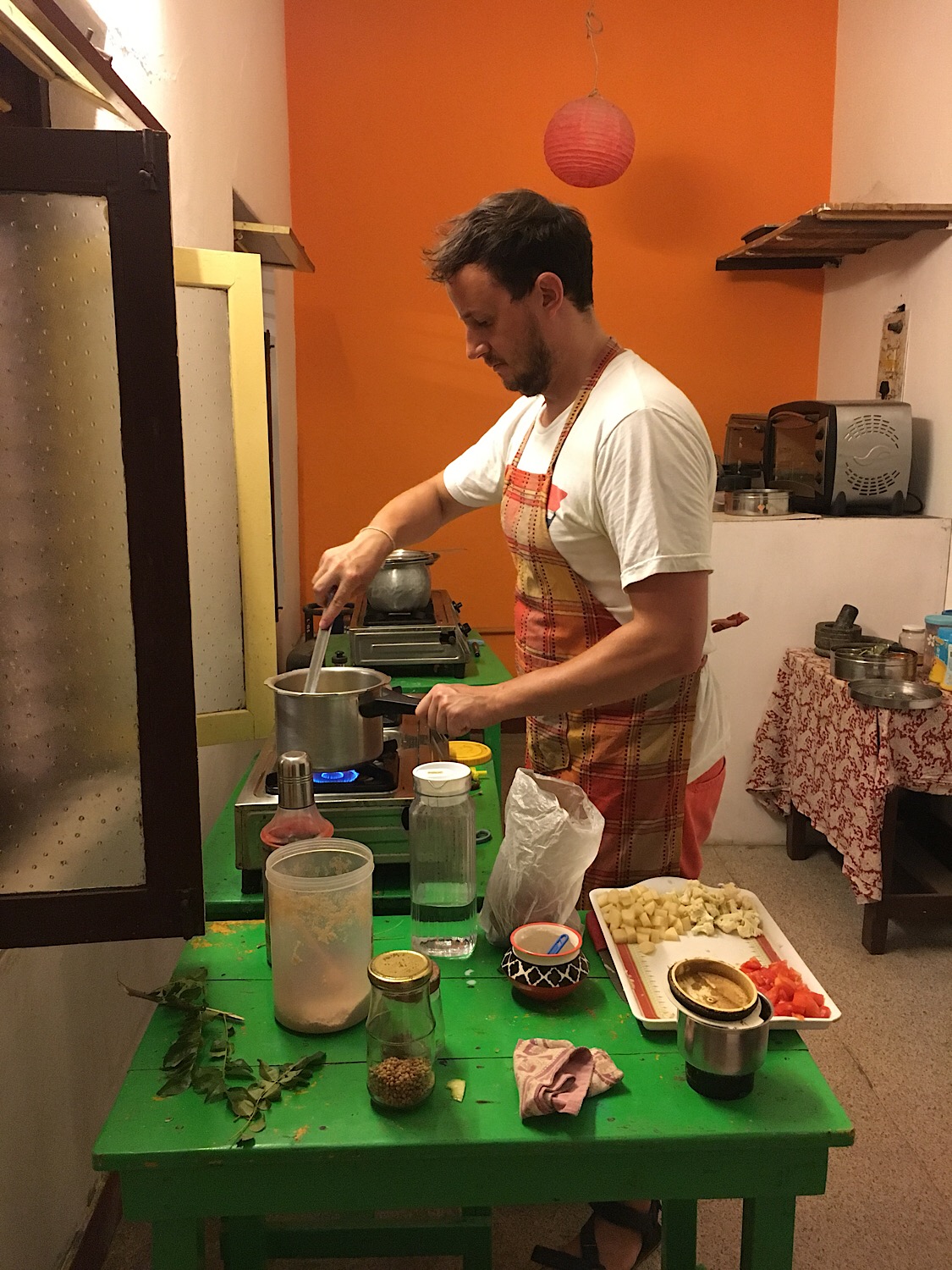
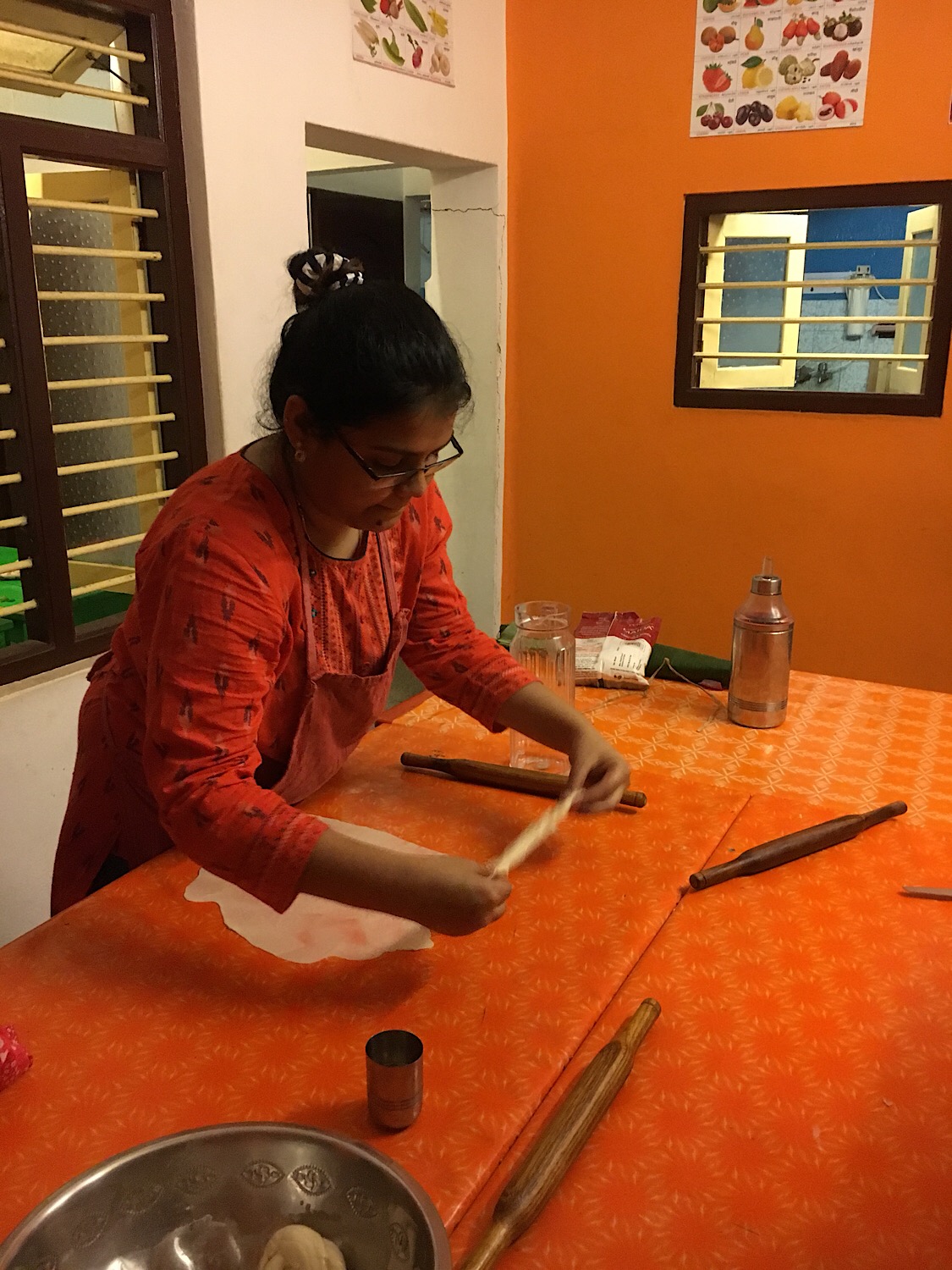
Then for the main event: home made paratha. One of the few disappointing things about making curry at home is the bread: making decent naan is tricky without your own tandoor, while shop-bought stuff is usually too dense and lacks the freshness that is so crucial to these types of bread. More concerning, Peahead had been sleep talking about paratha ever since Madurai (at least I think that’s what she’d been saying), so wouldn’t it be just great if someone could teach us how to make delicious, fresh, crispy, light, buttery, multi-layered, moreish, delicious, fluffy, authentic delicious Indian paratha bread using just a frying pan, some plain flour and water? Luckily for us, our prawn procurer-extraordinaire had this particular trick up her sari. Making a basic flour and water dough (egg is only needed if making a large batch), we rolled out a ping-pong ball-sized bit of dough until it was almost paper thin. I was terrible at this and was mocked by our teacher (I decided not to raise her stellar performance at the fish market). We then folded the sheet of dough multiple times in a concertina from one end, before shaping it into a disc. This was then put into a hot frying pan with some oil for a couple of minutes until it crisped on one side, before flipping and repeating.
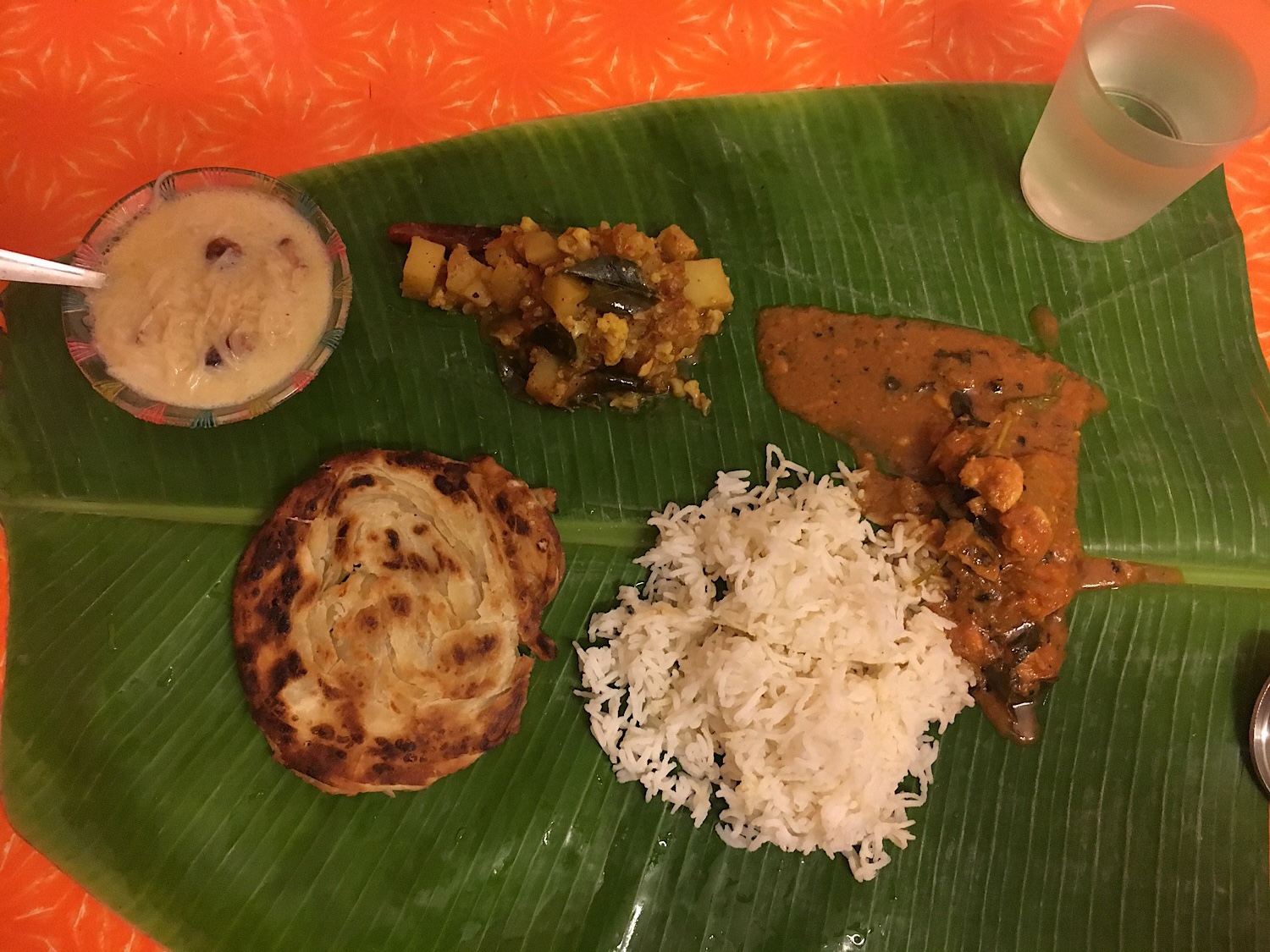
Soon enough it was time to eat. We sat down in a heady mix of hunger, anticipation and trepidation. I’ve often considered curry as a contender for my “death row meal” and so I resolved to enjoy it, come what may. It was all delicious, with the prawns in particular standing out – fiery, zingy, sour but balanced and fresh. The Chettinad veg curry also delivered on its regal backstory – hearty and beautifully spiced. Prawns aside, the ingredients were the real stars here. The freshness really makes it. Alongside all this, we tucked into the Paratha/Parotta. This was simply lush and was all of the adjectives written above. Definitely one we will be bringing back home.
As we ate, we got to know more about our teacher and her life, her family and their recent trip to Thailand to go to IKEA (apparently the Hyderabad branch is “too full of Indians”). She also, sensibly but worryingly, was not tucking into the prawns, which suddenly all made sense (along with the rest of the ordeal) when she told us she was Muslim! She had never bought prawns before and really had no idea what to look for when buying them. We felt a bit bad for putting prawns onto the menu and putting her through this, and we hoped that these bad feelings would stay strictly emotional without developing into anything gastric. We headed off satisfied, full and having learned something golden with the bread. And there was no sting in the tail – the housekeeper had done a top job and we had no problems from the prawns at all. I believe the technical term for this scenario is: “a result”.
The Gorgeous, Americidal Andaman & Nicobar Islands🏝🐠🐊🇺🇸⚰️
This was especially welcome as we had a big day of travel ahead: we were off to the Andaman & Nicobar islands for our next adventure.
The A&N islands are an archipelago of a few hundred islands way out in Bay of Bengal, much closer to Myanmar than they are to India, with paradisiacal white sand beaches and electric blue waters. We had originally wanted to visit when previously in India in 2016 but it was too far to get to, so we were really excited about this trip.
The islands also have an interesting history. During the glory days of the British Empire (no doubt soon to return), the Brits used the islands as a penal colony for Indian political dissidents and criminals. When independence came, the islands therefore reverted to India despite being nowhere near the mainland. For Indians, the islands represent the struggle for independence and so hold special significance, with moves underway to rename some of the islands to reflect the fight for freedom, rather than their somewhat dull current British names (one of them is simply called, ‘John Lawrence’, who sounds like he might have been the landlord at the favourite local of whoever was in charge of the islands back in the 1800s).
A number of the islands are also inhabited by indigenous tribes who date back to ancient times. Some are of Negrito heritage, linked to tribes in Africa many thousands of miles away. They still live a very basic, traditional existence and are not particularly receptive to outside contact. For this reason, tourists are not allowed to visit the islands and areas they inhabit, scattered across both the Andaman Islands in the North and the pleasingly-named Nicobars in the South. Recently the tribes were in the news when an American missionary, hellbent on converting these people to Christianity, was shot dead with a bow and arrow by a group who had had enough. He had been bribing local fishermen to take him to the islands and had been warned a number of times to stay away. He met with a suitably biblical end but he probably died believing he was a martyr so maybe like all successful negotiations, everyone came away thinking they’d won! Despite Gaby‘s strong sense of religious duty, we were staying away from that particular hornet’s nest and would be visiting Havelock Island and Neil Island (named after the governor’s plumber) for a week each.
Our journey began with a seamless 3 hr taxi from Pondicherry to Chennai, with the only wrinkle being our hostel-owner’s overweight son, who was hitching a free ride, trying to divert the car to his granny’s house in the middle of city as a priority ahead of us getting to the airport which was on our way into town. His pleas were thankfully ignored but I’m sure he got over it when granny presumably gave him a plate load of biscuits and Indian sweets. This was followed by a 2 hour flight to the capital Port Blair, where we had to stay for a night as they bizarrely don’t run any ferries to the other islands after around 4pm, despite a number of major flights arriving around then. Port Blair was listless and drab so I’m not going to waste any time writing about it.
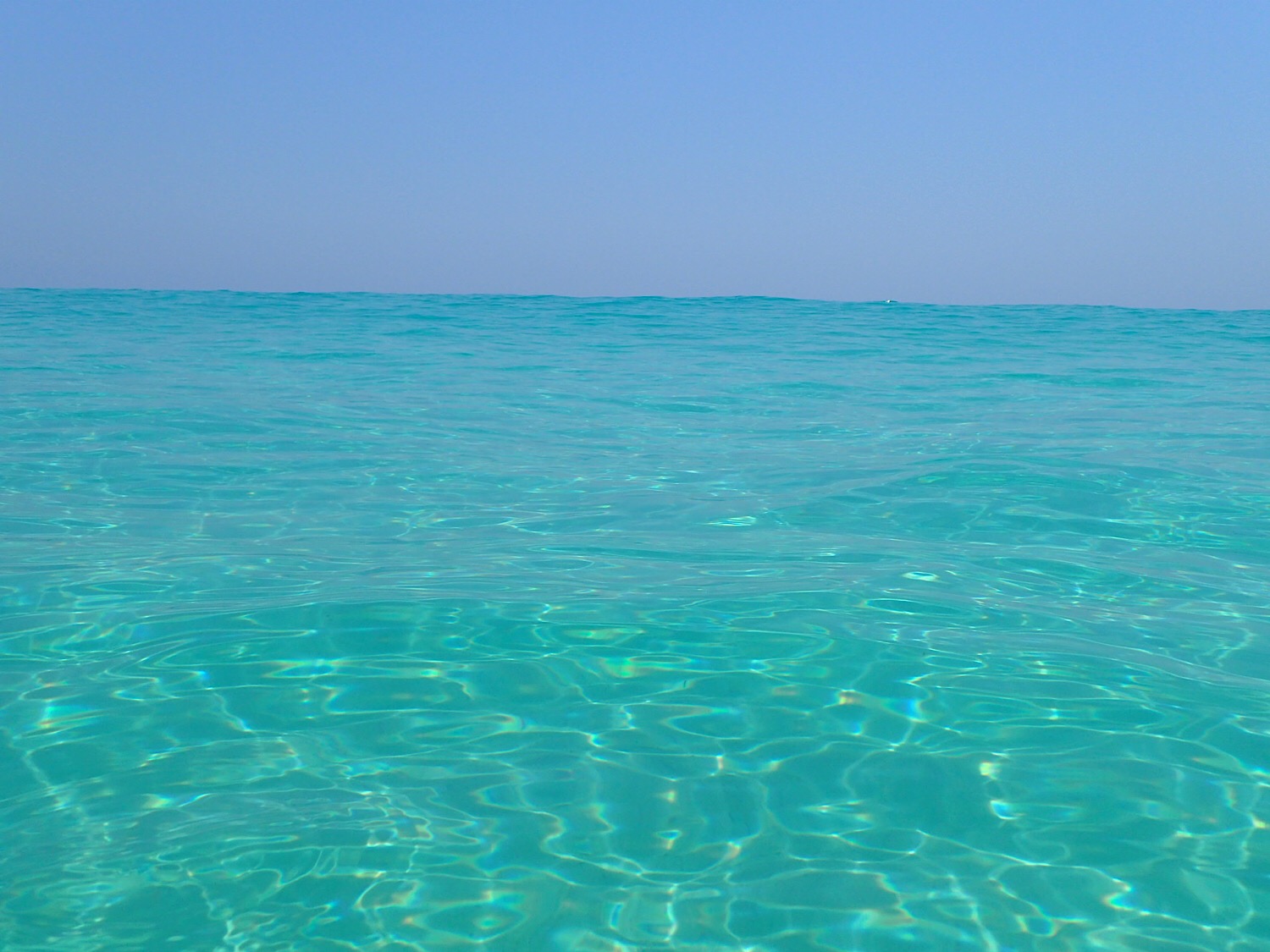
Next morning we headed straight for Havelock, which is one of the larger and more popular islands. We checked in at a tiny seven-bed hotel near to the beach and immediately got down to the water’s edge. It was beautiful, pristine yet rugged (much like yours truly), with no development at all on the beach and hardly anyone around. The water was about knee deep for at least a hundred metres out, giving off an brilliant light and it really felt and looked every bit like we were on a remote desert island. The only downside to this was that the water was quite literally as warm as a bath, which would be great if you were on a surfing weekend in Croyd in November, camping next to your car in a lay-by, but perhaps didn’t provide the refreshing respite we needed at that point under a searingly hot sun. Despite this extremely unfortunate inconvenience, we managed to get over it.
Over the coming days, we hired mopeds so that we could explore the island’s other beaches and settled into a fairly standard beach life rhythm, getting up earlyish to get to a beach, flop down for the day, splash around a little and then come home. Each of the seven beaches on Havelock were beautiful, each in their own way, and all of them were very natural and untouched, with no bars, restaurants or other development nearby.
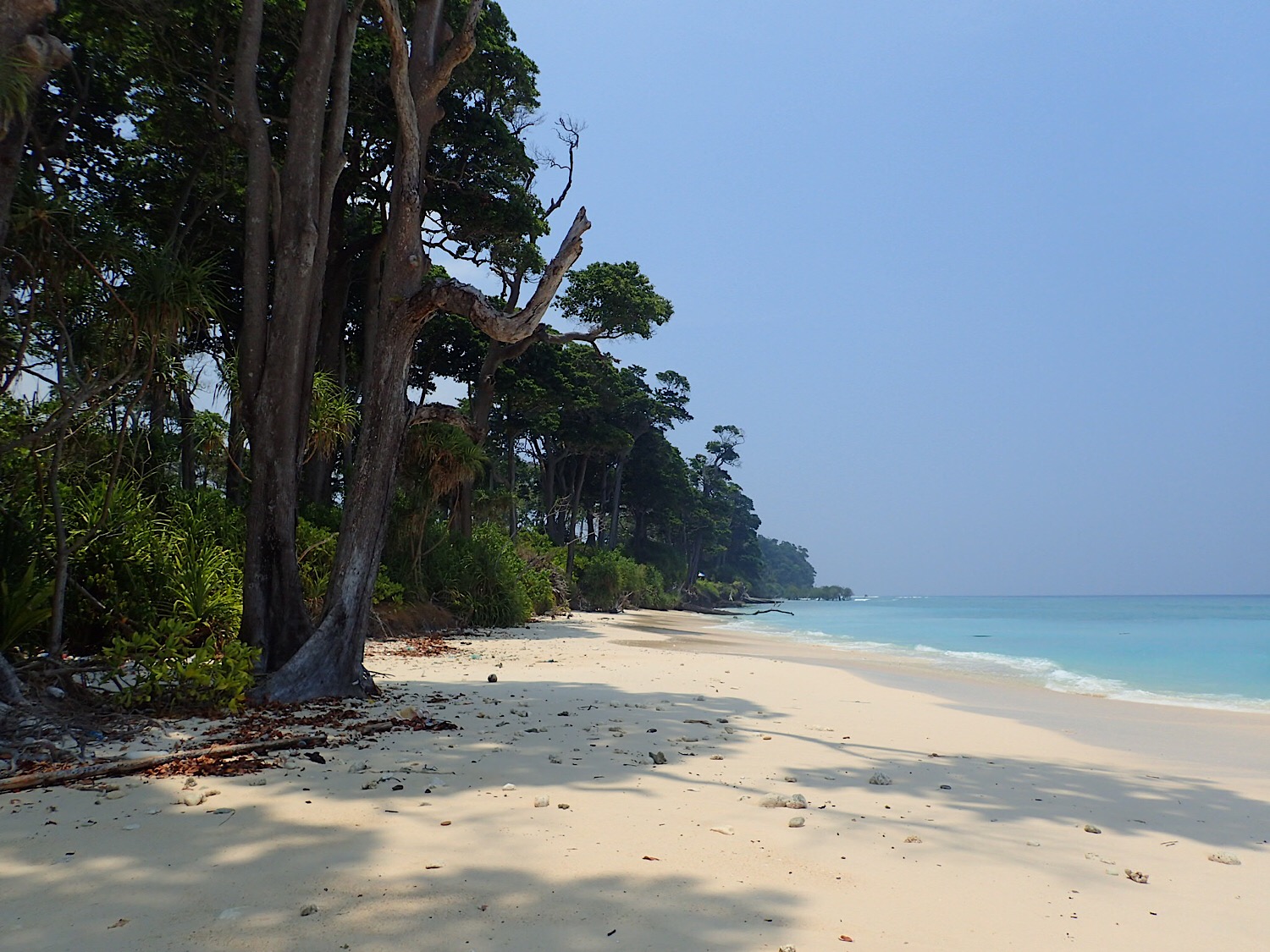
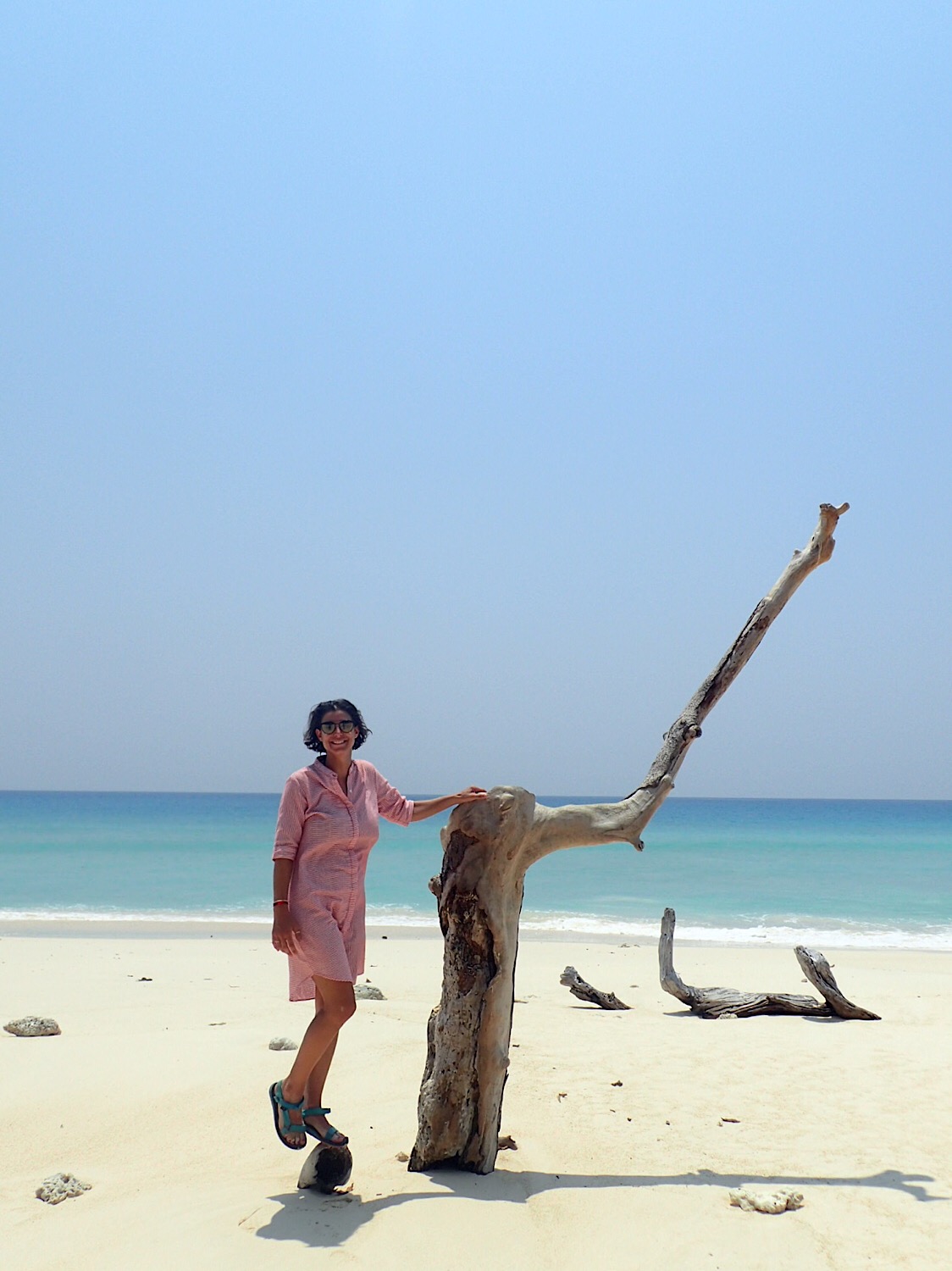
The only variable to really weigh up was the size of the crowds (to the extent that these existed at all). This really was not an issue at all: despite seeing many (predominantly Indian) tourists when driving around and a number of large hotels, there was hardly anyone on the beaches. The Indian tourists seemed to have no interest in swimming in the perfect, turquoise sea or lying on the luxuriously soft, white sand in the dappled shade of a verdant tropical forest under a nourishing, warm sun. Clearly we must be mad. They did like to briefly pitch up in jeans, shoes and polo shirts for some Insta shots but they would soon vanish never to be seen again. Whatever floats your boat.
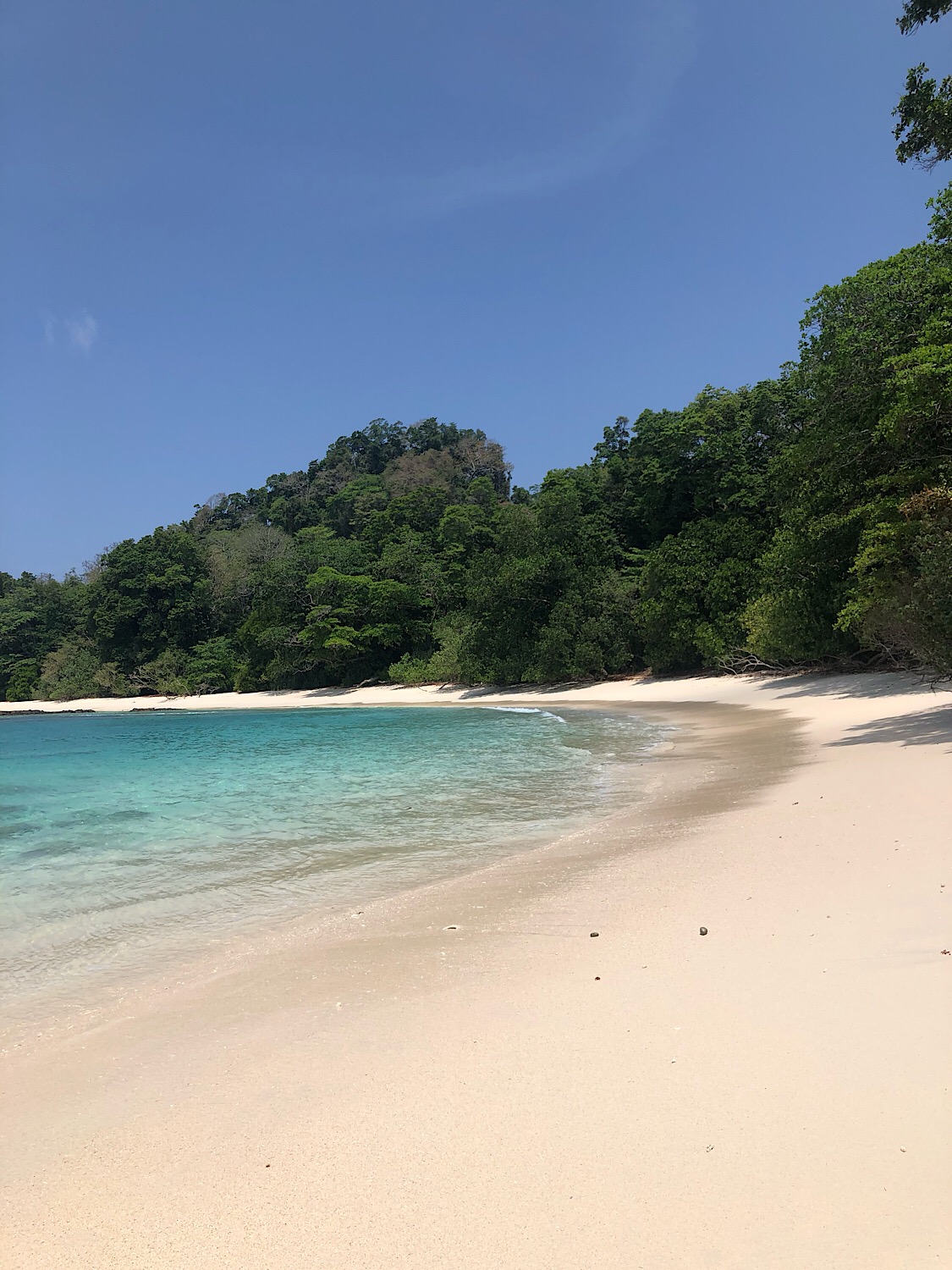
There was one beach that stood above the rest however: the romantically-named Beach No. 7 (all of the beaches are numbered, adding a slight Marxist flavour to the mix). This is arguably the most well-known beach in the entire of Andaman – partly due to a recently deceased ocean-going elephant named Rajan – and it does not disappoint (apart from the lack of a resident ocean-going elephant). A large swoop of white sand sat within a national park, it was somehow even more untouched and “natural” than anywhere else we’d seen. It also had much deeper water than Beach 5 (next to where we were staying), which was lush, cool and crystalline. Even beyond standing depth, it was completely clear allowing you to look straight down at the white sand seabed. It was sapphire blue and coupled with the completely transparent water, it sometimes felt like you floating in a giant bath that had had blue food colouring added to it. It was hard to believe your eyes and to believe it was all natural.
Except it obviously really was natural and in fact that “natural-ness” was probably the thing that made this place just so special. There are a number of places in the world where you can sit on a white beach in front of impossibly bright blue water, but many of those are manicured to within an inch of their lives. I have not been to the Maldives and I’m sure I would have a swell time there (no pun intended), but I have a sense I might find it a little bit fake. At Beach 7, however, it comes as it is. None of the sand is raked, there are many fallen leaves on the sand from the neighbouring tropical forest, there are no sun loungers nor anywhere to get a delicious cold beer. But it is because of all this that it feels so special and real. The raw visual ingredients are all here – white sand, blue waters, lush green forest and, crucially, somehow no plastic at all – but nothing has been done to it and as a result you are left with the feeling you have found an incredibly rare, unspoilt corner of the earth, like you’ve discovered a precious secret and it feels very good and smug to be there.
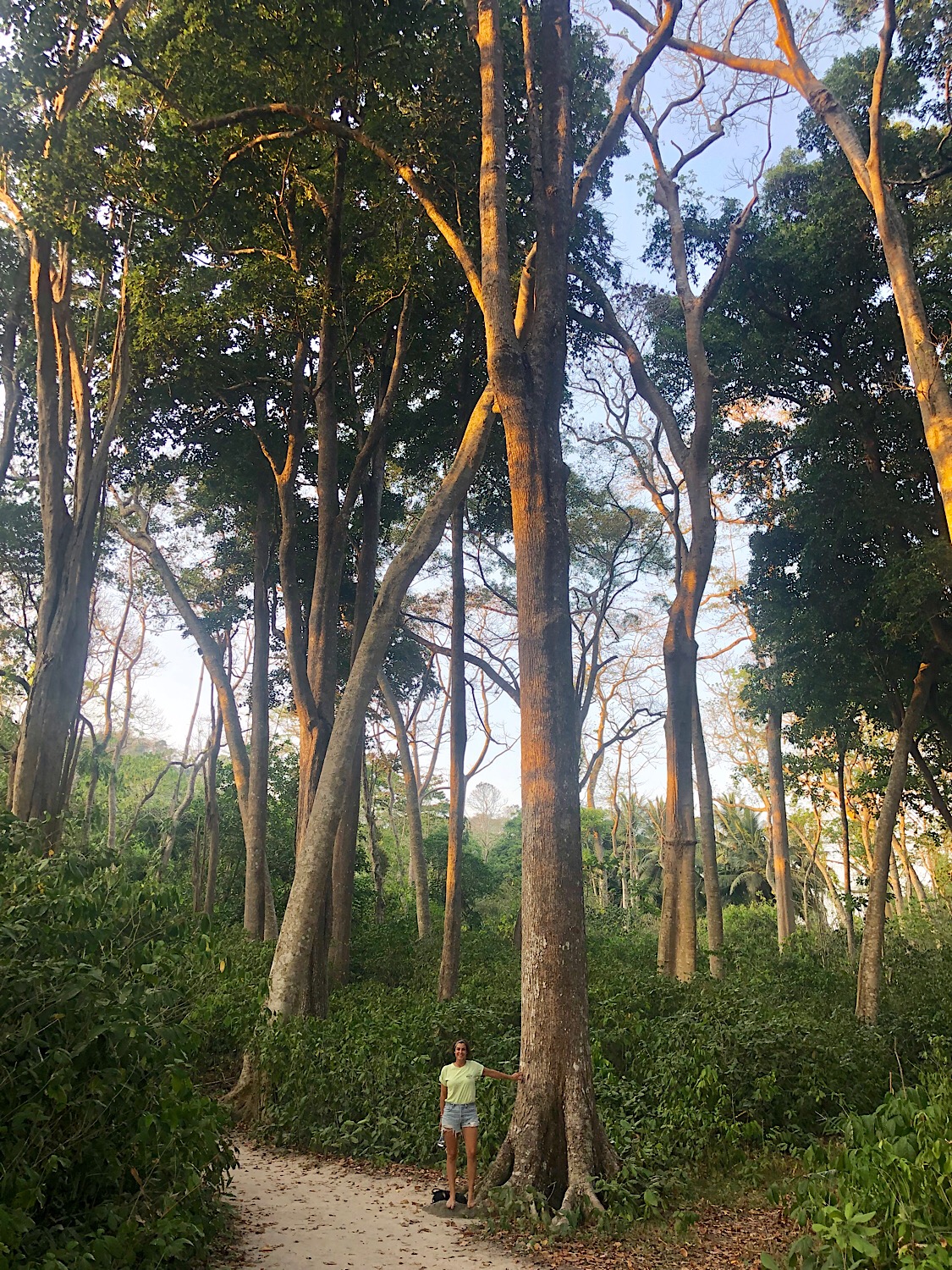
Consequently, we spent a good couple of days there. The Indians liked to stand in a largeish group around the entrance to the beach but then leave the rest of the kilometre long crescent to us pale-skinned Goras. We just read, bobbed around, slept and had ridiculous conversations about what we would the menu would be on our ideal restaurant food and drinks experience with mates. It was sublime.
In search of greater beauty and greater adventure, one day we headed down the beach to a much-vaunted spot with an equally idyllic name: Neil’s Cove. Trudging for about 25 minutes through the perfect but inconvenient-for-trudging white sand, we passed a sign: no swimming under any circumstances. Salt water crocodiles in the water.
Turning the corner, dripping with sweat, the cove was undeniably beautiful. Shimmering blue-green water filling a steep crescent of white sand backed with thick, bushy jungle. The water was in effect a large rock pool, with hundreds of tiny, craggy rocky peaks and ridges just nudging above the surface. It was also an undeniably risky place to take a dip. This was a place where, a few years before, an unsuspecting tourist had been serenely paddling around, congratulating himself on discovering this little corner of paradise, maybe whooping and hollering, perhaps high-fiving and shouting “YEAH BABY!”, before being unceremoniously devoured by one of the local sea-faring crocs. He was (the tourist, not the croc), if you hadn’t already guessed, American, just like our missionary friend mentioned above.
The sign we had passed was a sort of a legacy from this unfortunate episode and, perhaps unsurprisingly, we didn’t meet any other of our friends from across the pond during the rest of our visit. Anyway, we had our own skin to watch out for, and the demise of the americorn plus the sign plus the plethora of very crocodilic (?) rocky noggins poking above the water was plenty enough for me to shit my pants and absolutely refuse to enter the water. Peahead, on the other hand, was already stripped off and ready to dive headlong into the tempting, dangerous waters. I informed her of my assessment and she laughed. After all, she is much harder than me, having done a brief stint as a pro crocodile wrestler during her summer in Tobago while at uni. There was a bit of debate and she rinsed me out more than once, but, interestingly, ultimately didn’t put her money where her mouth was. Big chat, not so big game. We trudged back towards the Indians and safer waters, whereupon we both threw ourselves into the lushest, coolest plunge. Much lusher than what old Neil could have offered. My plan all along, executed to a tee.
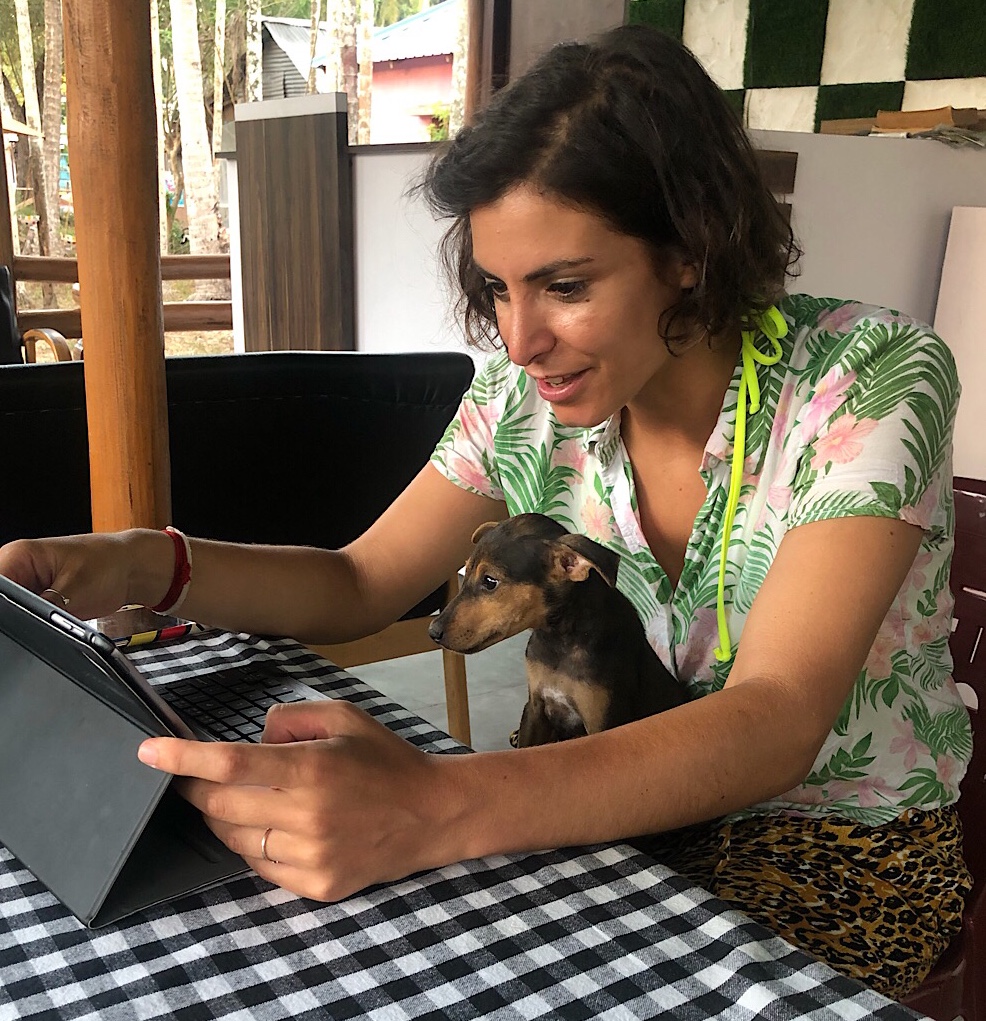
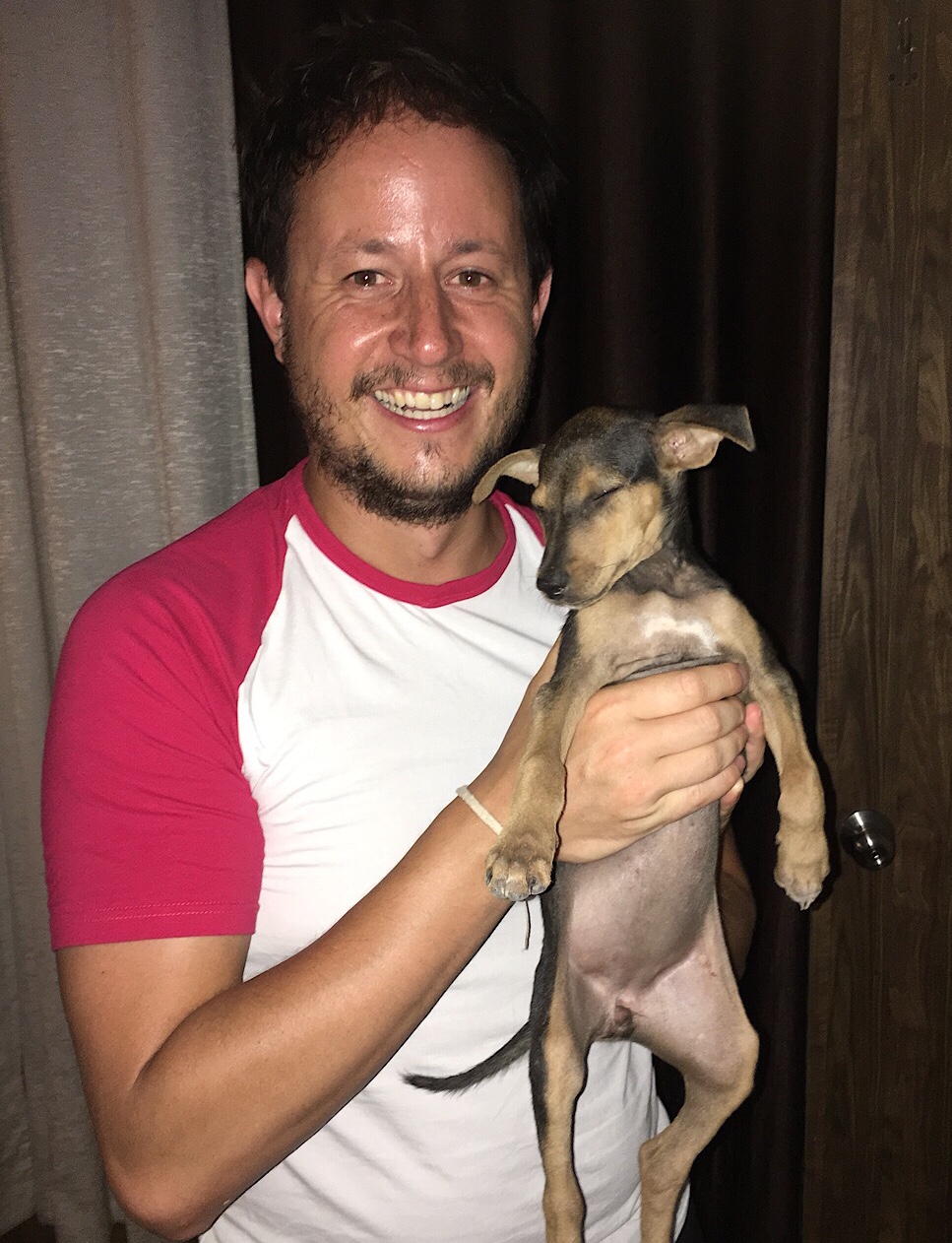
In the evenings, we’d normally enjoy a beer back at our gaff before heading out for food. This would normally include some time with a new canine friend. Early on, we had discovered a tiny puppy roaming around in the grass outside our room, no more than two months old. Peahead and I were instantly putty in its paws. It wasn’t clear who, if anyone, it belonged to so we assumed ownership and named it “Puplito” before quickly realising she was a little bitch, at which point she was renamed “Puplita”. She was adept at extracting food from Gaby, especially at breakfast where she would eat toast but only if buttered and served with egg. We were all getting along famously until one morning, Puplita vanished completely, never to be seen again. Conspiracies have abounded ever since, including that she was devoured by a saltwater croc, but we’ll never know. Maybe one day we will be reunited. The only lasting mark is from where she nibbled Gabs. We are waiting to see if she develops rabies, which kills around 25,000 people annually in India, so that’s keeping us on our toes.
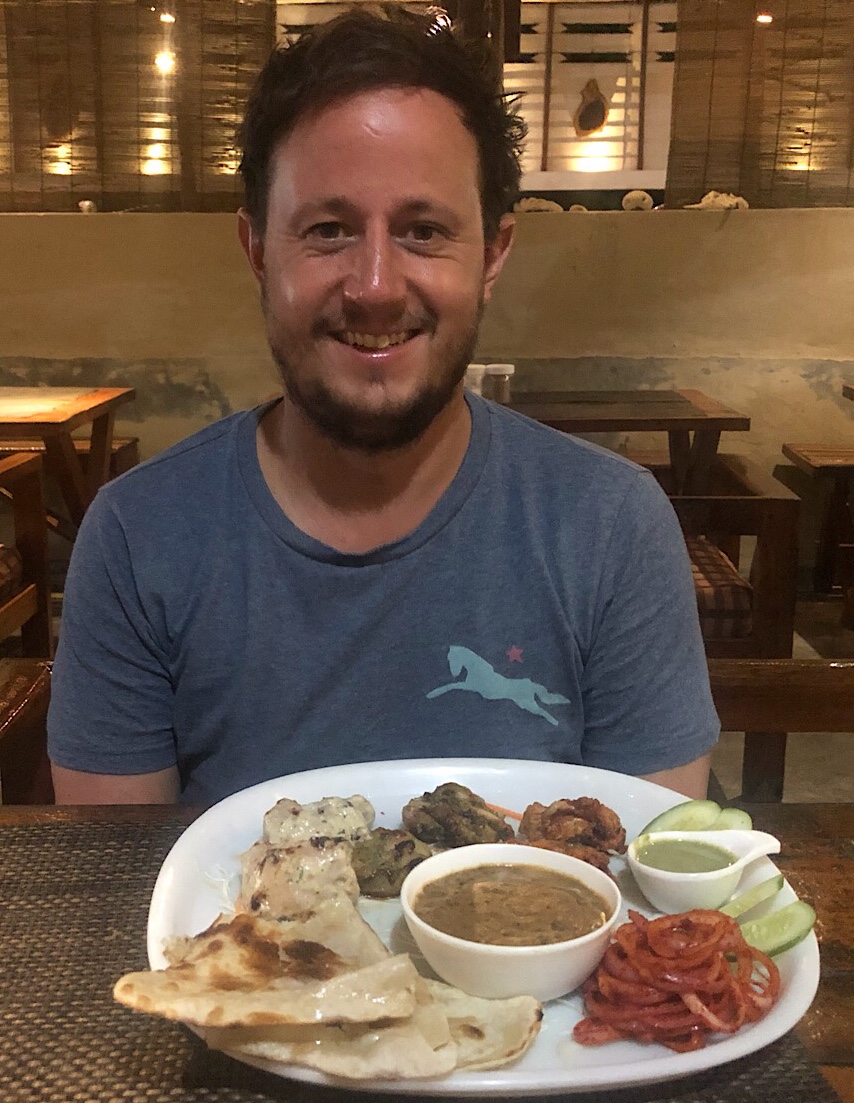
The local restaurants were surprisingly excellent and so we would reward ourselves for our hard day’s work with tasty food but sadly no beer – the island had run dry, apparently something to do with the Indian elections. But the food was lush and the real standout was Anju’s Coco Resto which served an amazing Tikka three ways: Malai (creamy, herby marinade), achari (hot and sour like lime pickle) and normal (normal). You could have it as fish or chicken (fish possibly shaded it) and it came with the essential fresh lemon, raw red onion and a slaw. We had paratha to cap it off. Utter lushness.
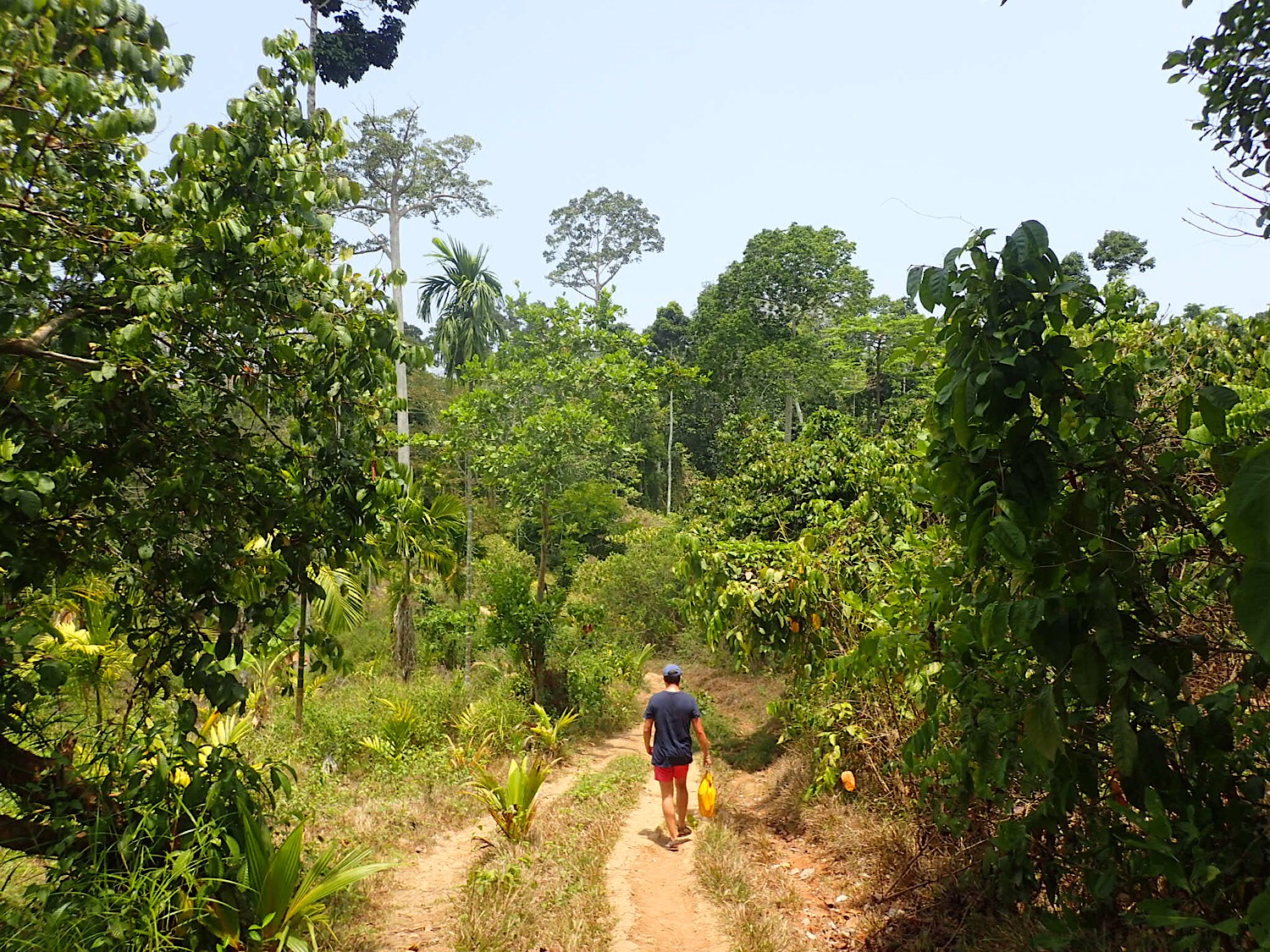
Days came and went, and after a bit we started to get a little bored as there are only 7 beaches, of which one was really stand-out, with the others being pretty but not really swimmable. So one day we decided to trek to Elephant Beach. Not being reachable by road, we thought we might be on to something special. So we drove our mopeds to the edge of a jungle and got our stomp on. Once used as a logging route (with elephants used to drag the timber), the walk took us through a lush, imposing rain forest where we encountered pineapple bushes, palms, vines and enormous trees (all the classics). Scampering up and down hills along the way in the morning sun, it was also extremely hot and sticky and I almost spontaneously combusted twice. At the foot of the jungle it opened up into a strange, otherworldly sparsely wooded, swampy beach, with black soil mixed in among the sand and quite literally millions of hermit crabs occupying thousands of mini pools. We could also hear a strange buzzing sound, which I presumed was some sort of killer hornet, but as we turned the corner, we were confronted by the sight of what seemed to be all of the Indian tourists on the island thronging on the beach while several jet skis rocketed around in the sea with whelping paying passengers on the back. This is where they all came, but on day boat trips rather than schlepping through the jungle like yours truly. Not quite the idyllic, remote island paradise we had been expecting but a beach nonetheless and with my temperature running at around 174 centigrade, it was time for a plunge. Or not. As we approached the water, a shrill whistle filled our ears followed by the coastguard telling us swimming was banned. Apparently a man had died from a heart attack while swimming a few weeks before and so, in a brilliant and inimitably Indian piece of logic, it had been concluded that swimming here should be banned until further notice, lest hundreds of tourists also suffered instant cardiac arrests on entering the water. Jet skiing at 1000 miles an hour whilst scarcely under control was fine though. After that, we crossed our fingers that, for the remainder of our time there, no one expired while on the can or eating or performing any other essential daily task. With little else to do, we turned around and walked back through the jungle, and I nearly caught fire again.
After around five days, it was time to move island, so we jumped on a ferry to Neil Island where we would spend another four or so days. Substantially smaller than Havelock, little Neil felt less developed and more rugged. It was certainly less visited but still had a fair number of tourists and they seemed mainly to be western with fewer Indians around. We stayed in a lovely split-floor Cabana, rustically built out of palm fronds and wood. It was basic but comfortable and had a little sun terrace overlooking a farmer’s field with an extremely small but vocal cow.
Our local beach (no.5 again) was, to me, initially a little disappointing. It was quite rocky and shallow in the water for some distance, unless the tide was in, in which case the entire beach was underwater. As with Havelock, there were no beach bars or restaurants around. Or any other people. But as we figured out the tide timings, I came to really enjoy this rocky cove, with it’s marooned desert-island feel, its handful of warring beach dogs (one of which could climb near-vertical faces on the rocky outcrops). We didn’t swim so much here – I was hooked on a good book (“This is Going to Hurt” by Adam Kay) but it was nice to let the day slip by with nothing else to do. We would sometimes go wallowing into the coral rock pools in the late afternoon, which were teeming with life: bright little fish either trying to defend their own or invade someone else’s patch at high speed, strange clam-like creatures embedded in the big rocks with big purple mouths that would occasionally burp out some air, and underwater crabs who would vanish like a ninja in a puff of sand if you got too close. Simple pleasures.
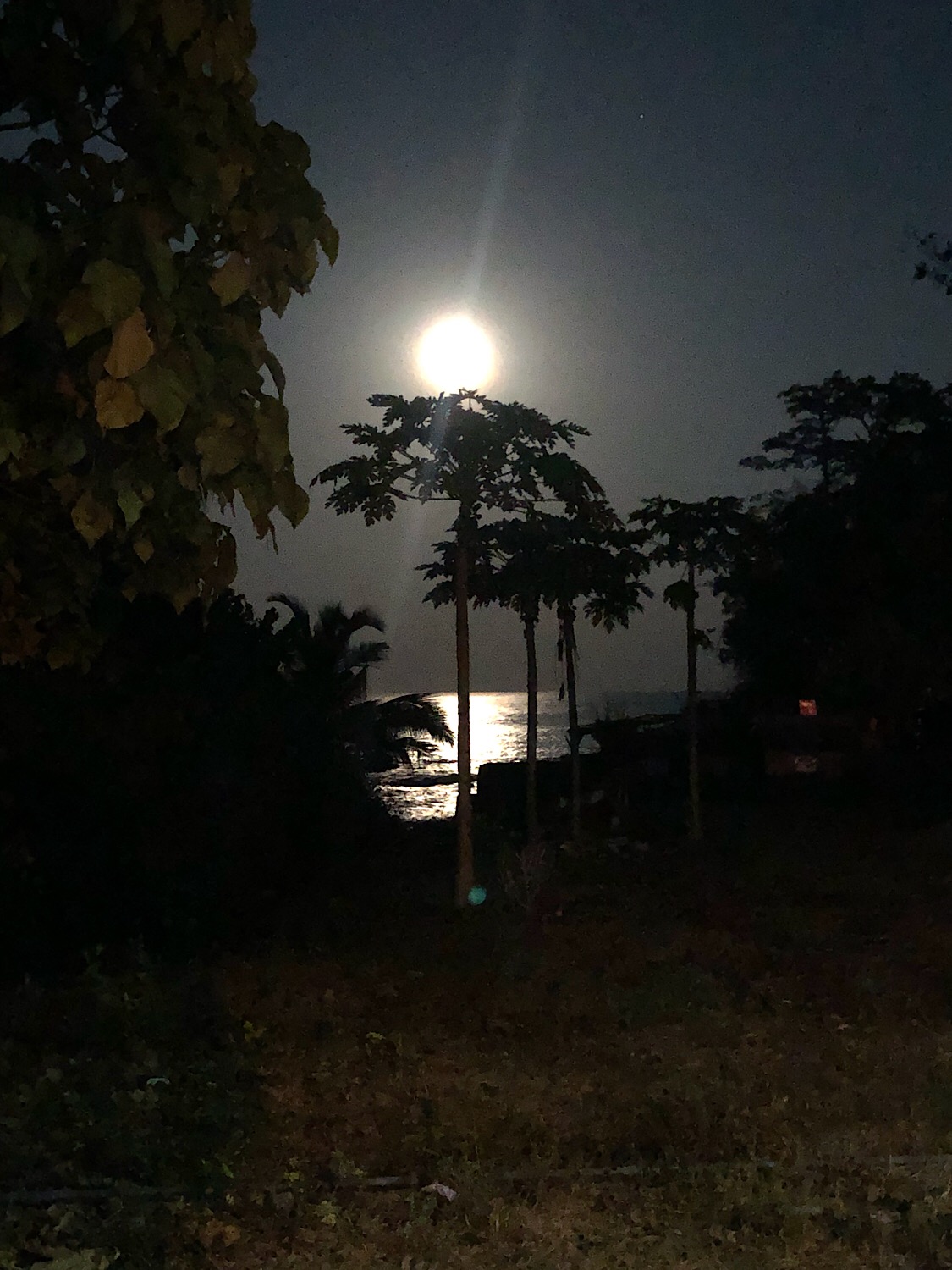
Owing to a moped shortage, we were largely confined to this beach though we did get a Tuk tuk to others on a couple of the days. One (beach 3 perhaps?) came highly recommended by the lonely planet but the tide was out when we got there and it was a bit of a muddy bank so we sacked that off, passing a bizarrely deserted restaurant on the way out. It was as if it had been left if a hurry, with ingredients and equipment all left out, like something out of Chernobyl! We checked out beach 1 which had more going on, small shops and restaurants, and you could swim more easily here, but it was also next to the port which took the sheen off a touch. Then we finally stumbled across a bit of a beauty (beach 2?!). Set around the corner from the port on the end of the island, this narrow strip was on the edge of a forest and, as was now becoming the norm, no one was around. It had a lot of small stalls which were boarded up, so maybe in peak season (December and Jan) it was a bit more happening, not that we cared much. Having lost all shade, we had to move around the corner where we discovered a pristine length of soft white sand, swimmable crystal blue water and not a soul in sight. I spent the day in the dappled shade of a tree while Peahead rotisseried herself in the hot sun, before trekking a couple of km to a rather swanky hotel and congratulating ourselves with a late slap-up lunch of Tikka + Kingfisher lager. Resplendent.
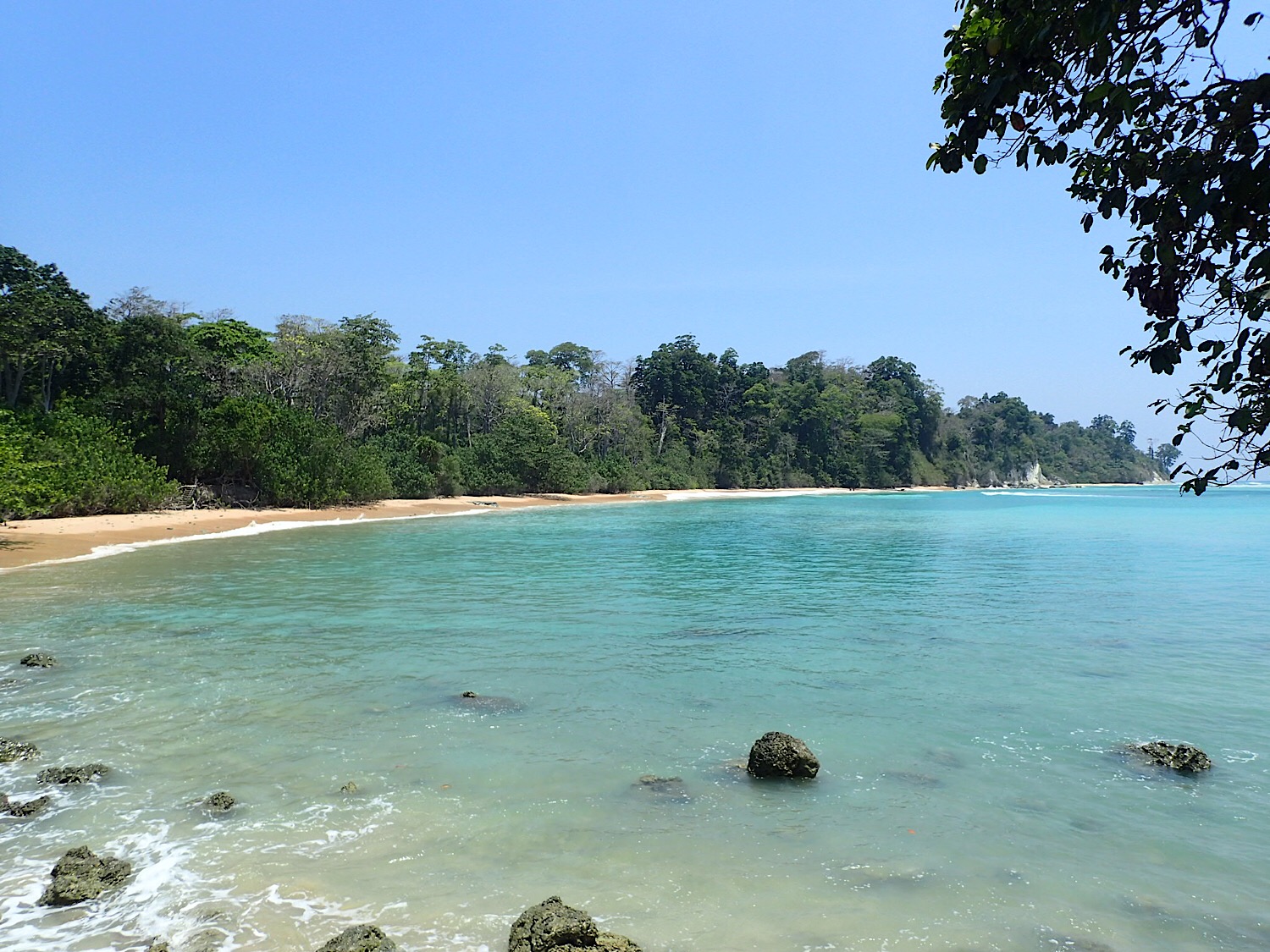
And that was more or less it for the Andamans. Reflecting back, we had really enjoyed ourselves, even if it had been different from what we were expecting. It was unquestionably strikingly beautiful, and we had really been able to relax and switch off (with the one highly regrettable exception of following Arsenal’s fatal capitulation at home to Crystal Palace). It was also spookily quiet, with us often being the only people on the entire beach. This did give an end-of-the-earth, desert island feel, which I certainly hadn’t experienced before, but also sometimes we found ourselves wishing there was maybe a small bar we could grab a beer or some music in the air, just for a bit of company! If I had to choose, I’m not sure which I’d go for, but in the end we are on this trip to experience new things and so, perhaps, I would go for what we had – the deserted feel rather than another fun, busy beach – because I’ve never really been anywhere like that and I wonder whether we will ever encounter that again. Wistfully chewing this over, we boarded our plane bound for royal Rajasthan, which Peahead will cover in her next blockbuster edition of this epic adventure blog classic.

 Frabby’s Indo-Afric Tropical Express